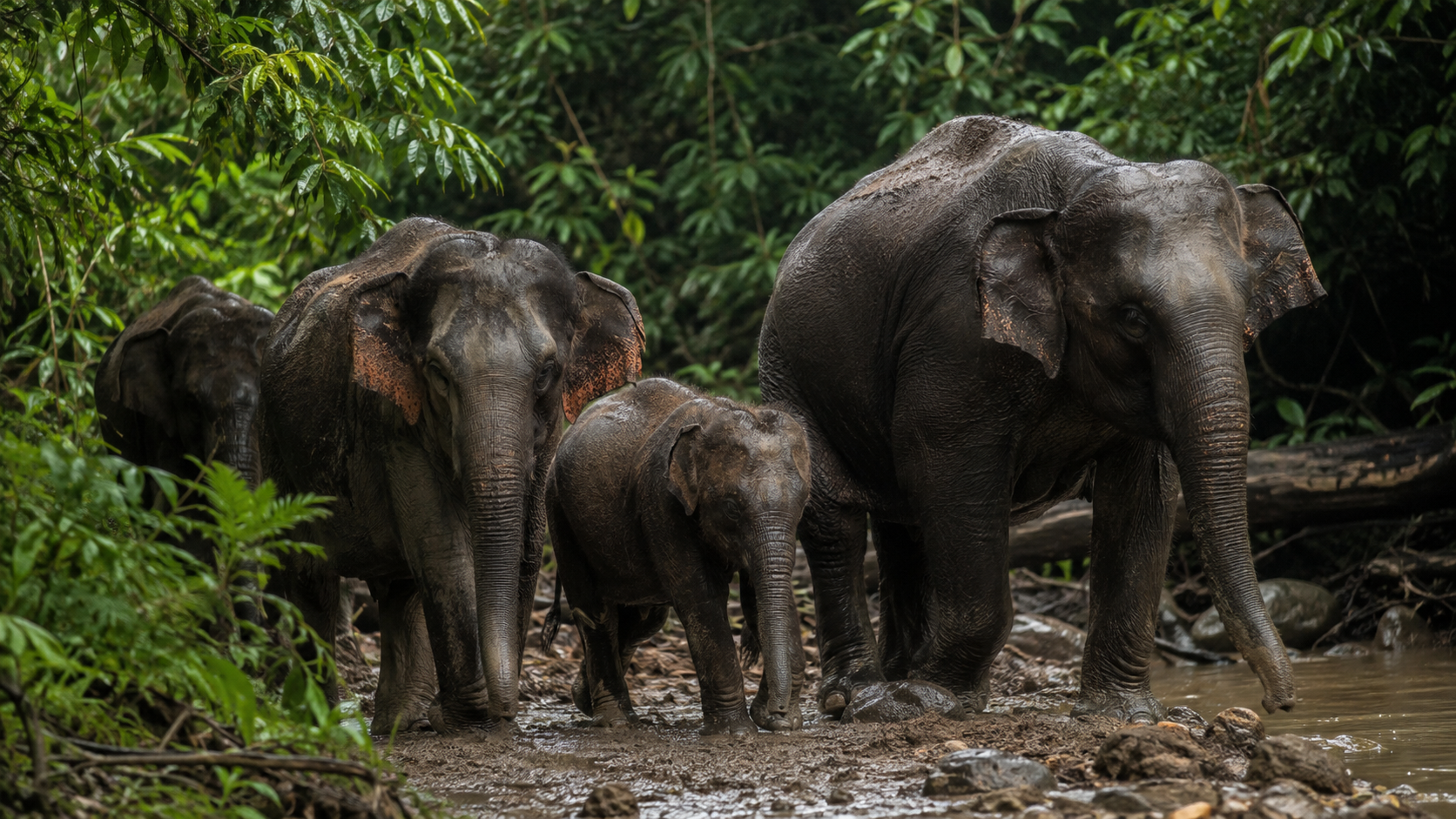
Sumatran Elephants
Indonesia marked its 81st Independence Day with an unusual piece of good news from South Sumatra: the birth of a male Sumatran elephants calf at the Jalur 21 Elephant Conservation Center in Padang Sugihan.
Born on August 17 to Lestari and Gapula, the calf was soon able to stand and nurse normally. Conservation staff placed it under round-the-clock monitoring. The timing was hard to ignore. While Indonesia celebrated another year of independence, one of its most endangered native animals was beginning its life.
The birth also came during a period of unusually active conservation policy. The government has moved ahead with stronger elephant protections, launched a new long-term conservation strategy, and on August 24 announced expanded cooperation with India’s Vantara and Indonesia’s Fauna Land on veterinary care, training and wildlife-health infrastructure.
It is an appealing symbol, but also a useful reminder. Indonesia inherited an extraordinary natural heritage, and preserving that heritage is part of the responsibility that comes with it.
More protection for Sumatran elephants
For several months, the government had been working on plans to strengthen Sumatran elephant protection and reconnect fragmented migration corridors across Sumatra. Those plans have now moved into a more concrete phase.
President Prabowo Subianto issued Presidential Instruction No. 8 of 2026, directing ministries, police and regional governments to protect Kalimantan and Sumatran elephants and their habitats. The directive covers the remaining 21 Sumatran elephant habitat pockets, stretching across around 5.43 million hectares. It also calls for protection of migration routes and tighter controls over new forest-use permits in important elephant areas.
In August, the Forestry Ministry also launched a 10-year conservation strategy for 2026–2036. It includes habitat restoration, corridor protection, conflict reduction, law enforcement and population monitoring.
New conservation cooperation and stronger veterinary support
The government has also moved to strengthen wildlife-health capacity.
On August 24, Indonesia announced an expansion of conservation cooperation with India’s Vantara and Indonesian wildlife organization Fauna Land. The program includes veterinary support, technical training, mobile wildlife hospitals and an upgrade of the Way Kambas Elephant Hospital in Lampung.
The improved facility is expected to support about 70 elephants under human care and nearly 185 wild elephants in the surrounding landscape.
This kind of cooperation matters because conservation is not only about forests and corridors. Veterinary care, disease monitoring and trained handlers can also determine whether vulnerable elephant populations survive.
A female calf was also born in Tesso Nilo National Park in Riau in June and was reported healthy and nursing normally. Every successful birth matters when the wild population remains so fragile.
The bad news has not disappeared
The Independence Day birth should not hide what has been a difficult year for the species.
In Aceh, three elephant deaths were reported within days of each other in August. One adult elephant was found dead inside an oil-palm plantation in Aceh Tamiang. Another young elephant, Yuna, died after symptoms associated with elephant endotheliotropic herpesvirus, while a premature calf was also found dead.
Elsewhere, the pressure is even more direct.
In Bengkulu, conservation groups are asking the government to grant wildlife-sanctuary status to roughly 80,000 hectares of the Seblat landscape. Their concern is understandable. Large sections of the wider landscape have been converted to oil palm, while only a small elephant population remains.
More disturbing still, a female elephant and her calf found dead there in April were later found to have toxic compounds in their bodies. Conservationists suspect poisoning.
If elephants are deliberately poisoned because they wander into plantations or farmland, that is not an acceptable answer to human-wildlife conflict. It is cruel, shortsighted and destructive.
Habitat threats can change quickly
The latest reminder came from Way Kambas National Park in Lampung.
A wildfire broke out on August 21 in the Kuala Penet Resort area and affected an estimated 673 hectares. Around 250 personnel were involved in the response, and the fire was extinguished on August 22. The Forestry Ministry said the park’s wild elephant herds were in the northern part of the park, far from the fire, while elephants at the conservation center were also unaffected.
That was good news, but the incident shows how quickly another threat can emerge. Habitat conservation is not only about preventing land conversion. Fire, especially in difficult peatland terrain, can put pressure on already limited wildlife areas with very little warning.
About the Author