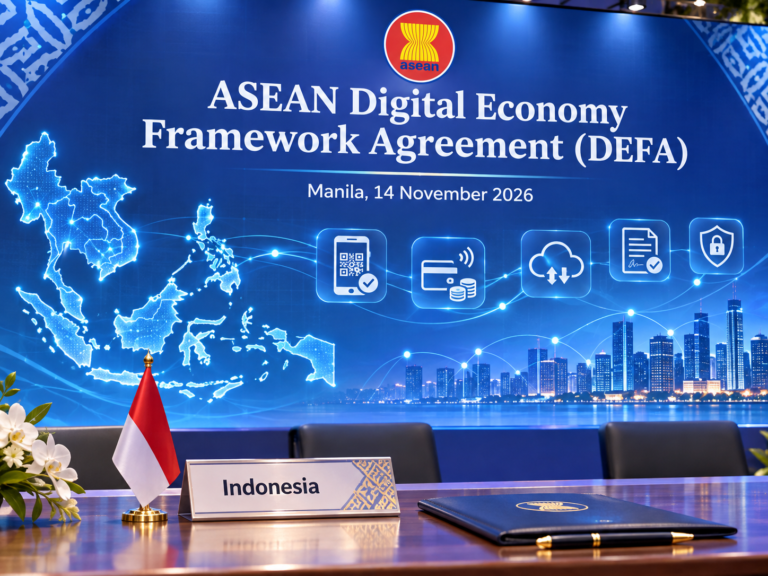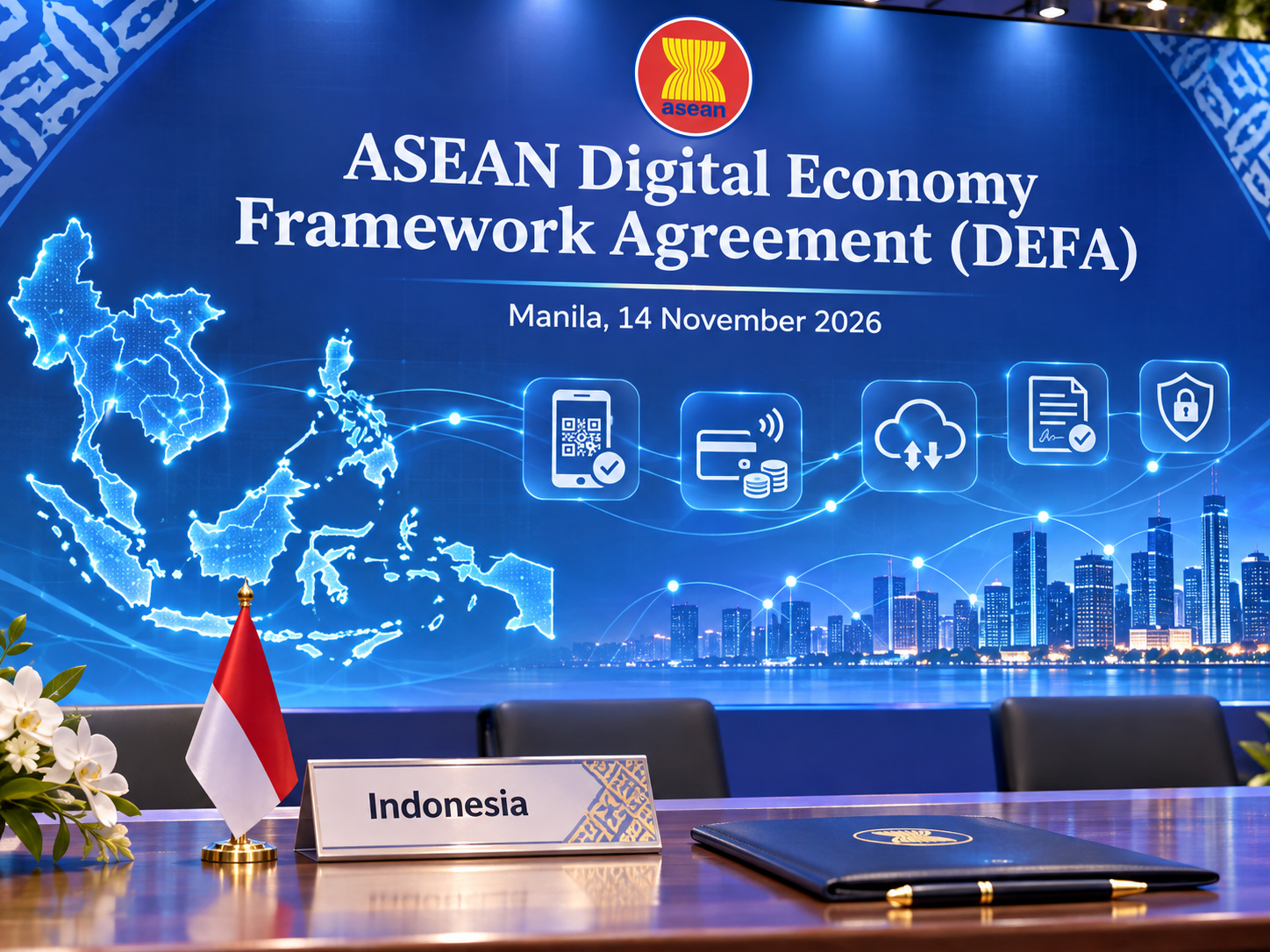
ASEAN has signed a landmark digital economy agreement that could transform how Indonesian businesses trade, receive payments, and expand across Southeast Asia. The Digital Economy Framework Agreement (DEFA), signed in Manila on November 14, 2026, represents a major step toward regional economic integration and a diplomatic achievement for Indonesia, which initiated the agreement.
The signing took place during the ASEAN Economic Community Council meeting, ahead of the 49th ASEAN Summit. Coordinating Minister for Economic Affairs Airlangga Hartarto represented Indonesia alongside representatives of the other ten ASEAN member states.
The agreement aims to make cross-border digital transactions simpler, safer, and more accessible to businesses of all sizes.
An Indonesian initiative becomes an ASEAN agreement
Indonesia helped launch DEFA negotiations during its ASEAN chairmanship in 2023. Three years later, the initiative has become ASEAN’s first standalone, legally binding digital economy agreement.
It establishes common regional rules covering electronic commerce, digital payments, data protection, cybersecurity, and artificial intelligence. The agreement also promotes the recognition of electronic documents and signatures, reducing the paperwork involved in international transactions. For example, an Indonesian business selling products to customers in Malaysia or Singapore could eventually benefit from simpler documentation and more compatible payment systems.
These improvements could make regional trade more accessible, particularly for smaller companies that lack the resources to navigate complicated international procedures.
New opportunities for Indonesia’s digital economy
Indonesia already has Southeast Asia’s largest digital economy by gross merchandise value, estimated at approximately US$100 billion in 2025. DEFA could help Indonesian entrepreneurs reach customers across ASEAN while reducing administrative costs and technical barriers.
Following the signing, Indonesia highlighted several implementation priorities. These include expanding regional connectivity for QRIS payments, improving customs procedures, and facilitating the recognition of electronic documents and signatures. The government also intends to strengthen investment in artificial intelligence, cybersecurity, data centres, and cloud computing.
These measures could benefit Indonesian micro, small, and medium enterprises (MSMEs), allowing more businesses to participate in regional trade. However, larger technology companies may be better positioned to exploit these opportunities initially. Ensuring that smaller Indonesian businesses can compete will therefore be essential.
Regional digital economy could reach US$2 trillion
ASEAN’s digital economy is expected to reach approximately US$368 billion in 2026.
A study by Boston Consulting Group suggests that comprehensive implementation of DEFA could help increase the region’s digital economy to as much as US$2 trillion by 2030, compared with a baseline scenario of approximately US$1 trillion.
However, these figures represent potential economic opportunities rather than guaranteed results. Success will depend on improvements in digital infrastructure, cybersecurity, workforce skills, and cooperation between ASEAN governments.
Indonesia must also balance regional digital integration with protecting personal information, maintaining national data sovereignty, and supporting domestic technology companies.
What happens after the ASEAN summit?
Following the signing, Indonesia announced plans to accelerate ratification, review domestic regulations, and coordinate implementation across government institutions.
With ASEAN preparing to implement DEFA in 2027, the agreement represents an important achievement for Indonesia’s regional economic diplomacy. Its long-term success will depend on turning these commitments into tangible benefits for Indonesian businesses.
About the Author