Nasida Ria
More than 50 years after forming in Semarang, Nasida Ria are still finding new ways to reach Indonesians. The veteran Muslim women’s group recently entered the world of artificial intelligence, releasing “Gebrakan Ramadan” for a Google Gemini campaign during Ramadan 2026. Their older songs are also attracting Gen Z listeners through festivals and social media.
From Quran lessons to modern qasidah
Nasida Ria began in 1975 under H.M. Zain, a teacher of Quranic recitation in Semarang, Central Java. He brought together nine female students and used music as a way to spread Islamic values.
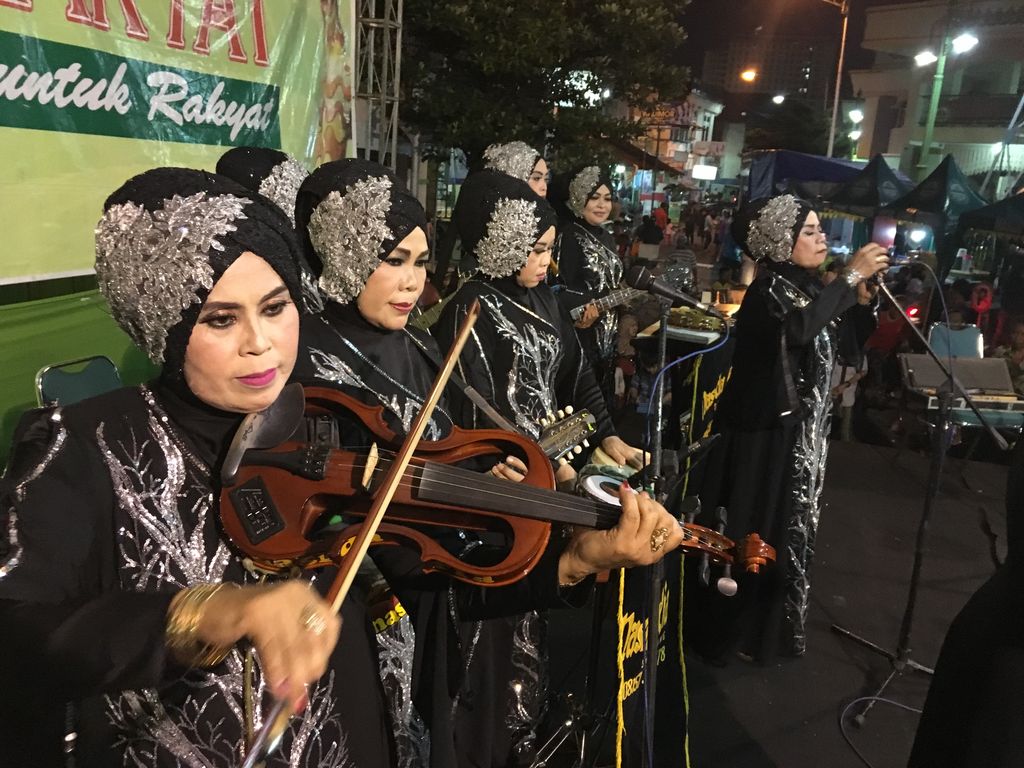
The group initially performed with rebana hand drums. It later added instruments such as keyboards, bass, guitar and violin, helping shape the style known as qasidah modern. Instead of treating religious music as something separate from popular culture, Nasida Ria combined Islamic messages with accessible melodies and modern arrangements.
The membership has changed over several generations, but the group’s identity has remained recognizable. Women in matching hijabs perform their own instruments while singing about religion, society and the future.
Islamic music with surprisingly global concerns
Nasida Ria’s songs are devotional, but they are not limited to prayer or personal morality. Their catalogue addresses justice, environmental damage, war and social change.
“Bom Nuklir” warned about nuclear weapons. “Tahun 2000” imagined the opportunities and anxieties of a new technological era. Their best-known song, “Perdamaian,” asks why war continues when so many people claim to love peace.
That message found a new audience in March 2026, when “Perdamaian” circulated again as conflict dominated headlines in the Middle East. The song may come from another era, but its question has not become outdated.
A 50-year-old group meets Gen Z
Nasida Ria’s survival is not based only on nostalgia. In October 2025, the group performed with Mother Bank at Synchronize Fest in Jakarta before an audience dominated by younger festivalgoers. The performance brought songs such as “Bom Nuklir” and “Perdamaian” into a contemporary music setting.
During Ramadan 2026, Nasida Ria remained busy with performances and commercial collaborations. “Gebrakan Ramadan” placed the group inside a playful digital campaign built around Google’s Gemini technology. It was an unlikely combination, but that was precisely the point: a group formed during the 1970s could still adapt without abandoning its Islamic character.
About the Author