Indonesia has resumed exports of several processed mineral products after a new rare-earth regulation left more than 100 ships stuck at its ports. Yet Jakarta has not abandoned its wider ban on raw mineral exports. Indonesia still wants minerals processed at home, but Chinese companies now control much of the industry created by that policy.
Indonesia resumes exports, but not raw ore exports
The latest disruption began after Indonesia introduced a regulation restricting exports of rare-earth elements and compounds with purity levels below 99 percent.
Testing then detected traces of rare-earth elements in ordinary processed products, including alumina, copper cathodes and nickel derivatives. Without a clear limit for incidental rare-earth content, authorities delayed export clearances. The Indonesian Nickel Industry Forum said at least 120 ships had been unable to leave by July 20.
The government has now allowed those shipments to proceed while it revises the regulation and sets a permitted threshold for trace rare-earth content in other processed mineral exports.
Why Indonesia banned raw mineral exports
Indonesia still prohibits many raw mineral exports. Its goal is to stop foreign buyers from purchasing cheap ore, processing it abroad and capturing most of the value. Companies seeking Indonesian nickel, bauxite or copper must generally refine or process it inside the country.
Refining minerals at home can create jobs, attract factories and raise export revenues. The policy has helped Indonesia build smelters and industrial parks while becoming the world’s dominant nickel producer.
However, much of this expansion has relied on Chinese investment, technology and processing capacity. That dependence is particularly risky at a time of intensifying trade disputes and geopolitical tensions involving China, including tensions over Taiwan, which could leave Indonesia more exposed to economic pressure or disruptions in regional supply chains.
How minerals entered the global trade war
Critical minerals have recently moved closer to the center of global trade tensions.
In April 2025, Trump imposed worldwide “reciprocal” tariffs, arguing that persistent US trade deficits, unequal tariff rates and foreign trade barriers had weakened American manufacturing. Indonesia initially faced a proposed 32 percent tariff before negotiations reduced the rate to 19 percent.
Although the tariffs affected many countries, China remained the main strategic target of Trump’s wider trade agenda. Washington had long accused Beijing of state subsidies, technology transfers, intellectual-property violations and restrictions on foreign companies.
Just two days after Trump announced his reciprocal tariffs on April 2, 2025, China responded with a package of countermeasures that included new export controls on several medium and heavy rare-earth products. The move brought China’s dominance of critical-mineral supply chains directly into the escalating trade confrontation. However, Beijing had already begun tightening its control over strategic minerals well before Trump’s 2025 tariffs, introducing export controls on gallium and germanium in 2023, followed by restrictions on graphite and antimony.
Those restrictions did not start the trade war, but they turned access to critical minerals into one of its most important battlegrounds.
Minerals in the US-Indonesia trade agreement
That helps explain why minerals featured in the US-Indonesia trade agreement finalized in February 2026. Washington said Indonesia would remove restrictions on exports of industrial commodities, including critical minerals, while both countries would cooperate on supply-chain security.
Indonesian officials have offered a narrower interpretation. They insist that the ban on raw mineral exports remains in place. American and other foreign companies may gain access, but they must invest in Indonesian processing first.
This gives Indonesia leverage. Foreign companies need its mineral resources, but Jakarta can demand investment, factories and jobs in return.
Indonesia controls the minerals, but China dominates the processing
Indonesia’s policy has produced real results. More processing now takes place inside the country, and Indonesia has gained a larger role in global mineral supply chains.
The problem is Indonesia’s overdependence on China.
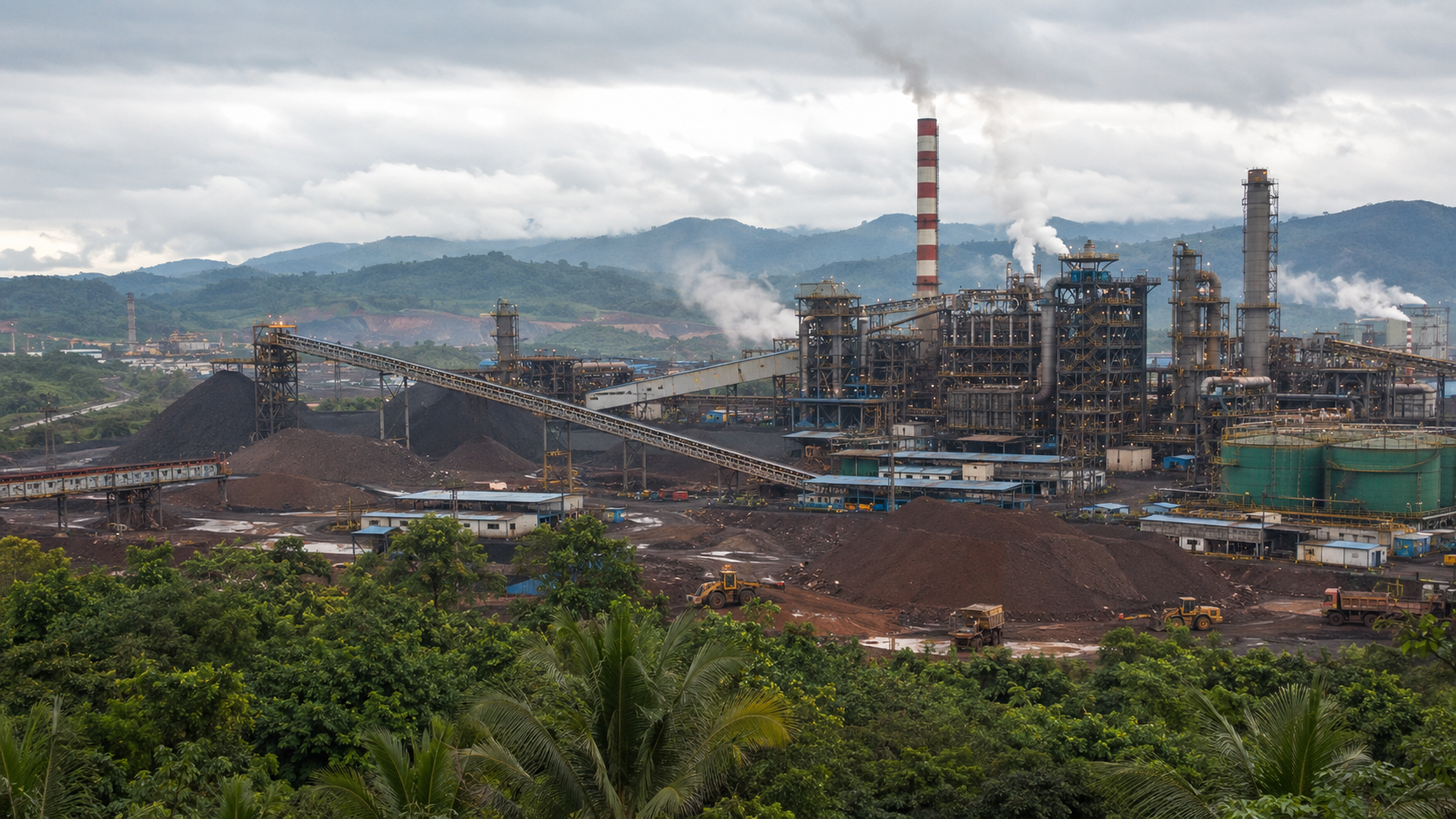
Chinese companies supplied much of the financing, technology and construction capacity needed to build smelters quickly. Chinese investment in Indonesia’s nickel-refining sector reached an estimated $30 billion in 2024, while Chinese firms accounted for around 75 percent of national refining capacity.
Indonesia has therefore reduced one form of dependence while creating another. It exports less raw ore, yet much of its processing industry now relies on Chinese capital, technology and markets.
The risks of overdependence
That dependence carries a wider strategic risk. Tariffs, export controls and access to energy, technology and critical minerals are increasingly used as economic and political leverage. China has already restricted exports of strategic materials during disputes with the United States.
Heavy reliance on Chinese financing, processing technology and buyers could limit Jakarta’s room for maneuver if relations deteriorate or wider geopolitical tensions disrupt trade and supply chains.
The environmental costs are also serious. Nickel expansion has brought deforestation, polluted water, land disputes and industrial accidents. Many smelters rely on coal-fired power plants, weakening claims that Indonesian nickel automatically supports a clean-energy transition. Chinese-backed industrial parks are directly connected to many of these problems.
The real question is not whether Indonesia should process its own minerals. It should. The challenge is ensuring that downstreaming produces Indonesian expertise, ownership and higher-value manufacturing rather than simply moving Chinese-controlled processing onto Indonesian soil.
About the Author