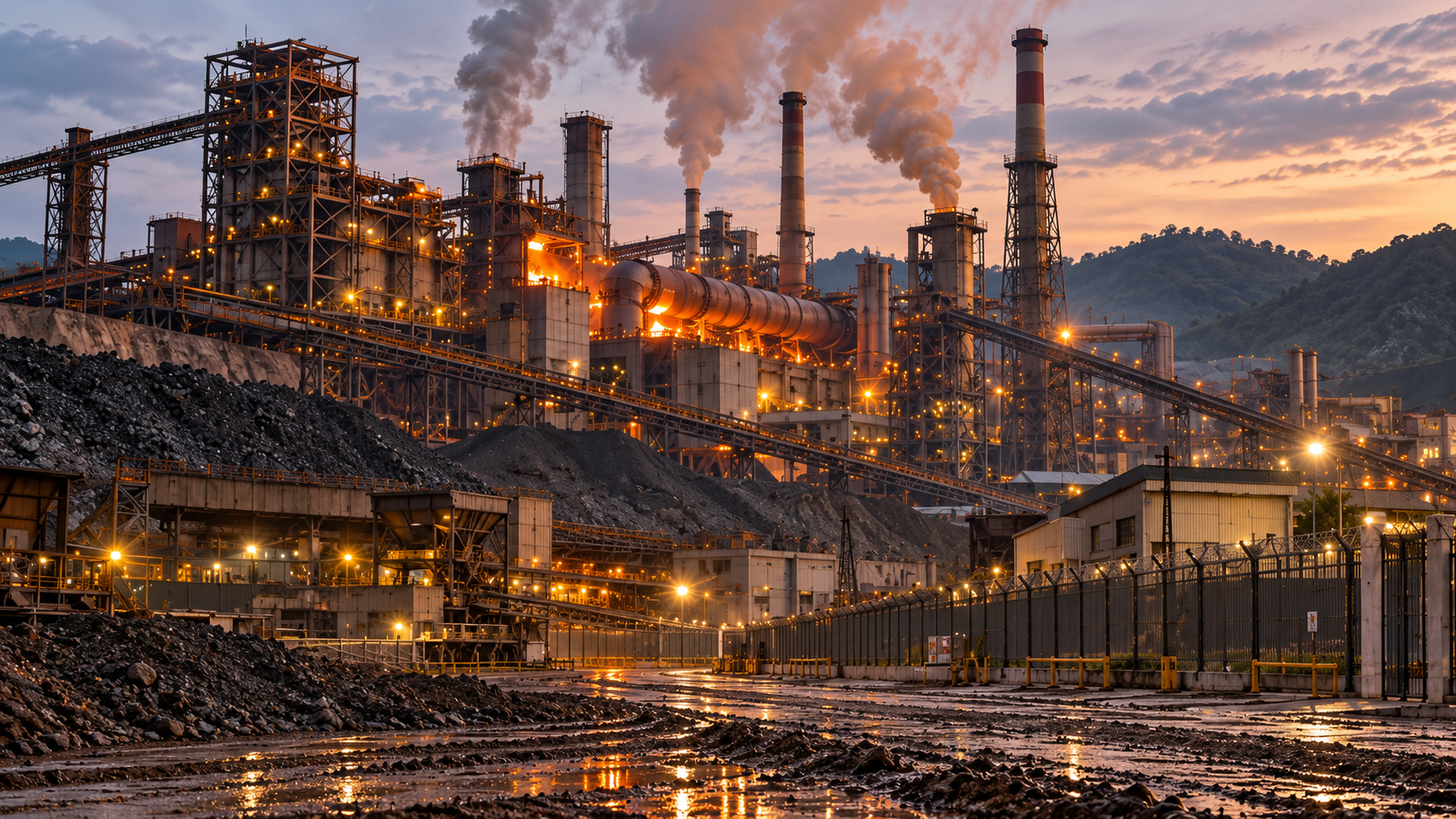
Nickel Smelter
Indonesia’s nickel industry has become a global powerhouse, driven by enormous mineral reserves and billions of dollars in Chinese investment. Yet behind this industrial success, forced labor allegations involving Chinese-backed mining and smelting operations are raising troubling questions about workers’ rights, corporate accountability, and the risks of excessive dependence on China.
In September 2024, the US Department of Labor added Indonesian nickel to its list of goods associated with forced labor. The designation followed reports of passport confiscation, unpaid wages, restricted movement, intimidation, and compulsory overtime, particularly among Chinese migrant workers.
More recent findings suggest these concerns remain relevant.
Forced labor allegations at Chinese-backed nickel facilities
Investigations by China Labor Watch have documented serious allegations involving workers at major nickel processing facilities in Sulawesi.
At PT Virtue Dragon Nickel Industry in Southeast Sulawesi, Chinese workers reportedly arrived expecting monthly salaries of around 15,000 yuan ($2,200). Instead, some received allowances of only 1,000 yuan ($150). Workers also alleged that recruitment intermediaries confiscated their passports and demanded payments of 50,000 yuan ($7,400) to return them.
Other investigations at Indonesia Morowali Industrial Park have described withheld wages, excessive working hours, movement restrictions, and intimidation.
In March 2026, United Nations human rights experts raised further concerns about PT Huadi Nickel Alloy Indonesia, a subsidiary of China’s Huadi Steel Group.
The allegations included compulsory overtime, underpayment, interference with trade union activities, and working conditions potentially amounting to forced labor. UN communications identified approximately 3,000 alleged victims, although this does not mean 3,000 confirmed forced labor cases.
The Indonesian government submitted a formal response in May.
Chinese and Indonesian workers face exploitation risks
The strongest documented forced labor indicators concern Chinese migrant workers, some of whom reportedly depend on their employers for passports, accommodation, wages, and permission to travel.
Indonesian employees have also reported unfair treatment, including excessive overtime, workplace intimidation, wage disputes, and dangerous working conditions.
A September 2026 OECD study cited estimates of 104 accidents and 107 deaths at Indonesian nickel smelters between 2019 and 2025. It also highlighted concerns about movement restrictions affecting Chinese workers.
Importantly, not every labor violation constitutes forced labor. However, withholding passports, threatening workers, or preventing them from leaving employment can indicate serious coercion.
A broader pattern of forced labor concerns linked to China
The allegations also recall longstanding international scrutiny of labor practices inside China.
United Nations experts have raised concerns about coercive employment programs affecting Uyghurs and other predominantly Muslim minorities in Xinjiang. Chinese supply chains involving cotton, solar products, and other industries have consequently faced heightened international scrutiny.
Beijing rejects accusations of systematic forced labor in Xinjiang.
Although the circumstances differ, the Indonesian nickel allegations reinforce the importance of independently examining labor practices within Chinese-linked supply chains, particularly where workers have limited freedom to challenge their employers.
Indonesia strengthens measures against forced labor
Indonesia has taken steps to address forced labor through its trade and labor policies. In April 2026, the government introduced Trade Minister Regulation No. 9/2026, prohibiting imports of goods found to have been produced through forced labor.
At the G20 Trade Ministers’ Meeting in October, Indonesia reaffirmed its commitment to eliminating forced labor and emphasized international cooperation. The government also highlighted its ratification of nine of the International Labour Organization’s ten fundamental conventions.
These measures demonstrate Indonesia’s commitment to protecting workers, although the import regulation does not directly address violations inside domestic nickel facilities. Effective workplace inspections, recruitment oversight, and accessible complaint mechanisms remain essential.
The wider risks of dependence on China
Chinese investment has helped Indonesia transform its nickel industry from a raw-material exporter into a major processing and manufacturing center. However, this success has also created vulnerabilities.
An OECD study published in 2026 cited estimates that Chinese companies accounted for 90% of the construction of Indonesia’s domestic nickel refining capacity. Such concentration can expose Indonesia to risks involving foreign financing, technology, corporate practices, and international market access. Forced labor allegations add another concern, potentially affecting the reputation of Indonesian nickel among global buyers. Environmental and deforestation concerns have also increased scrutiny of the industry.
Diversifying investment through partnerships with Japan, South Korea, Europe, the United States, and other countries could strengthen Indonesia’s bargaining position while encouraging higher operating standards.
Indonesia needs investment that respects its laws, protects workers, and contributes to lasting national development.
Indonesia’s nickel wealth should strengthen its economy, not leave workers vulnerable to exploitation or the country overly dependent on a single foreign partner.
About the Author