A promising job abroad can become a nightmare for Indonesian fishermen recruited to work aboard foreign vessels. Recent research has exposed how misleading contracts, excessive recruitment fees, and withheld wages can trap workers in exploitative conditions, sometimes thousands of kilometers from home.
Forced labor at sea remains a serious concern, with numerous Chinese fishing vessels implicated in allegations of exploitation and abuse.
How recruitment agencies can trap Indonesian fishermen
Exploitation often begins before workers board a vessel. In an account published by Oceana on October 15, Indonesian fisherman Rizky Oktaviana described being promised $350 a week, bonuses, and holidays. However, when he questioned his contract, a recruiter allegedly threatened to charge him $2,000 if he refused to sign. The agency already held his personal documents. Once at sea, conditions were reportedly far worse than promised, with limited opportunities to seek outside help.
His experience reflects broader concerns about recruitment practices in the fishing industry. A recent study by researchers at Canada’s York University examined the role of recruitment agencies in the exploitation of Indonesian and Filipino fishermen working aboard foreign fishing vessels. The researchers highlighted how excessive deductions, delayed wages, debt, and threats of blacklisting can leave migrant fishermen dependent on recruiters and employers.
Chinese fishing vessels face serious forced labor allegations
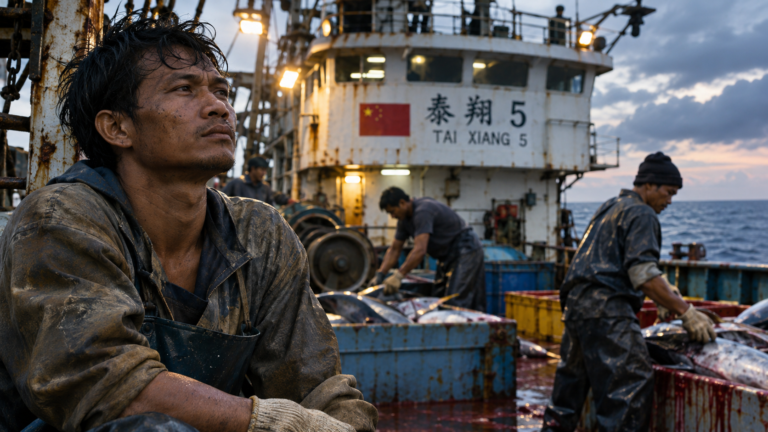
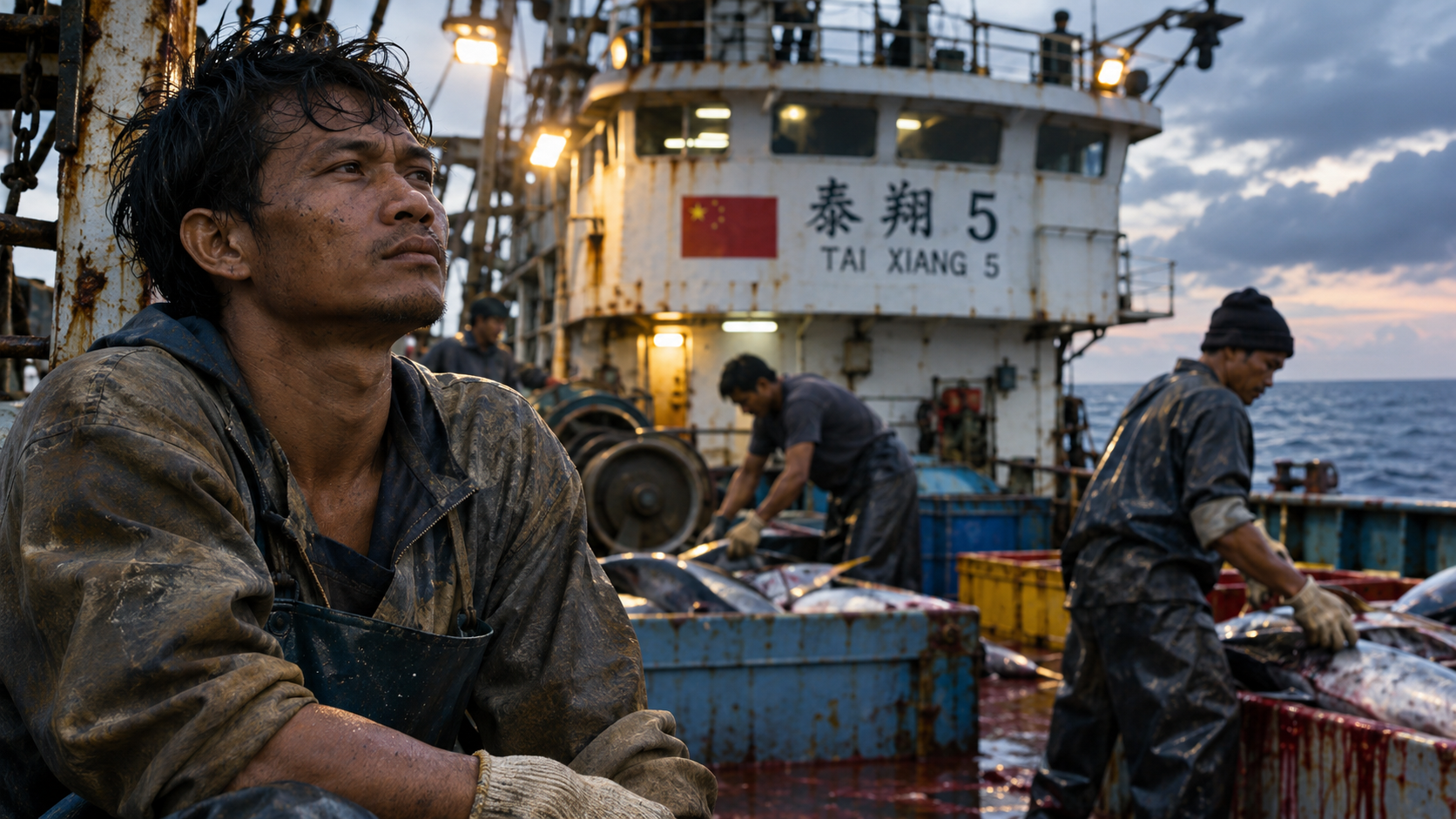
Chinese fishing operations have faced growing scrutiny over their treatment of Southeast Asian migrant workers. In April 2026, testimonies collected by the Environmental Justice Foundation revealed allegations of severe abuse aboard the Chinese tuna fishing vessel Tai Xiang 5, operated by state-owned Shandong Zhonglu Oceanic Fisheries.
Three migrant fishermen died during the voyage amid reports of inadequate nutrition, exhausting working schedules, and insufficient medical assistance.
An Indonesian survivor, Abdul, described working approximately 16 hours daily. After eight months aboard the vessel, he reportedly received just Rp11.9 million following deductions.
Other Indonesian fishermen have described passport confiscation, physical intimidation, withheld wages, and restrictions on their freedom aboard Chinese vessels.
These practices can indicate forced labor, particularly when workers face threats or penalties for refusing to continue working.
Although numerous allegations involve Chinese fishing vessels, the problem is not limited to China. Fishing fleets from Taiwan, South Korea, and other countries have also faced accusations of labor exploitation and abuse.
Indonesia strengthens protections against forced labor at sea
Indonesia has taken steps to protect fishermen working domestically and overseas.
In April 2026, President Prabowo Subianto approved the ratification of International Labour Organization Convention No. 188. Indonesia formally deposited its ratification in June, with the convention scheduled to enter into force for the country in June 2027.
The convention establishes standards covering employment contracts, adequate rest, medical care, workplace safety, and living conditions aboard fishing vessels.
In October, Indonesia’s Ministry of Marine Affairs and Fisheries reaffirmed efforts to strengthen recruitment oversight, complaint mechanisms, and enforcement.
These measures aim to prevent exploitation and improve protection for Indonesian fishing crews.
About the Author