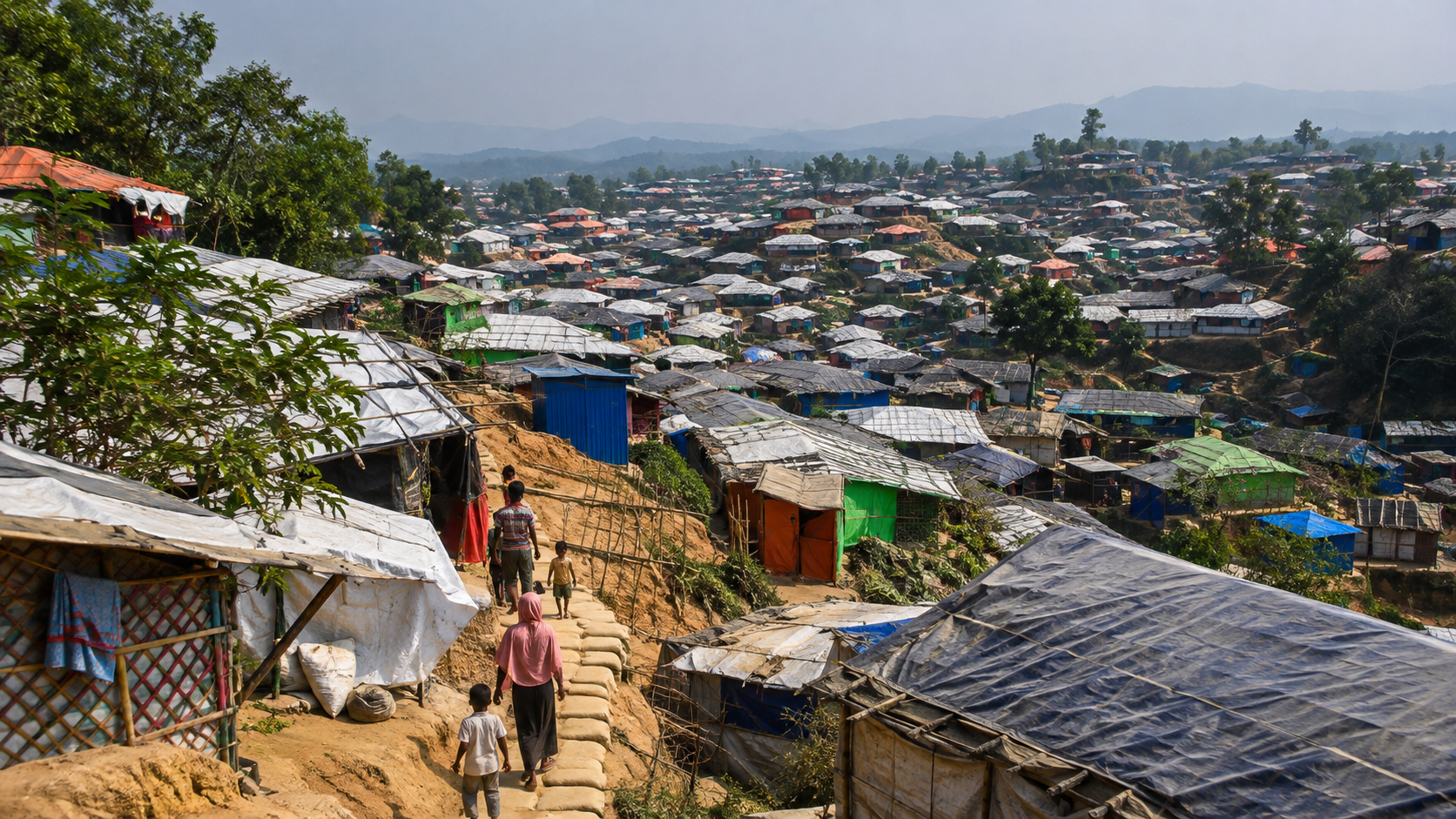
Nearly a decade after hundreds of thousands of Rohingya Muslims fled Myanmar, their humanitarian crisis remains unresolved. On October 27, 2026, United Nations investigators warned that atrocities across Myanmar were worsening, with civilians increasingly exposed to military airstrikes, torture and other serious abuses.
The warning followed a September bombing of a market in Rakhine State that reportedly killed more than 50 people from different communities. Meanwhile, over 1.2 million Rohingya refugees remain in Bangladesh, with little prospect of returning home safely.
How did this crisis begin, and why has so little changed?
Who are the Rohingya?
The Rohingya are a predominantly Muslim ethnic minority whose historical homeland is Myanmar’s western Rakhine State, bordering Bangladesh. Muslim communities have lived in the region for centuries, although migration during British colonial rule also shaped its population. Relations between Muslim and Buddhist communities became increasingly strained during the colonial period, particularly during the Second World War, when communal violence caused widespread suffering.
After Myanmar gained independence in 1948, the Rohingya faced growing questions over their legal status and national identity. Successive governments increasingly portrayed them as immigrants from Bangladesh, despite the community’s longstanding presence in Rakhine.
The situation deteriorated under military rule, particularly after the introduction of Myanmar’s 1982 citizenship law. The law established restrictive categories of citizenship. Combined with discriminatory implementation, it left most Rohingya effectively stateless. Without recognized citizenship, many faced severe restrictions on movement, education, employment and healthcare. These policies created the foundations of a humanitarian crisis long before the violence of 2017.
The 2017 exodus and allegations of genocide
Myanmar’s persecution of the Rohingya reached a devastating turning point in August 2017. Following attacks on security posts by Rohingya militants, Myanmar’s military launched large-scale operations across northern Rakhine State. Soldiers and other perpetrators carried out mass killings, sexual violence and widespread village destruction. More than 700,000 Rohingya fled across the border into Bangladesh, joining refugees displaced during earlier waves of persecution.
A United Nations fact-finding mission subsequently concluded that senior military commanders should face investigation and prosecution for genocide, crimes against humanity and war crimes. The atrocities also brought international scrutiny to Myanmar’s civilian leadership under Aung San Suu Kyi, who defended the country’s position before the International Court of Justice in 2019.
However, the military retained substantial autonomy during her administration and was directly responsible for the operations that drove the mass exodus.
Why persecution continues today
Myanmar’s February 2021 military coup triggered a wider civil war, dramatically worsening conditions across the country. In Rakhine State, the conflict became particularly complicated as the Arakan Army, a predominantly Buddhist ethnic Rakhine nationalist movement, gained control over much of the territory.
Although the Arakan Army fights Myanmar’s military, that does not necessarily make it a protector of Rohingya civilians. An August 2026 UN report documented serious abuses against Rohingya by both the military and the Arakan Army. These included arbitrary detention, forced labor, forced recruitment, land confiscation and restrictions on movement.
The October 27 UN warning reinforced the broader picture of worsening civilian suffering. Investigators described attacks on homes, schools, hospitals, religious sites and displacement camps. For the Rohingya, the changing balance of military power has brought little assurance of safety.
More than 1.2 million refugees remain in Bangladesh
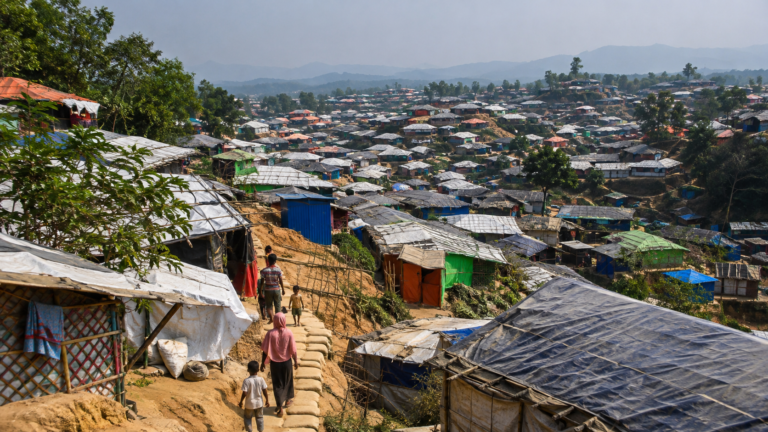
Bangladesh has carried much of the humanitarian burden. According to government and UNHCR figures, approximately 1.21 million Rohingya refugees were recorded in Bangladesh as of September 30, 2026. Most lived in the overcrowded camps around Cox’s Bazar. More than 155,000 had arrived since early 2024, demonstrating that displacement continues.
Many have escaped persecution only to face uncertain futures, restricted employment opportunities and dependence on humanitarian assistance. For children born in refugee camps, Myanmar may be a country they have never seen.
Rohingya refugees across Southeast Asia and beyond
While Bangladesh hosts the overwhelming majority of Rohingya refugees, several other countries also provide shelter. Malaysia hosts approximately 129,000 Rohingya refugees and asylum seekers, while India hosts around 22,000. Indonesia also provides shelter to approximately 2,500 Rohingya, particularly in Aceh, North Sumatra and Riau.
Dangerous journeys across the sea
Some Rohingya risk dangerous sea crossings in search of safety and a more secure future, often heading toward Malaysia and Indonesia. According to UNHCR, nearly 900 Rohingya died or went missing at sea in 2025, making it the deadliest year recorded for these journeys.
What would make a safe return possible?
Ending the Rohingya refugee crisis requires more than a ceasefire or a change in Myanmar’s political leadership. Refugees need credible guarantees of physical safety, freedom of movement, access to citizenship and protection against discrimination. They also need the possibility of reclaiming homes and property, alongside accountability for past abuses. Until these conditions exist, returning to Myanmar could expose many to the same dangers that originally forced them to flee.
About the Author