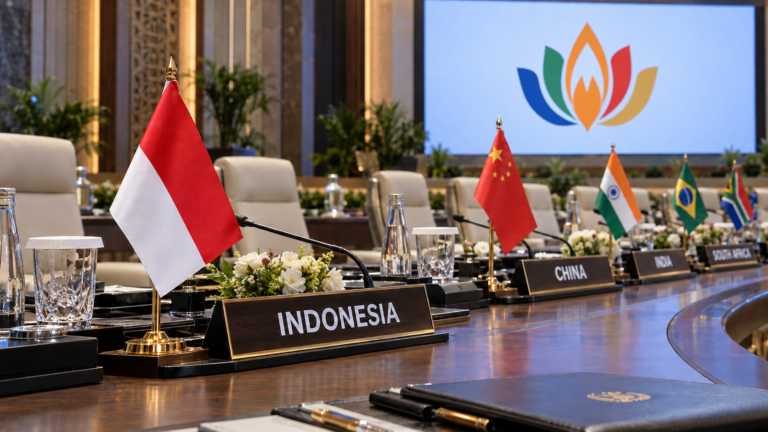
Indonesia is taking a leading role in Southeast Asia’s debate over AI copyright and compensation for journalism. On October 10, representatives from several countries gathered at an ASEAN forum in Bali to discuss protecting journalistic work from unauthorized use by digital platforms and artificial intelligence companies.
The meeting produced the Bali Joint Statement on Protection of Journalistic Works in the Digital and AI Era, commonly referred to as the Bali Declaration, which calls for stronger copyright protection, fair compensation, and regional cooperation.
The initiative comes as AI companies face growing pressure worldwide to recognize the economic value of the material their systems use.
ASEAN forum adopts Bali Declaration to protect journalism
The ASEAN Forum on the Protection of Journalistic Works in the Copyright Regime in the Digital Era was jointly organized by Indonesia’s Press Council (Dewan Pers) and the Ministry of Law’s Directorate General of Intellectual Property (DJKI).
Held in Bali, the forum brought together media representatives, policymakers, academics, and legal experts from ASEAN countries and Scotland.
Participants examined how digital platforms collect, summarize, and commercially exploit journalistic content, sometimes without authorization, attribution, or adequate compensation.
The resulting Bali Declaration established four priorities: recognizing journalism’s economic value, strengthening copyright frameworks, promoting fair commercial agreements, and encouraging regional cooperation.
Indonesia’s Broadcasting Commission endorsed the declaration on October 12.
However, the agreement is not legally binding. Its impact will depend on whether participating countries introduce effective protections.
What Indonesia’s 2014 Copyright Law already protects
Indonesia’s existing copyright framework is based on Law No. 28 of 2014, which protects original literary, artistic, and scientific works.
Under Article 40, written works and photographs can receive copyright protection. Authors also hold economic rights over activities such as reproduction, distribution, and commercial use of their creations.
However, the law recognizes important exceptions.
Article 43 permits certain uses of current news when the original source is fully cited. Article 44 also allows specified uses for education, research, criticism, and other purposes, subject to legal conditions.
These distinctions matter because copyright protects original expression rather than facts themselves.
The law was adopted long before today’s generative AI systems became widespread. It does not explicitly establish a comprehensive framework for using copyrighted material to train AI models or generating commercial AI summaries of journalism.
This uncertainty is one reason Indonesia is considering reforms.
Proposed reforms and disagreements with Google
Proposed amendments to the 2014 law would strengthen publishers’ economic rights, including compensation for certain uses of journalistic content in AI training, aggregation, and previews.
They also address copyright protection for AI-assisted creations and propose mechanisms for collecting and distributing payments.
The legislation remains under discussion
During a July meeting with Dewan Pers, Google objected to the proposed requirement to pay for news links and to mandatory collective licensing arrangements.
Google favored direct commercial agreements with publishers and warned that compulsory arrangements could affect its use of news content.
According to Dewan Pers, only 34 Indonesian media companies had established direct business agreements with digital platforms at that point.
This raises an important question: how can smaller and independent publishers secure fair treatment when negotiating with multinational technology companies?
International publishers are organizing
Indonesia’s initiative coincides with growing international cooperation among news organizations.
On October 12, more than 40 publishers, including The New York Times, The Economist, and Agence France-Presse, joined the Standards for Publisher Usage Rights (SPUR) coalition.
Representing more than 80 members across over 20 countries, SPUR is developing standards to track AI use of published material and facilitate licensing agreements.
Similar mechanisms could strengthen Indonesian publishers’ bargaining positions and make compensation arrangements more transparent.
Protecting journalism without restricting innovation
Journalism requires investment in reporting, investigation, and fact-checking. If AI companies profit from that work without adequately compensating its creators, the economic foundations of independent media could weaken.
However, poorly designed regulations could also restrict research, innovation, and access to information.
Indonesia therefore needs rules that distinguish legitimate uses of published material from unauthorized commercial exploitation, while ensuring that smaller publishers receive fair treatment.
The Bali Declaration offers Indonesia an opportunity to help shape regional standards rather than simply follow decisions made elsewhere.
About the Author