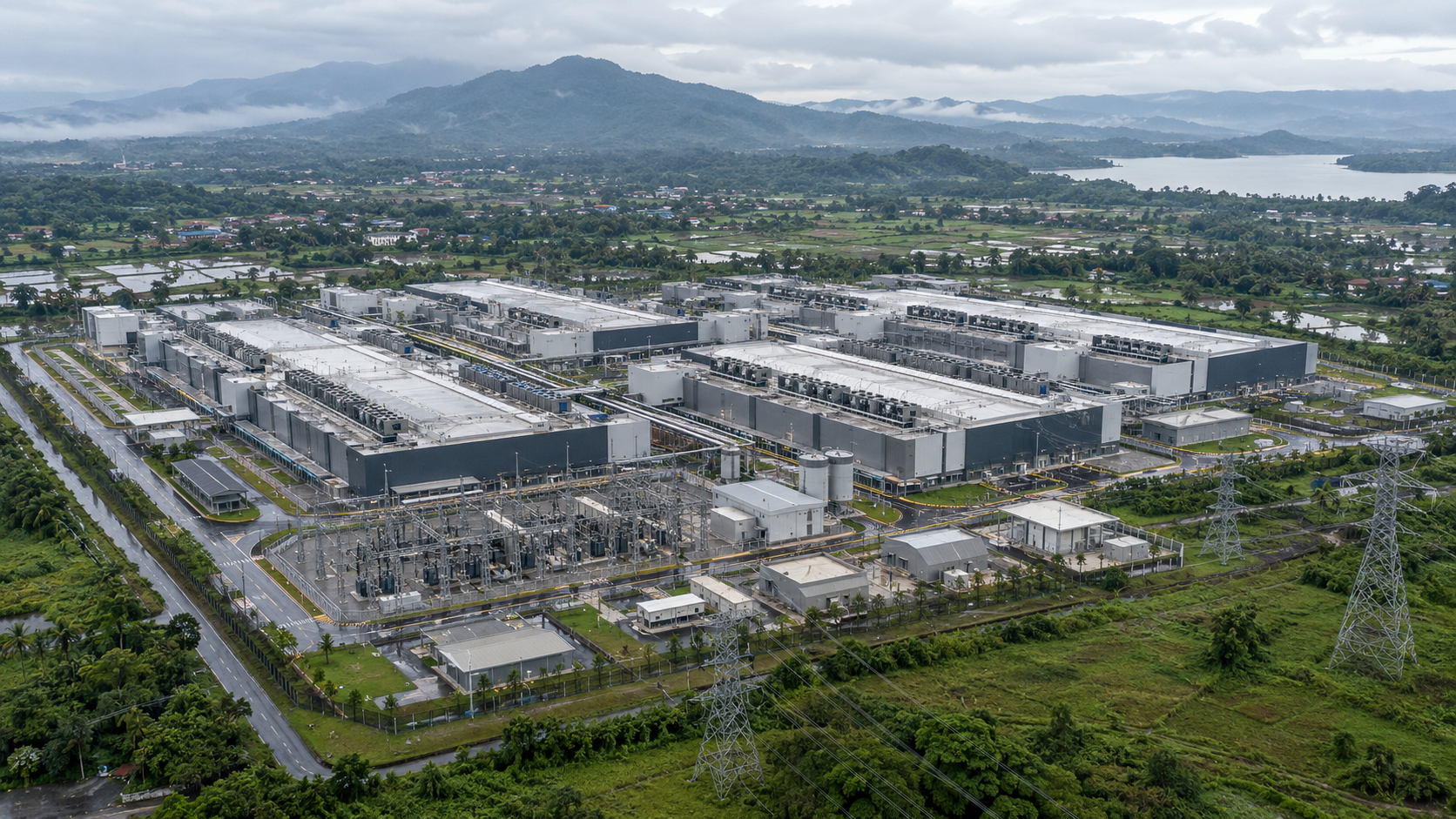
Indonesia wants to become a regional center for artificial intelligence and cloud computing. But a dispute surrounding one of the country’s largest planned AI data centers shows why attracting investment is only part of the challenge.
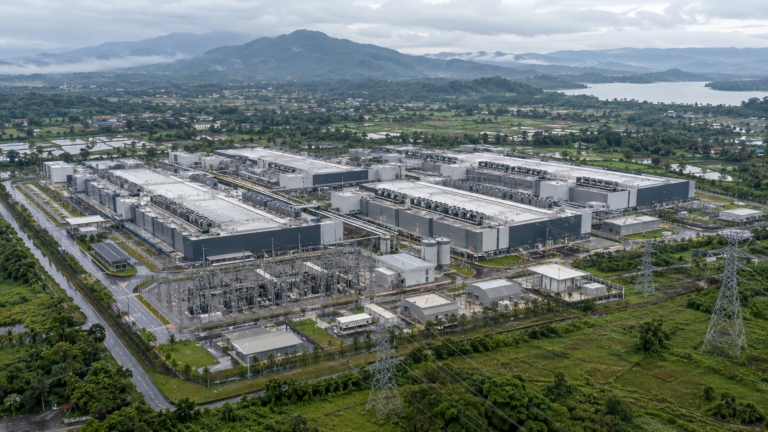
On September 22, Singapore-based BDx Data Centers broke ground on a 640-megawatt campus near the Jatiluhur Reservoir in West Java. Eight days later, Governor Dedi Mulyadi suspended construction because the project had not completed its environmental assessment, known as an AMDAL, or obtained its building approval.
The project promises investment and advanced digital infrastructure. It also raises harder questions about electricity, water, land and what surrounding communities will receive in return.
Why data centers need so many resources
Data centers are buildings filled with servers that store information and perform calculations. AI requires especially powerful chips operating continuously, which makes AI facilities far more energy-intensive than ordinary offices or warehouses.
A 100-megawatt facility operating at full capacity would use 2.4 gigawatt-hours of electricity every day. Data centers also require land for server buildings, substations, generators, cooling equipment and security. Hines Research estimates that every three to four megawatts of capacity typically requires about one acre of powered land.
Water may be needed because servers generate enormous amounts of heat. Some cooling systems evaporate water to remove that heat, while others circulate water through closed systems or use more electricity-intensive air cooling.
A US study estimated average onsite water consumption of around 0.36 liters for every kilowatt-hour of data-center electricity use in 2023. At that rate, a 100-megawatt facility running continuously would consume approximately 864,000 liters per day. Actual use varies considerably according to climate, workload and cooling technology.
An investment Indonesia wants
Indonesia currently has around 580 megawatts of operating data-center capacity. The government says investors are considering an additional 1.3 gigawatts, potentially representing US$15 billion to US$20 billion in investment.
The BDx campus demonstrates that ambition. Its planned capacity is 640 megawatts, supported by 845 megavolt-amperes of secured supply from state electricity company PLN. The first of six buildings is designed to provide 120 megawatts, with its initial phase originally expected to begin operating in early 2027.
BDx says the facility will use direct-to-chip liquid cooling and is pursuing lower-carbon electricity, including a possible hydroelectric arrangement. Its location close to the Jatiluhur Dam offers access to power and water, but also makes environmental scrutiny particularly important.
The water question becomes more concrete
Purwakarta officials began a detailed environmental review on October 5 involving specialists from the University of Indonesia, BRIN and other institutions. No final decision has been made, and the building approval remains incomplete.
During the meeting, officials said BDx could receive 27 liters of water per second from the local water utility. That represents a proposed supply of approximately 2.3 million liters per day, although allocated supply is not necessarily the same as the amount ultimately consumed.
Purwakarta Regent Saepul Bahri Binzein argued that unused utility capacity would prevent the project from affecting households or agriculture. However, he also acknowledged that this calculation still needs to be tested.
Experts identified several unresolved questions: water availability during droughts, the effect on West Java’s electricity system, electronic and battery waste, and the benefits promised to local communities. Closed-loop cooling has been proposed as one way to reduce water demand.
Who pays for the electricity network?
Electricity supply involves more than generating enough power. Data centers need substations, transmission lines and highly reliable connections capable of handling large, continuous loads.
PLN finances much of Indonesia’s grid expansion through its own balance sheet. If new infrastructure is built primarily for large private facilities, the government must clarify how those costs will be shared.
Indonesia should not offer cheap electricity while transferring grid expenses or reliability risks to ordinary consumers. Data-center agreements should disclose who pays for new connections, backup capacity and necessary upgrades.
Renewable electricity claims also require scrutiny. A hydroelectric agreement may reduce emissions associated with one facility, but Indonesia still needs to determine whether large new loads could divert cleaner power from other users or slow the wider energy transition.
Large investment does not mean large employment
Data centers require thousands of workers during construction, but relatively few once operational. Energy Shift Institute managing director Putra Adhiguna estimates that every US$100 million invested may produce only around 15 permanent jobs.
That does not make the investment worthless. Data centers can improve domestic computing capacity, strengthen cloud services and support Indonesia’s digital economy. But officials should not describe headline investment figures as if they automatically translate into equally large employment benefits.
Tax incentives should therefore depend on measurable contributions, including local technical employment, workforce training, domestic procurement and affordable computing access for Indonesian researchers and companies.
A fair agreement for Indonesia
The temporary suspension of the BDx project does not mean Indonesia should reject data-center investment. It means the country should set conditions before construction begins, not after environmental or infrastructure problems emerge.
Developers should disclose expected electricity and water requirements, including demand during droughts and peak grid periods. Water use should be measured and independently audited. Agreements should also establish who finances infrastructure upgrades and how surrounding communities will benefit.
The Jatiluhur review could set an important precedent. If Indonesia approves projects before answering these questions, communities may carry the environmental and infrastructure costs while investors capture most of the returns.
AI infrastructure can strengthen Indonesia’s economy and technological independence. But megawatts and investment announcements are not enough. The real test is whether Indonesia gains reliable computing capacity, skilled employment and long-term economic value without sacrificing water security, affordable electricity or public trust.
About the Author