Indonesia's Role in ASEAN
Eighty-one years ago, on August 17, 1945, Indonesia declared itself free from colonial rule and spent the following four years fighting to make that declaration stick. That struggle shaped a foreign policy doctrine, “bebas aktif” (free and active), that still guides the country today: independent from great-power blocs, but actively engaged in shaping the region around it. On this Independence Day, that legacy is worth examining not as history, but as a living principle, one that has shaped Indonesia’s role in ASEAN and its standing well beyond Southeast Asia. The nation that once had to fight for a seat at the table now helps set the table for others.
The Anchor of ASEAN
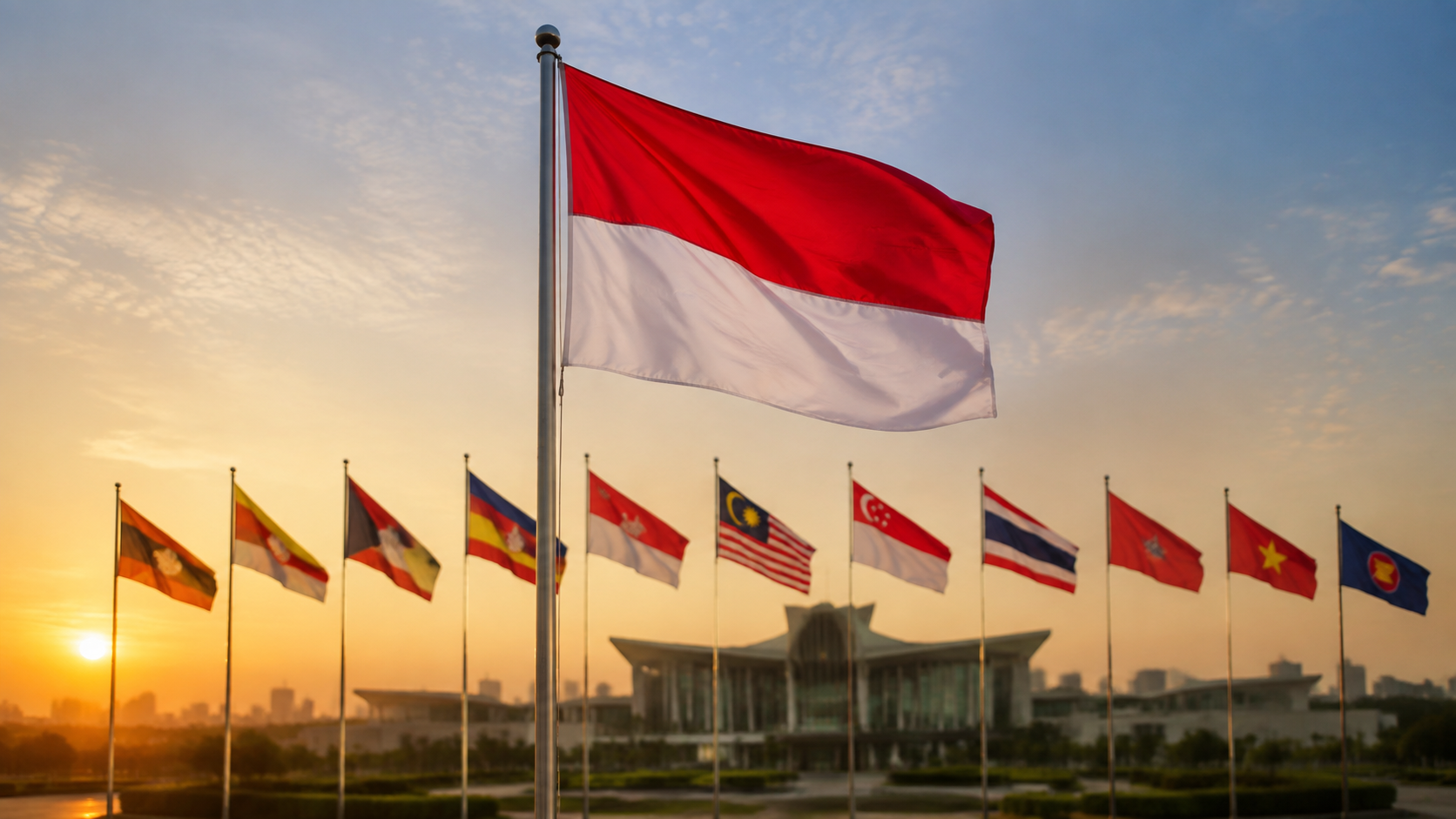
Indonesia was one of five founding signatories of the 1967 Bangkok Declaration that created ASEAN, and nearly six decades later it remains the bloc’s largest economy by a wide margin, along with its most populous member. Size alone doesn’t explain Indonesia’s role in ASEAN, but its consistent role as a consensus-builder does. During its own 2023 chairmanship, Jakarta pushed through the ASEAN Concord IV, a long-term vision statement committing the bloc to stronger human rights protections and deeper cooperation on food and energy security, while also working to strengthen the ASEAN Secretariat’s institutional capacity.
The chairmanship rotates (the Philippines holds it in 2026, under the theme “Navigating Our Future, Together“), but Indonesia’s weight in the room doesn’t. It has traditionally played the role of unifying ASEAN behind shared objectives on difficult files, including the bloc’s fraught response to Myanmar’s civil conflict and coordination on the South China Sea. Looking ahead, Indonesia is expected to nominate the next ASEAN Secretary-General when the position rotates back to Jakarta around 2027, a reminder that its influence over the bloc’s direction is not a one-time event but an ongoing role.
A Trusted Partner in Defense
Indonesia’s military posture reflects the same “free and active” instinct: build partnerships without picking sides. Every year, the country co-hosts Super Garuda Shield, a multinational exercise that began as a modest bilateral drill with the United States in 2007 and has since grown to include forces from more than a dozen nations, among them Australia, Japan, South Korea, and the United Kingdom. The exercise now spans land, air, maritime, and cyber components, and organizers have described recent iterations as the largest in the drill’s history, a sign of how central Indonesia has become to regional security cooperation.
Indonesia also hosts Garuda Canti Dharma, the world’s largest annual international peacekeeping field exercise, at its dedicated peacekeeping training center in Bogor, West Java. The 2026 edition brought together more than 700 personnel from 22 countries across five continents. It’s a distinction worth pausing on: Indonesia isn’t just a venue for other militaries to train, it is a leader in preparing the world’s peacekeepers, a role that lines up naturally with a country that has never sought to project power beyond its own defense.
Indonesia’s navy also joined RIMPAC 2026, the world’s largest international maritime exercise, alongside more than 30 nations off Hawaii. Indonesian Marine Corps personnel took part in live-fire drills, fast-rope insertions, and multinational amphibious training, the kind of hands-on interoperability that keeps the archipelago’s forces sharp and its partnerships current.
Crucially, none of this comes at the cost of Indonesia’s non-alignment. It trains alongside the United States and its allies while maintaining its own independent line on China and other powers, exactly the balancing act its founders envisioned when they coined “bebas aktif” in the earliest years of independence.
A Voice for the Global South
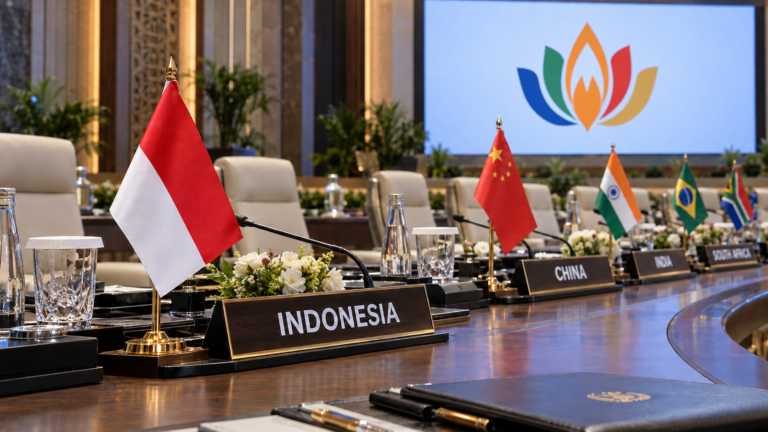
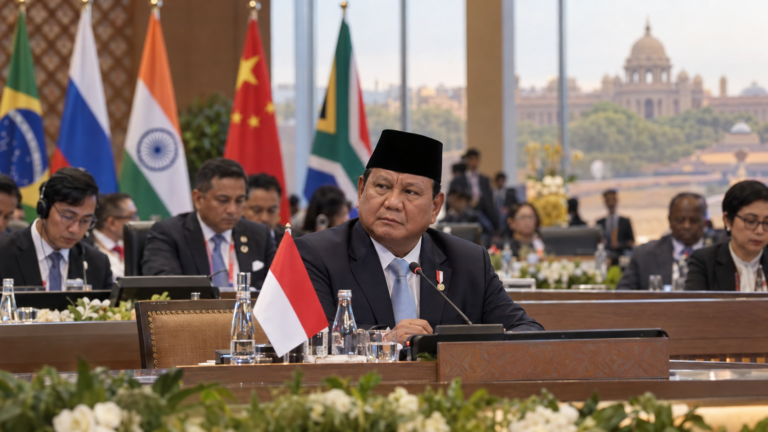
Indonesia’s international standing extends beyond its own neighborhood. As a G20 member, it hosted the group’s 2022 presidency and the Bali summit, using the platform to advocate for developing-economy priorities on debt, energy transition, and food security. That advocacy is backed by credibility: international lenders including the IMF and Asian Development Bank have repeatedly pointed to Indonesia’s fiscal discipline, keeping its budget deficit under the self-imposed 3 percent of GDP ceiling, as a model of stability among emerging economies, at a time when many peer nations are struggling with exactly that.
That combination of fiscal credibility and diplomatic consistency is why Indonesia is increasingly treated less as a regional player and more as a bridge between the developing and developed world.
Independence, Realized
None of this was guaranteed in 1945. A newly declared republic, facing a colonial power unwilling to let go and a world still redrawing its borders after a global war, had every reason to end up a pawn in someone else’s rivalry. Instead, the doctrine its founders chose, sovereignty without isolation, engagement without submission, has carried the country from the fight for independence to a seat at nearly every table that matters: ASEAN, the G20, and the peacekeeping missions that keep fragile peace intact around the world.
Eighty-one years on, Independence Day isn’t just a commemoration of the day Indonesia became free. It’s a reminder of what the country chose to do with that freedom, and the influence it continues to build, one partnership at a time.
About the Author