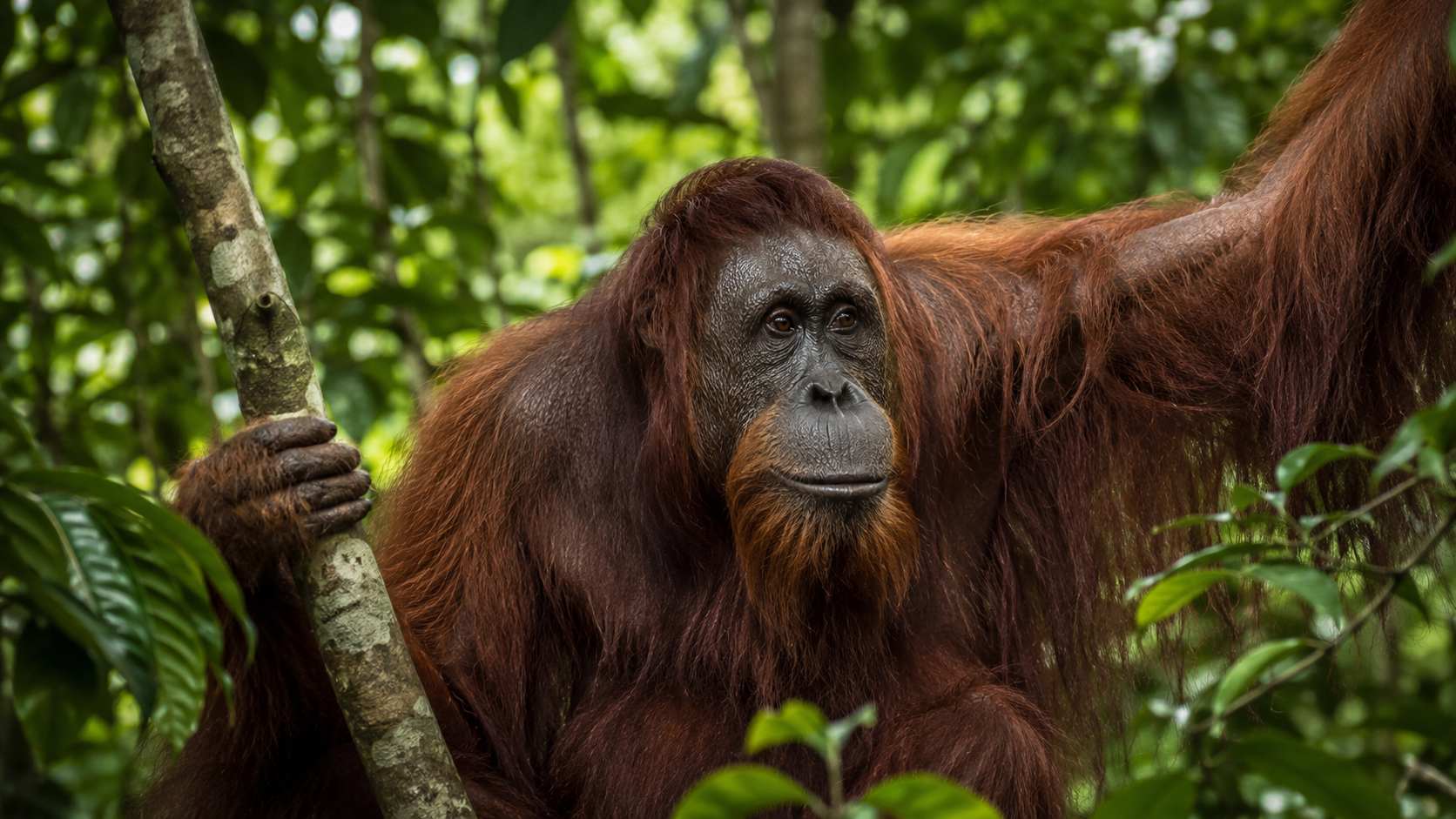
Sumatran orangutan
Indonesia is preparing a new 87,000-hectare conservation area in East Kalimantan, while new data from Sumatra shows how fragile orangutan protection remains.
An 87,000-Hectare Corridor in East Kalimantan
In July, the Ministry of Forestry said it was preparing an 87,000-hectare conservation area in East Kalimantan. The plan aims to strengthen orangutan habitat protection in the Keraitan Landscape.
Forestry Minister Raja Juli Antoni said on July 13 that the proposed conservation area had reached its final administrative stage. The ministry was preparing a letter of support and a ministerial decree to form a Working Group for Integrated Orangutan Conservation in the Keraitan Landscape.
The proposed area would function as a wildlife corridor. That matters because orangutans do not only need “forest” in a general sense. They need connected forest where populations can move, find food, and avoid becoming isolated in small blocks.
The plan also involves conservation organizations and companies holding business permits in the area. Many orangutan habitats overlap with working landscapes, not only national parks. A corridor will mean little if it exists on paper but fails on the ground.
Two Sumatran Orangutans Relocated in Aceh
The need for real habitat protection showed again in Aceh. On July 11, BKSDA Aceh said it had relocated two male Sumatran orangutans that became trapped in community plantation areas in Seuneubok Pusaka, Trumon Timur, South Aceh.
The two animals were found in separate locations. One was estimated to be about 30 years old and weighed around 40 to 50 kilograms. The other was estimated to be about 35 years old and weighed around 40 kilograms.
BKSDA Aceh said both were healthy and had no visible wounds. After a veterinary recommendation, the team released them into forest habitat far from plantations.
This was a successful intervention. But it also showed the same old problem: orangutans are still being pushed into human-use areas because their natural habitat keeps shrinking or breaking apart.
New Data Shows a Deeper Decline in Sumatran Orangutans
A recent population assessment gave the Aceh rescue a wider meaning. Researchers estimated that Sumatran orangutans declined by 19.5 percent over roughly a decade in comparable survey areas.
The study compared data from 2011 with field surveys from 2021 to 2023. In the same comparison area, the population fell from about 13,846 individuals to 11,146. That means around 2,700 Sumatran orangutans disappeared, or roughly 225 per year.
The broader range-wide estimate placed the Sumatran orangutan population at 11,694 individuals across eight metapopulations. The Tapanuli orangutan, which survives only in North Sumatra, was estimated at 716 individuals across three metapopulations.
Researchers also found that about 94,399 hectares of forest disappeared from Sumatran orangutan habitat between 2011 and 2023. Forest loss explained much of the decline, but not all of it. Hunting, illegal trade, and deaths linked to human-orangutan conflict also remain part of the picture.
About the Author