Naval Drill
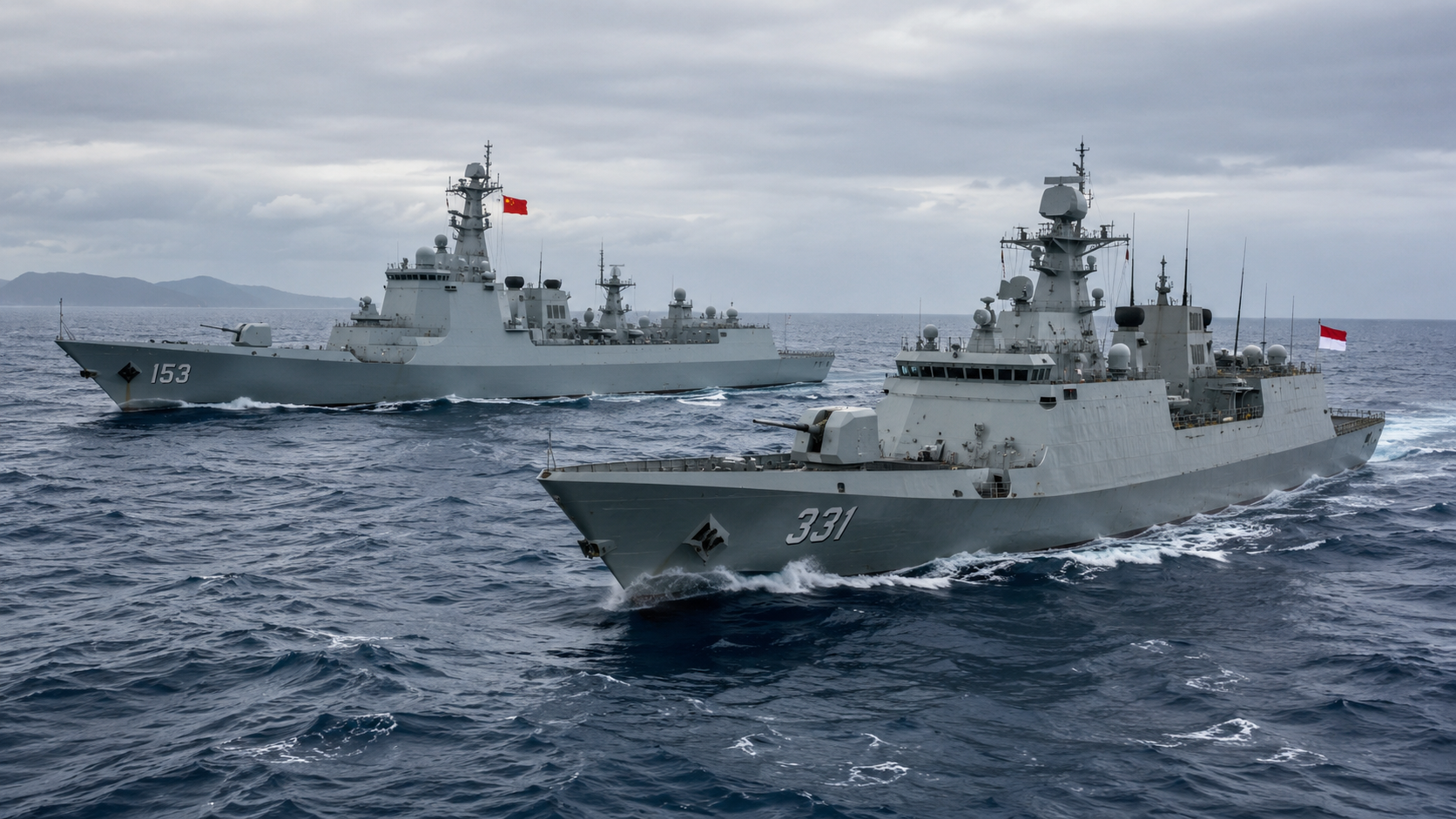
Indonesia is set to join a Chinese naval drill east of Taiwan in mid-August, placing Jakarta in an awkward position at an unusually tense moment. The drill may be limited militarily, but its location gives Beijing an opportunity to make its growing presence around Taiwan look increasingly normal.
Why the location is sensitive
China’s Defence Ministry describes the planned operation as a navigation exercise with an Indonesian Navy ship. Joint naval training itself is not unusual, but China rarely conducts exercises with foreign militaries near Taiwan.
Beijing claims democratic Taiwan as part of its territory and has never renounced the use of force to bring it under its control.
China has steadily increased military and coast guard activity around the island. Chinese coast guard ships also began operating east of Taiwan in June, an area Taipei says Beijing is trying to portray as falling under Chinese jurisdiction.
An Indonesian warship therefore gives Beijing something politically useful: the image of a major Southeast Asian country training alongside the Chinese navy in sensitive waters near Taiwan.
Han Kuang war games raise the stakes
Taiwan is currently holding its annual Han Kuang war games, designed to prepare the island for a possible Chinese attack. This year’s exercises include more than 20,000 reservists and scenarios involving disrupted communications, attacks on infrastructure and amphibious assaults.
Taiwan has also deliberately slowed mobile internet in parts of the island to simulate wartime disruption.
These exercises reflect growing concern in Taipei that China’s military pressure is becoming more frequent and that warning time before a possible conflict could shrink.
Taiwan condemns the drill
Taiwan’s Mainland Affairs Council called the planned exercise a military provocation and accused Beijing of trying to create a false impression that China exercises jurisdiction over waters east of Taiwan.
Taiwan’s Foreign Ministry has also asked Indonesia for clarification.
Taiwan’s military assessment was more measured about the immediate danger. Officials said the Indonesian vessel itself posed no direct military threat, but emphasized the geopolitical meaning of the exercise.
The episode is unlikely to cause a major crisis between Jakarta and Taipei, but it risks creating unnecessary friction. Taiwan is also home to hundreds of thousands of Indonesian migrant workers, giving the relationship real practical importance despite the absence of formal diplomatic ties.
The Indonesian Navy did not dispatch the ship specifically for the drill
According to Taiwan’s military intelligence, the Indonesian vessel was already returning from Japan and did not travel north specifically to join the Chinese exercise.
That detail is important. Indonesia does not appear to have deliberately dispatched a warship toward Taiwan to support Beijing.
But it also raises another question: if the drill was simply an opportunity that arose during the voyage home, why accept it in such a sensitive location?
Indonesia could have continued its journey without becoming part of a Chinese military activity that Beijing can use for political messaging.
Indonesia should not help normalize Chinese pressure
Indonesia follows the One China policy and officially recognizes Beijing rather than Taipei.
That does not mean Jakarta should support China’s pressure on Taiwan.
Taiwan is a self-governing democracy whose people should be able to determine their future peacefully, rather than face a settlement imposed through military coercion.
Indonesia has every reason to be cautious about helping Beijing make military activity around Taiwan appear ordinary or internationally accepted.
The contradiction at the heart of Indonesia-China ties
Beijing is an important trading and investment partner, but Chinese maritime claims have repeatedly clashed with Indonesian interests around the North Natuna Sea.
Indonesia rejects those claims where they overlap its exclusive economic zone, while Chinese coast guard vessels have repeatedly appeared in the area.
That is the contradiction at the heart of the relationship: China can be both an economic partner and a source of strategic pressure.
For that reason, Indonesia should avoid becoming overly dependent on Beijing or lending unnecessary support to Chinese geopolitical narratives elsewhere.
Indonesia’s natural place is among democracies
Indonesia does not need to choose between China and the United States. But it should recognize that its democratic system, concern for sovereignty and commitment to independence place it more naturally alongside countries that defend political self-determination than governments that threaten to change borders through force.
About the Author