
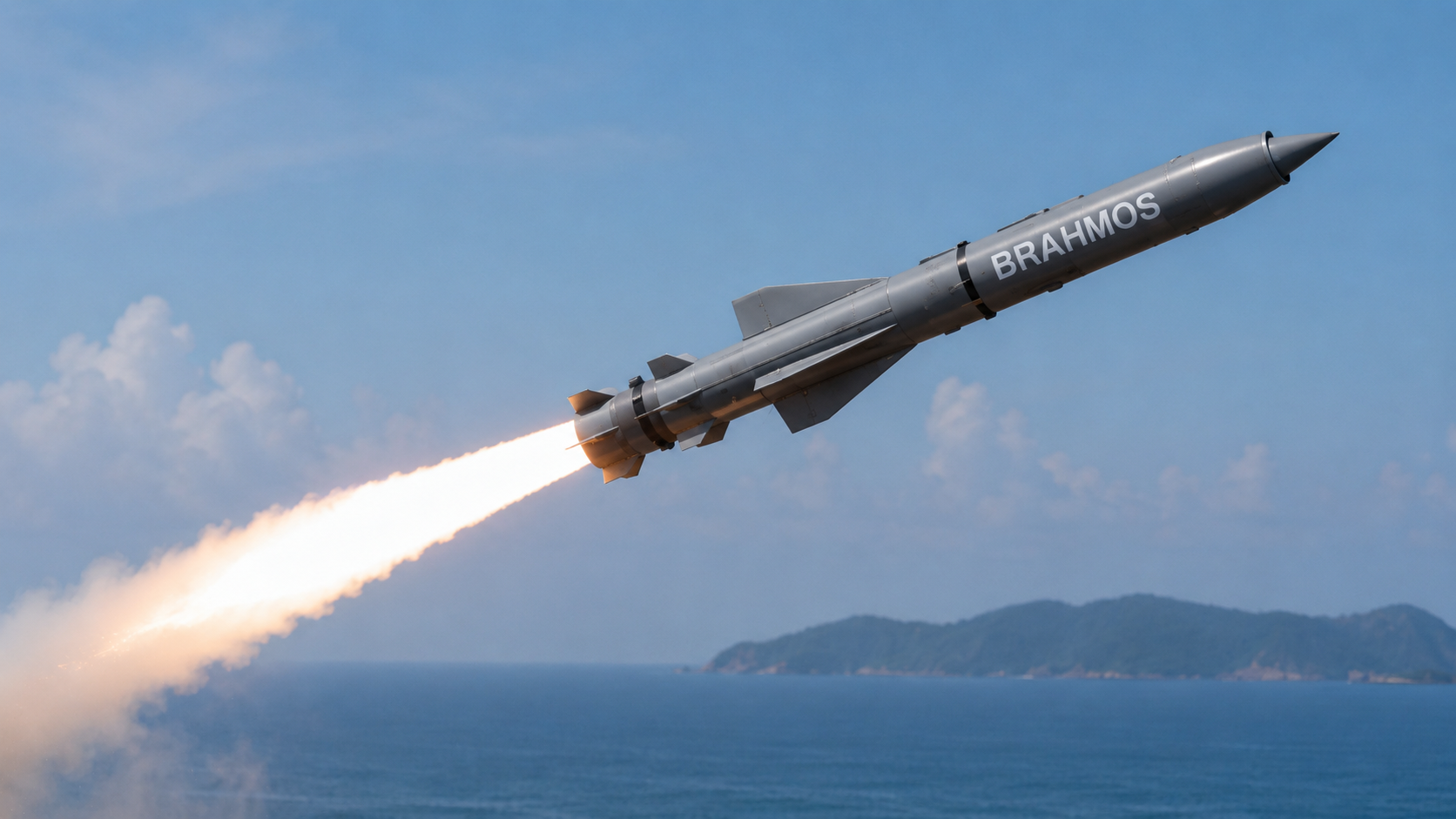
Brahmos Missile
Indonesia’s planned purchase of Indian missiles highlights a growing defence partnership between Jakarta and New Delhi, as both countries look to strengthen their strategic ties in the Indo-Pacific.
India-Indonesia missile deal signals deeper defence ties
India will supply Indonesia with the BrahMos cruise missile system and the Astra air-to-air missile. BrahMos is among the world’s fastest cruise missiles, and that reputation is part of why it has drawn attention across Southeast Asia.
Astra adds another layer. As a beyond-visual-range air-to-air missile, it could improve Indonesia’s air combat options if integrated with its fighter fleet.
The purchase also points to deeper India-Indonesia defence ties. India wants a larger role in Southeast Asian security, while Indonesia wants more options. Jakarta does not want to depend too heavily on any single major power.
India has also signed agreements to sell BrahMos missiles to Vietnam and the Philippines. Indonesia’s purchase therefore fits a broader pattern: countries facing pressure in or near the South China Sea are looking for stronger maritime deterrence, and India is becoming one of the suppliers they are willing to trust.
For Indonesia, India is a useful partner: large, democratic, maritime-minded and increasingly active in the Indo-Pacific.
China’s Pacific missile test adds to the timing
The India-Indonesia missile deal was reported on July 7, just one day after China conducted a missile test from a nuclear-powered submarine into the Pacific.
China said the July 6 launch used a dummy warhead. Still, the test alarmed several regional governments, including Japan, Australia, New Zealand and Taiwan. For them, the message was not only about one missile. It was about China’s growing ability to project military power farther into the Pacific.
A tenser Indo-Pacific from Natuna to Taiwan
The Indonesia-India deal sits inside a wider regional picture.
In the West Philippine Sea, China continues to pressure the Philippines through coast guard patrols, maritime claims and activities around disputed features. Around Taiwan, Beijing has increased military and coast guard pressure. Around Japan, tensions continue near the Senkaku Islands, which China calls Diaoyu.
Although Jakarta is not a South China Sea claimant like the Philippines or Vietnam, Chinese vessels have still entered or contested waters within Indonesia’s exclusive economic zone, near the Natuna Islands.
Indonesia prepares militarily without joining a bloc
Indonesia still values non-alignment, but it is also preparing militarily.
Indonesia’s participation in RIMPAC 2026 fits this picture. The U.S.-hosted exercise runs around the Hawaiian Islands from June 24 to July 31 and brings together dozens of countries, ships, submarines, aircraft and more than 25,000 personnel. Its training areas include missile proficiency, anti-submarine warfare, air defence, counter-piracy, mine clearance and humanitarian response.
Modern maritime security is not only about buying weapons. It is also about learning how to operate with partners in contested waters.
Recent exercises with Singapore tell the same story closer to home. In July, Singapore’s commandos and Indonesia’s Kopassus concluded Exercise Chandrapura, with urban operations, close-quarter battle training, fast-roping, rappelling and airborne drills.
Earlier this year, the Singapore and Indonesian navies also held Joint Minex Pandu in Singapore and waters off Bintan, focused on mine-countermeasure and clearance-diving operations.
About the Author

1 thought on “The India-Indonesia missile deal and the rising Indo-Pacific tensions”
Comments are closed.