Artemis II Mission
The return of astronauts from Artemis II in mid-April 2026 marks a turning point in space exploration. For the first time in over 50 years, humans traveled to the Moon’s vicinity and back. It is a technical milestone, but also a strategic one. As the global space race picks up pace, the question is where countries like Indonesia fit.
Artemis II: A Return to Deep Space
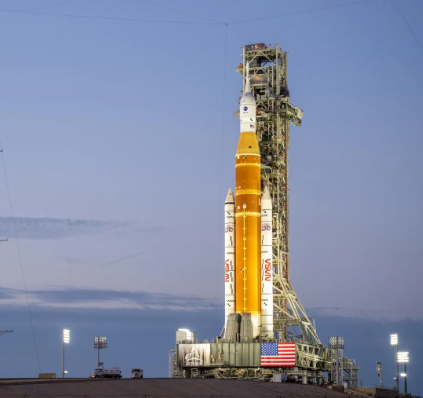
Artemis II is part of the NASA Artemis program, a long-term effort led by NASA to return humans to the Moon and build a sustained presence there, with the longer-term goal of missions to Mars. Launched on April 1, 2026, Artemis II is the program’s first crewed flight, following the uncrewed Artemis I test in 2022.
The mission sent four astronauts on a 10-day journey around the far side of the Moon before returning safely to Earth. It pushed human spaceflight further than at any time since the Apollo missions of the 1960s and 1970s. The crew traveled over 250,000 miles from Earth and tested the Orion capsule under extreme conditions, including re-entry at more than 30 times the speed of sound.
NASA plans to use the same system for future missions that aim to land astronauts on the Moon later this decade.
A New Space Race
This progress comes amid a changing global landscape. The United States is advancing Artemis with international partners, while China is targeting its own crewed lunar landing around 2030. The result is a more complex competition than in the past.
Today’s space race is not just about reaching the Moon. It is about building infrastructure: orbital systems, communication networks, and future access to resources. Private companies now play a central role, working alongside governments.
Indonesia’s Position in The Space Race
Indonesia’s role in the space race remains practical: the creation of the National Research and Innovation Agency (BRIN) brought together the country’s research efforts, including space activities.
The focus is clear: satellites, earth observation, and communications. For an archipelago, these systems are essential. They support connectivity and disaster response across thousands of islands.
But this approach has limits: Indonesia still depends heavily on foreign technology and services. Without stronger domestic capacity, that dependence will continue.
The Equatorial Advantage: Biak
Indonesia has a strategic asset in the space race: it’s geography. Launching rockets near the equator provides a natural efficiency boost, allowing satellites to reach orbit with less fuel. Few countries can offer this advantage at scale.
Biak Island in Papua has long been discussed as a potential spaceport location, attracting periodic interest from international partners. Yet despite years of proposals, no major launch facility has been realized.
This gap highlights a broader pattern: Indonesia possesses clear structural advantages, but struggles with execution. A functioning equatorial launch site could position the country as a valuable partner in the global launch market.
About the Author