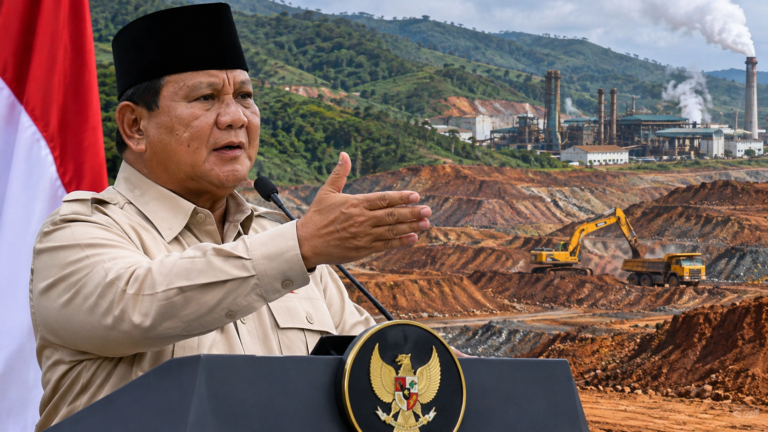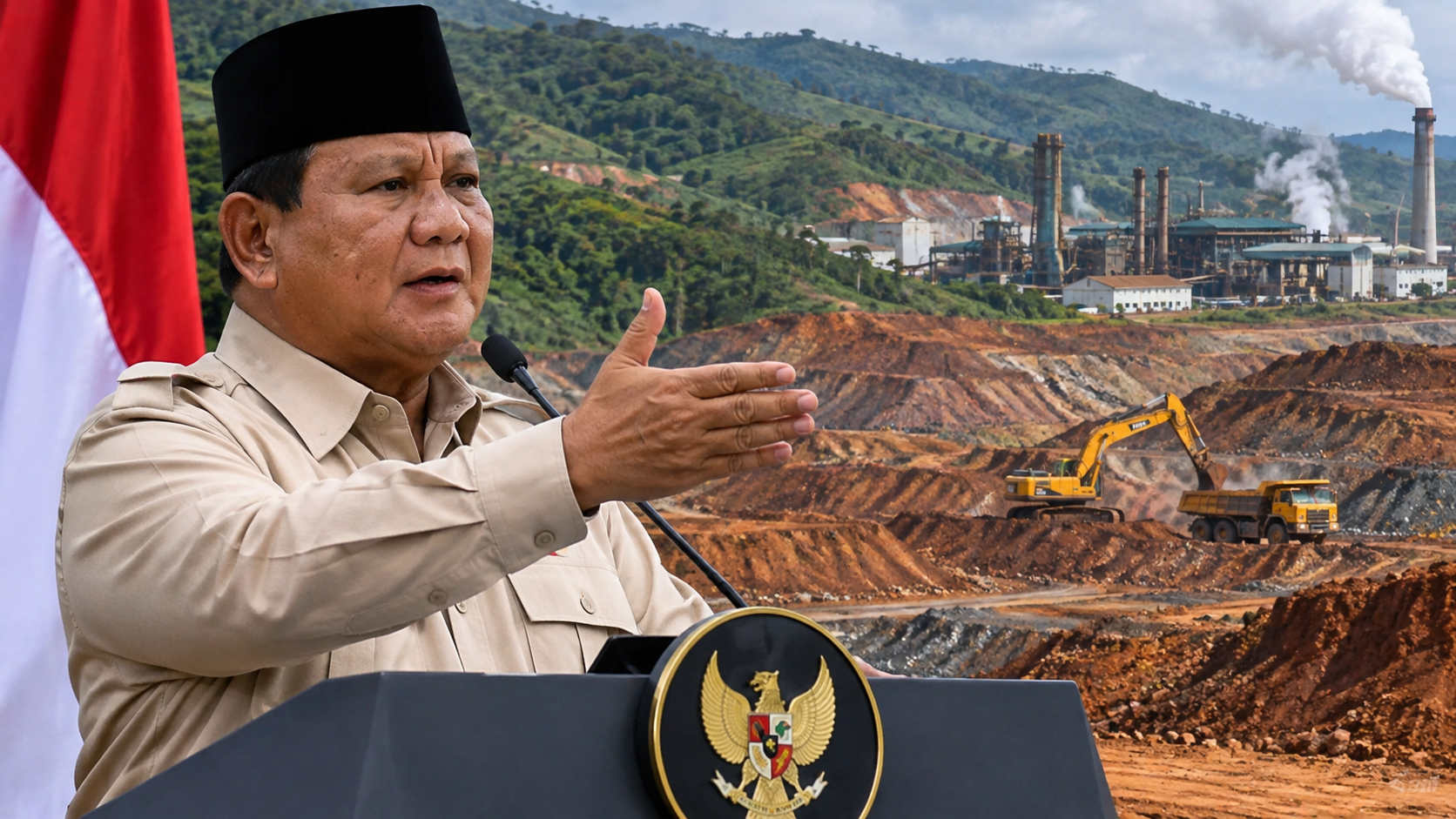
President Prabowo Subianto has called for at least 70% of the benefits from Indonesia’s mining permits to go to the state, a significant proposal that could strengthen the country’s economic sovereignty. Speaking in Palu, Central Sulawesi, on November 14, he also raised the possibility of government-controlled ownership stakes in mining companies.
China’s dominant role in Indonesia’s nickel industry
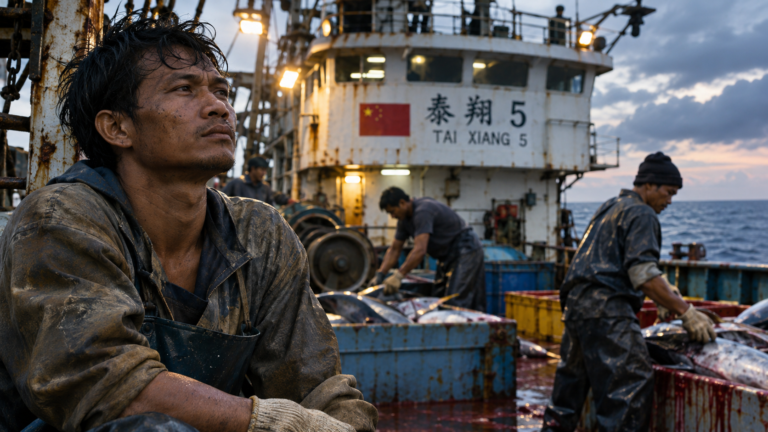
Chinese investment has helped transform the country into a global nickel powerhouse, but it has also created substantial economic dependence. According to the International Energy Agency (IEA), approximately 75% of Indonesia’s nickel refining capacity is linked to Chinese investment. The OECD also estimates that Indonesian companies control less than 10% of nickel production, compared with roughly 40% under Chinese-majority ownership.
Prabowo’s initiative offers an opportunity to address this imbalance and ensure that more of Indonesia’s natural wealth contributes to national development.
Prabowo wants Indonesians to receive more mining profits
Addressing Muhammadiyah members, Prabowo instructed Energy and Mineral Resources Minister Bahlil Lahadalia to ensure that the state receives the majority of benefits generated by mining permits. He emphasized that Indonesia remains open to foreign investment. Investors should be able to recover their capital, but the Indonesian people should ultimately receive most of the profits.
Prabowo also called for mineral exports to pass through a single government-designated channel, intended to prevent companies from underreporting shipments and depriving the state of revenue. His argument draws on Article 33 of Indonesia’s Constitution, which requires natural resources to be managed for the people’s prosperity.
However, important details remain unresolved. Earlier in 2026, officials discussed a revenue-sharing arrangement that would allocate 70% of mining output to the government and 30% to operators. Energy Minister Bahlil said in June that the proposal had been dropped.
It is not yet clear whether Prabowo’s latest announcement revives that arrangement or introduces a different mechanism involving royalties, profits or state ownership. The distinction matters because these approaches have very different consequences for mining companies and government revenue.
The risks of Indonesia’s overdependence on China
Indonesia’s nickel expansion has delivered substantial industrial growth, but dependence on Chinese financing, processing technology and export markets creates vulnerabilities.
The IEA estimates that as much as 98% of nickel processed in Indonesia is exported to China. Such concentration exposes Indonesian producers to changes in Chinese demand, investment decisions and international trade restrictions. Strategically, excessive reliance on one foreign partner can also limit a country’s economic flexibility.
Environmental and ethical concerns add another dimension
Nickel mining has contributed to deforestation in Sulawesi and Maluku, while coal-powered smelters generate substantial emissions and pollution. These problems demonstrate the environmental costs of poorly regulated resource exploitation.
There are ethical concerns as well. In March 2026, UN human rights experts raised allegations of serious labor exploitation, potentially amounting to forced labor, at Chinese-linked PT Huadi Nickel Alloy Indonesia.
These allegations do not implicate every Chinese investor. However, they reinforce the importance of independent oversight and enforceable labor protections. Greater Indonesian control could provide more opportunities to address these problems, provided the government strengthens regulation alongside ownership.
How greater mining revenue could benefit Indonesia
The potential advantages extend well beyond reducing foreign influence. A larger public share of mining profits could help finance roads, ports, electricity networks and public services. It could also support universities, technical education and research, allowing Indonesian businesses to develop more advanced industrial capabilities.
For mineral-producing regions such as Central Sulawesi and North Maluku, the benefits could be particularly significant. Communities that experience pollution, environmental degradation and industrial disruption should also receive a fair share of the wealth generated locally.
Additional government revenue could support environmental restoration, stronger workplace inspections and investments in cleaner processing technologies.
Greater state participation might also encourage Indonesian companies to move beyond mineral extraction into higher-value manufacturing.
About the Author