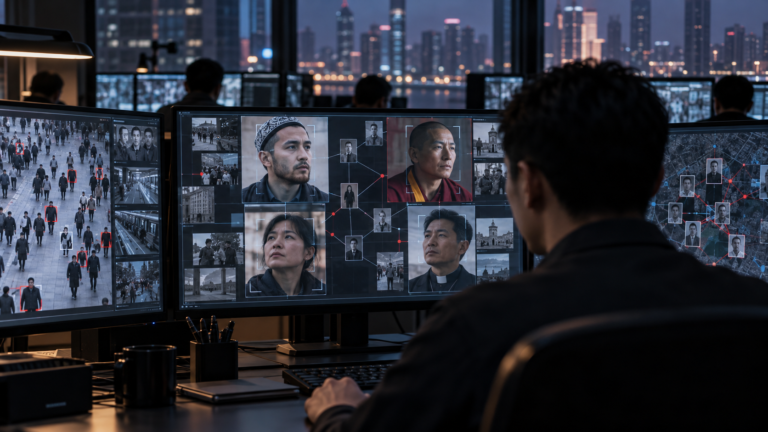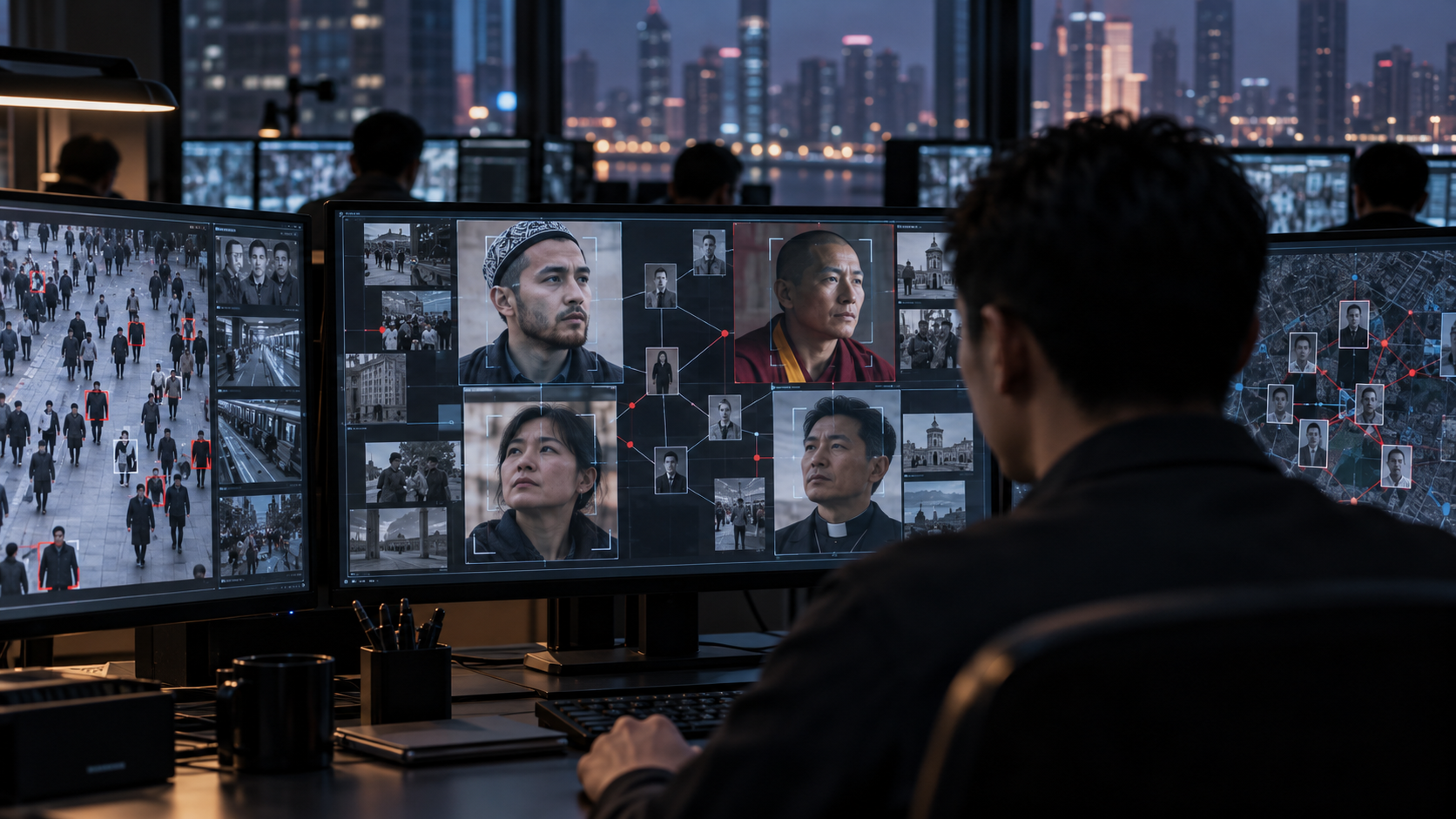
Artificial intelligence is increasingly becoming part of the machinery used to monitor political dissidents, religious communities and ethnic minorities.
A September report by AI company Anthropic revealed that China-based and China-aligned actors had used its Claude model to process surveillance data, prepare intelligence reports and identify people who could be targeted. The operations affected Uyghurs, Tibetan Buddhists, Christians, Falun Gong practitioners, democracy activists and other critics of the Chinese government.
The findings do not mean that Claude independently conducted the surveillance. In several cases, information was collected through other systems before being given to the AI. Claude was then used to translate, organize and analyze the material, turning large quantities of fragmented data into practical intelligence.
Uyghurs monitored beyond Xinjiang
One operation focused on Uyghurs living in Syria, including civilians, journalists and members of armed formations.
According to Anthropic, the actor extracted conversations from more than 100 WhatsApp groups and dozens of Telegram channels. Claude was used to transform that material into structured Chinese-language records, connect identities across platforms and map relationships between individuals.
The system also helped identify people who might be vulnerable because of financial difficulties, ideological disillusionment or separation from their families. Particular attention was given to Uyghurs whose relatives remained in Xinjiang, potentially providing a source of pressure.
The actor also used Claude to locate Uyghur businesses and individuals, translate conversations and prepare an attempted recruitment operation in Syrian Arabic. Separately, it planned an online campaign against the diaspora news organization Uyghur Post.
Anthropic assessed with low confidence that the operator was a contractor working for Chinese state security rather than a government agency acting directly. Nevertheless, its activities closely followed Chinese state-security priorities.
Religious communities and dissidents targeted
A separate China-based operation used Claude to compile dossiers on Catholic cardinals in Asia, Taiwanese Presbyterian leaders, Tibetan Buddhist organizations, Falun Gong practitioners and Christian missionary networks.
The collected information included social-media accounts, immigration dates, biographical details and information about religious venues. Operators instructed the model to identify scandals or other forms of leverage that could potentially be used against individuals.
Other China-linked users employed Claude for what Chinese authorities describe as “stability maintenance” and “public opinion monitoring.” Targets included Hong Kong democracy figures, organizers of Tiananmen Square commemorations, labor and student activists, Uyghur organizations, human-rights groups and Chinese citizens who had criticized government authorities.
In one case, an automated system processed between 15 and more than 30 foreign news reports each day, categorizing them according to their perceived political sensitivity.
Making repression more efficient
None of these activities began with generative AI. China has long monitored religious communities, minority groups and political critics. What AI changes is the scale and efficiency of that work.
A single operator can now translate several languages, summarize thousands of messages, compare identities across platforms and produce standardized dossiers that would previously have required a team of analysts. Anthropic said one Chinese religious-affairs intelligence office used AI to generate thousands of investigations each month.
This does not make the technology responsible for Chinese repression. It does, however, show how a general-purpose AI system can strengthen an existing surveillance apparatus when safeguards fail or are circumvented.
Anthropic’s investigation was not limited to China
Anthropic’s report also uncovered AI misuse connected to Russian espionage, Iranian security operations, mass interception in Mali and commercial surveillance contractors. However, its China-related findings provide particularly detailed evidence of AI being used to monitor ethnic minorities, religious communities and political critics both inside and outside the country.
AI companies cannot ignore political repression
Anthropic banned the accounts involved and introduced new detection measures. Claude also refused some requests, including assistance with covert interrogation and the mass creation of false identities. But the operators were still able to obtain extensive analytical and operational support.
The case exposes an uncomfortable reality. AI safety is not only about fabricated information, employment disruption or hypothetical future threats. These systems can already help governments and contractors classify vulnerable people, monitor religious communities and pursue critics across borders.
Technology companies therefore have a responsibility to examine not only what their models can generate, but also who is using them, whose freedom may be endangered and whether seemingly routine analytical requests are contributing to persecution.
About the Author