China’s new ethnic-unity law claims authority beyond its borders, raising concerns for Uyghur communities and Muslim organizations that speak about Xinjiang.
A law reshaping minority identity
China’s Law on Promoting Ethnic Unity and Progress was passed on March 12 and took effect on July 1, 2026. It promotes a shared national identity among China’s officially recognized ethnic groups while reinforcing Mandarin-language education, Communist Party leadership and the “Sinicization” of religion.
Critics fear that this approach treats Uyghur, Tibetan, Mongolian and other minority identities as acceptable only when subordinated to a Party-defined Chinese identity. The law therefore raises concerns not only about equality, but also about the future of minority languages, religious practices and distinct cultural traditions.
Article 63 extends the law beyond China
A country’s laws normally apply within its own borders. China’s new ethnic-unity law takes a broader view. It says organizations and individuals abroad can be held legally responsible for conduct Beijing considers harmful to ethnic unity.
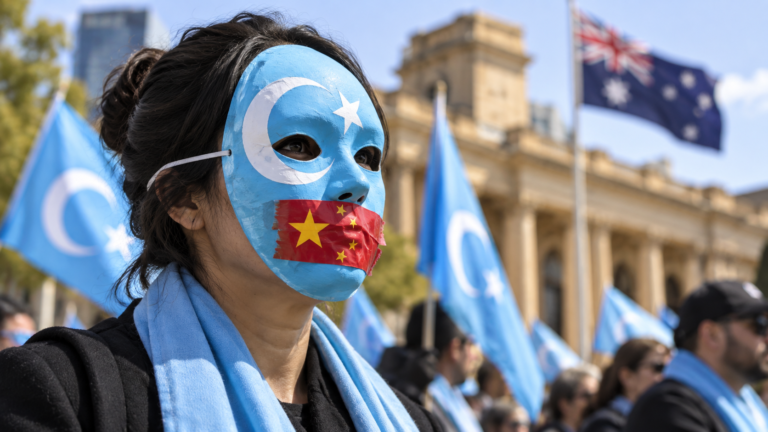
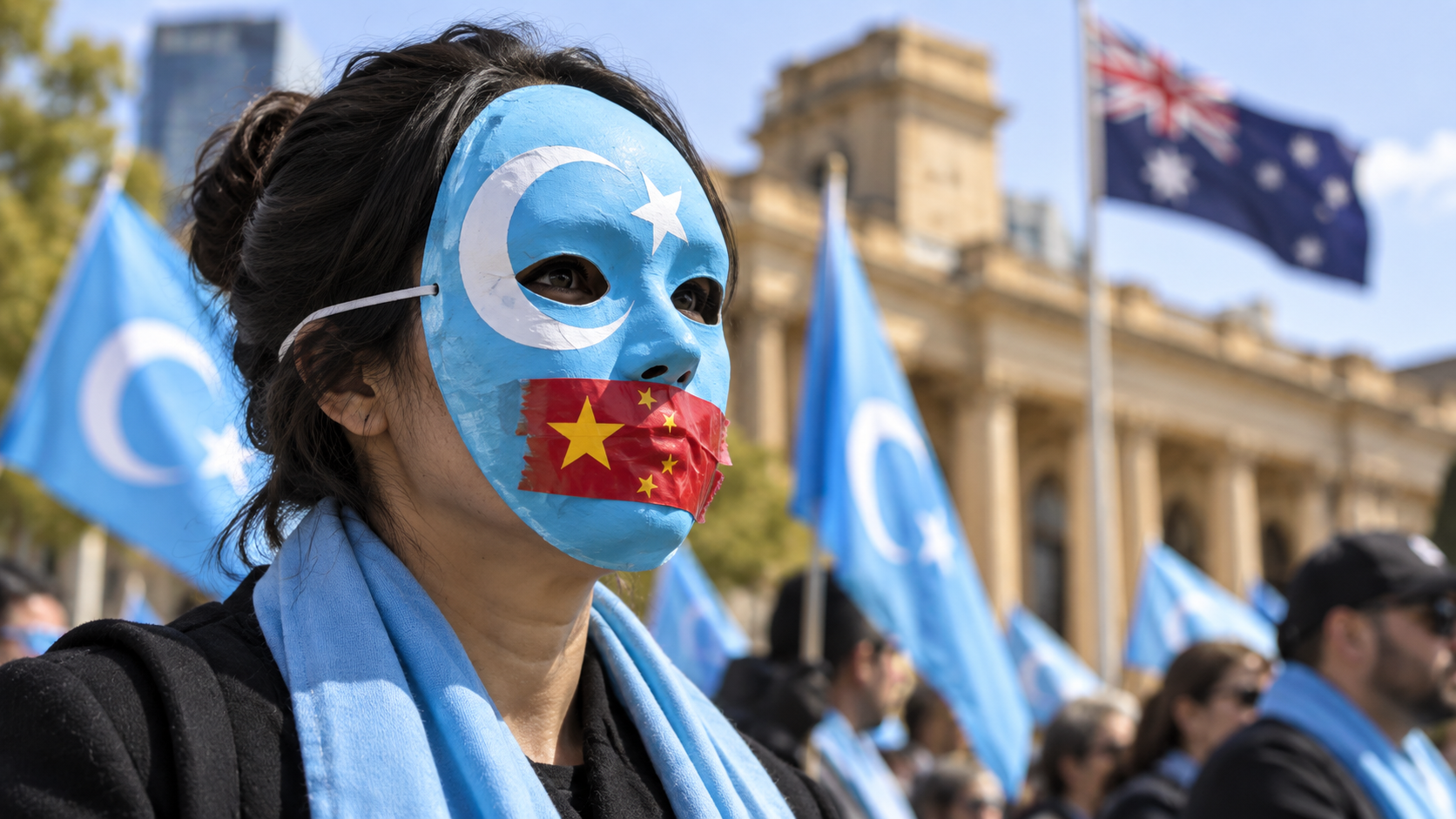
That provision is especially concerning for Uyghurs overseas. Many remain connected to relatives inside Xinjiang, creating opportunities for Chinese authorities to pressure people who would otherwise be protected by the laws of their adopted countries.
Article 63 is the law’s provision addressing conduct outside Chinese territory. It states that organizations and individuals abroad can be held legally responsible for activities directed at China that undermine ethnic unity or create ethnic division.
This gives the law a potentially international reach. The provision does not clearly define which overseas activities might cross that line or explain how China would seek to enforce liability in other countries. Broad terms such as “ethnic division” could potentially be applied to activism, academic research or peaceful criticism that Beijing associates with separatism.
China rejects this interpretation
Vice Justice Minister Hu Weilie has argued that Article 63 is consistent with international practice and necessary to protect national unity, territorial integrity and social stability. He has also said that it will not interfere with normal academic, commercial or cultural exchanges.
Pressure on Uyghurs in Australia
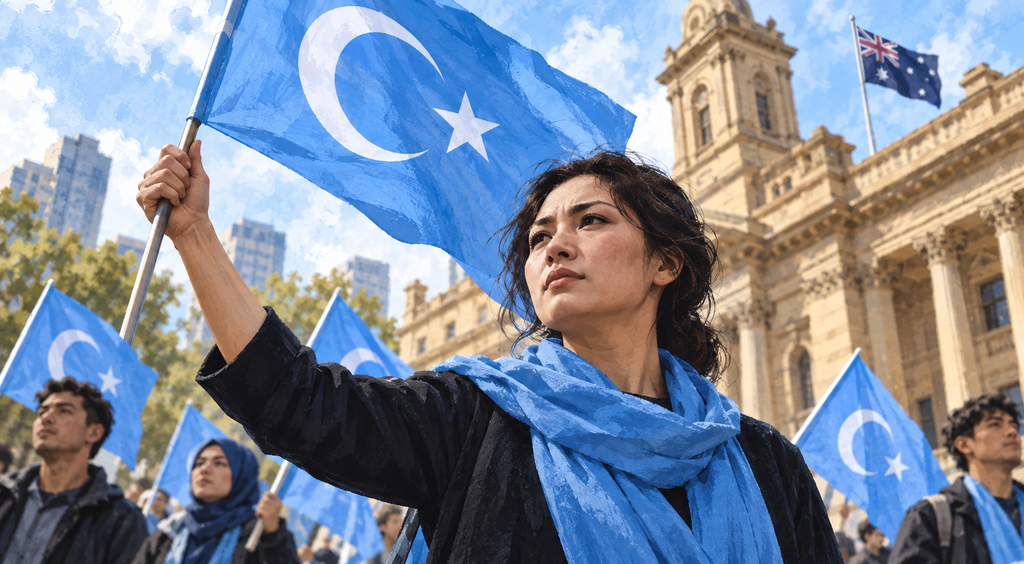
A Human Rights Watch investigation published in August described pressure allegedly faced by Uyghur Australian citizens and permanent residents visiting Xinjiang.
Human Rights Watch interviewed 11 people in Sydney, Melbourne and Adelaide. Several recent visitors said their families had to obtain official approval before they arrived. Some were reportedly required to stay in government-designated hotels, disclose their daily activities and accept close surveillance.
One visitor said he was interrogated more than a dozen times, including once for over seven hours. He alleged that police asked for the addresses and telephone numbers of prominent Uyghur activists in Australia and pressed him to monitor community events after returning home.
Others said authorities questioned them about Uyghur-language schools in Australia. Such schools help diaspora families preserve a language increasingly marginalized in Xinjiang. Scrutiny of these institutions suggests that the pressure concerns not only political activism, but also the survival of Uyghur identity abroad.
The Chinese government had not responded to Human Rights Watch’s findings when the report was published. Australia’s Department of Home Affairs said foreign interference and transnational repression were serious matters and that preventing people from exercising their rights in Australia was unacceptable.
The law formalizes an existing danger
These alleged practices began before the ethnic-unity law took effect. It would therefore be inaccurate to suggest that Article 63 created China’s transnational pressure on Uyghur communities.
However, the provision may give existing practices an additional legal justification. Beijing does not need to secure a conviction abroad for Article 63 to have an effect. The possibility of investigation, retaliation or consequences for relatives in China may be enough to encourage self-censorship. Such fears can discourage Uyghurs abroad from joining demonstrations, speaking to journalists or sending their children to Uyghur-language schools.
Family separation makes the pressure particularly effective
Uyghurs living in democratic countries may possess foreign citizenship and legal protections, while their parents, children or siblings remain inside Xinjiang. Peaceful criticism abroad can therefore carry consequences for people who never left China.
International concern is growing
In a September 8 parliamentary response, the British government said the law could restrict minority rights and undermine Tibetan language and culture. It also confirmed that it had raised concerns with Chinese officials about the law’s possible extraterritorial application.
There has not yet been a well-documented prosecution brought exclusively under Article 63. The immediate danger is intimidation and self-censorship rather than a visible series of overseas court cases.
Uyghur rights should be discussed without fear
Indonesian Muslim organizations, researchers and journalists should pay attention. Some maintain relationships with Chinese institutions or participate in official visits to China. They should be able to investigate conditions in Xinjiang, meet Uyghur representatives and discuss religious freedom without wondering whether peaceful criticism could be characterized as hostility toward China.
About the Author