
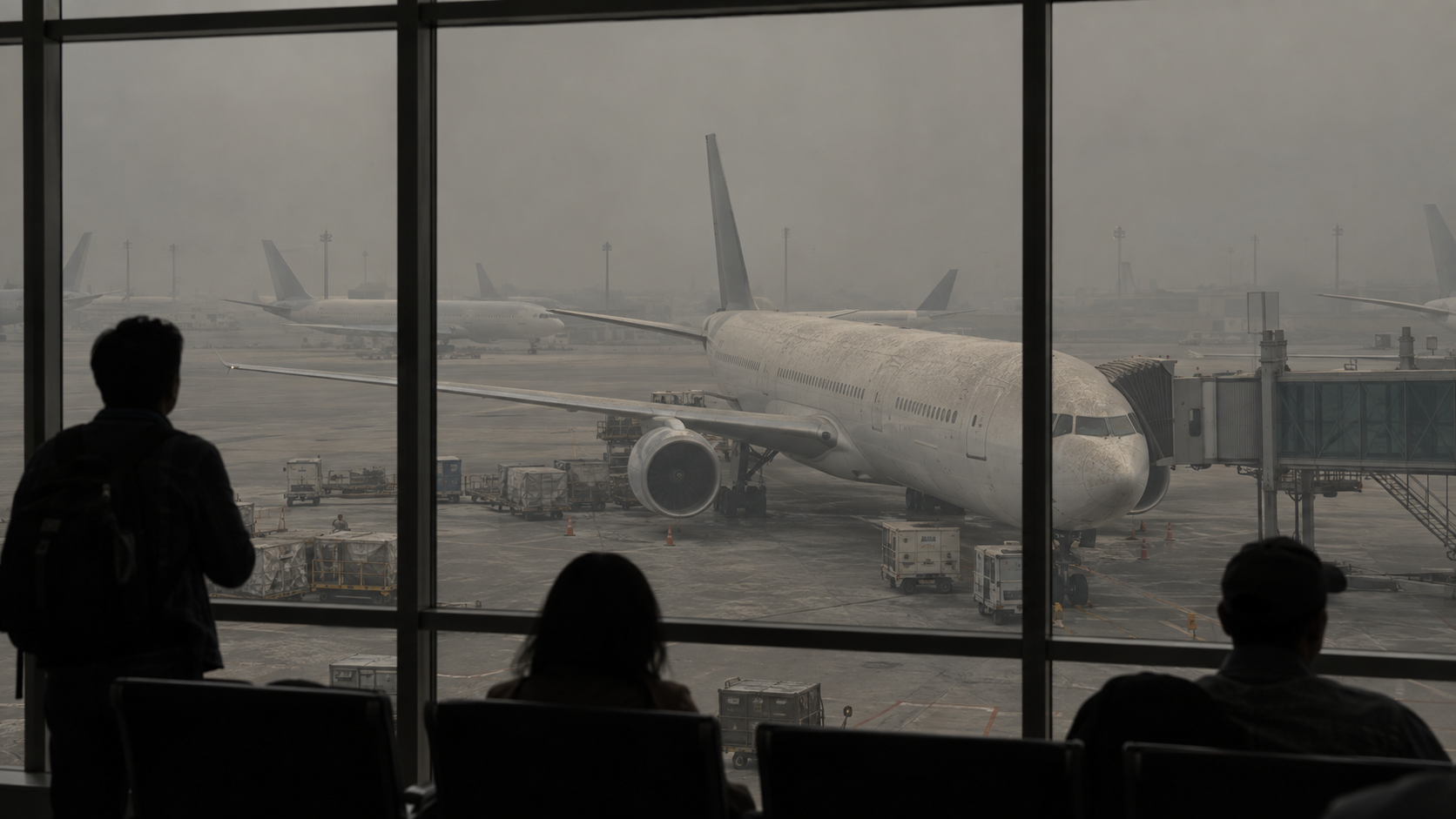
The Anak Krakatau eruption began late on September 4 and intensified over the weekend. A continuous eruptive phase lasted about 25 hours, producing lava fountains, loud explosions and columns of ash. Although that phase ended on Sunday, September 6, the volcano remained active on Monday and produced several smaller eruptions the following morning.
Volcanic ash forced eight airports to suspend operations, disrupting 2,961 domestic and international flights and affecting around 341,000 passengers. All affected airports had reopened by late Tuesday morning after tests found their airspace and runways clear of ash.
Why the Anak Krakatau eruption posed a danger to flights
The ash spread far beyond the uninhabited volcanic island in the Sunda Strait. At its greatest extent, plumes reached up to 50,000 feet and drifted across Banten, Jakarta, West Java and parts of Sumatra. BMKG detected ash in the airspace around several airports, while changing winds made its direction difficult to predict.
Volcanic ash contains fine particles of rock and glass that can damage aircraft engines, block sensors and scratch cockpit windows. Inside a jet engine, the particles can melt and stick to turbine components, potentially causing a loss of power. Ash on runways can also reduce visibility and affect braking. Once it was detected around Jakarta and other airports, suspending flights was the only safe option. Authorities kept the airports closed until tests confirmed that their runways and surrounding airspace were clear.
Eight airport closures disrupted nearly 3,000 flights
Eight airports suspended operations at different points. Among them were Soekarno-Hatta and Halim Perdanakusuma in the Jakarta area, Husein Sastranegara in Bandung and two airports in Lampung.
The government’s final count covered 2,339 domestic flights and 622 international services. Around 341,000 passengers experienced cancellations, delays or diversions.
Flights resumed after two days of disruption
Ash had to clear from both the airspace and airport facilities before flights could resume. Authorities also needed to inspect aircraft that had remained on the ground. At Soekarno-Hatta alone, 178 planes required airworthiness checks after the closure.
BMKG said tests conducted by 6am on September 8 found no volcanic ash at the eight affected airports. Jakarta’s two airports and several regional facilities reopened during the early morning. The remaining affected airports resumed operations later that morning.
Disruption spread across the transport network
The airport closures increased demand for trains, ferries and flights from unaffected cities. Tickets sold out on some rail routes, while airfares rose as passengers searched for alternatives. The government extended operating hours at alternative airports and provided ground transport for some diverted travellers.
Airlines also faced higher fuel, parking and staffing costs. The Indonesia National Air Carriers Association estimated potential losses of up to Rp19 billion per day. Some delays continued after airports reopened because aircraft and crews had been displaced from their normal schedules.
About the Author


1 thought on “Anak Krakatau eruption disrupted 2,961 flights and affected 341,000 passengers”
Comments are closed.