El Nino Preparations
Indonesia’s El Niño preparations are moving from policy briefings to rice fields, reservoirs, and fire-prone land. In April, the discussion centered on warnings and stockpiles. By June, much of the country has entered the dry-season window, and farmers are already adjusting planting schedules.
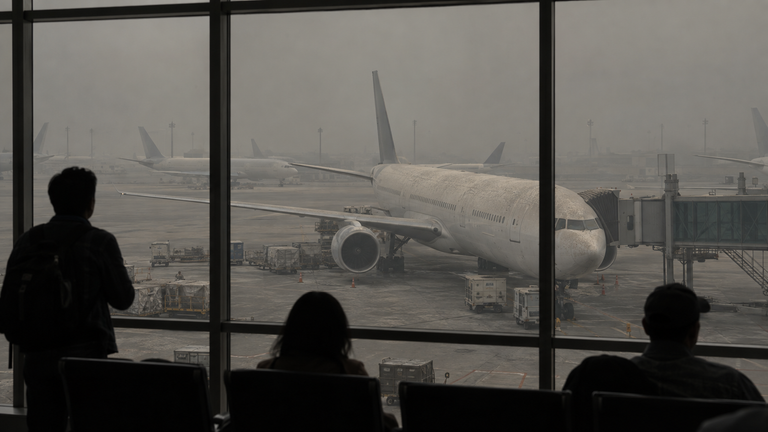
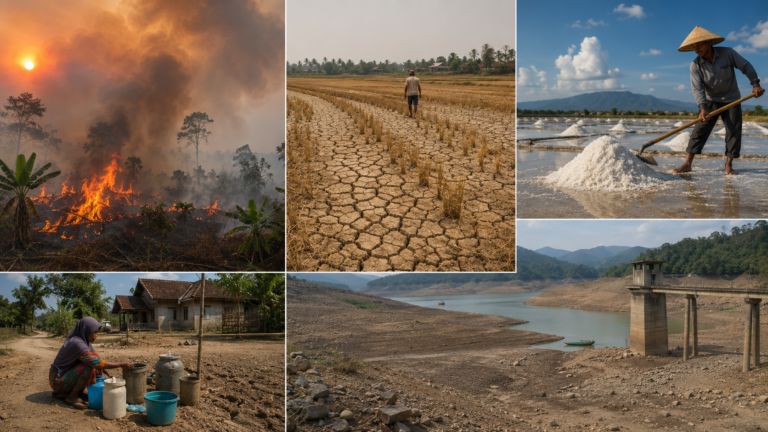
El Niño is not only a weather headline. For Indonesia, it can mean weaker rainfall, hotter days, lower water availability, and higher pressure on rice production. The latest international warnings have also sharpened the timeline. The World Meteorological Organization now sees a high chance of El Niño developing during June to August, with an even stronger likelihood that it continues later in the year.
Farmers Are Already Adapting
The clearest sign of change is coming from the fields. Indonesian authorities have urged farmers to replant faster after harvest, reducing the usual gap between harvest and planting. The government is also promoting drought-resistant rice varieties and better irrigation use.
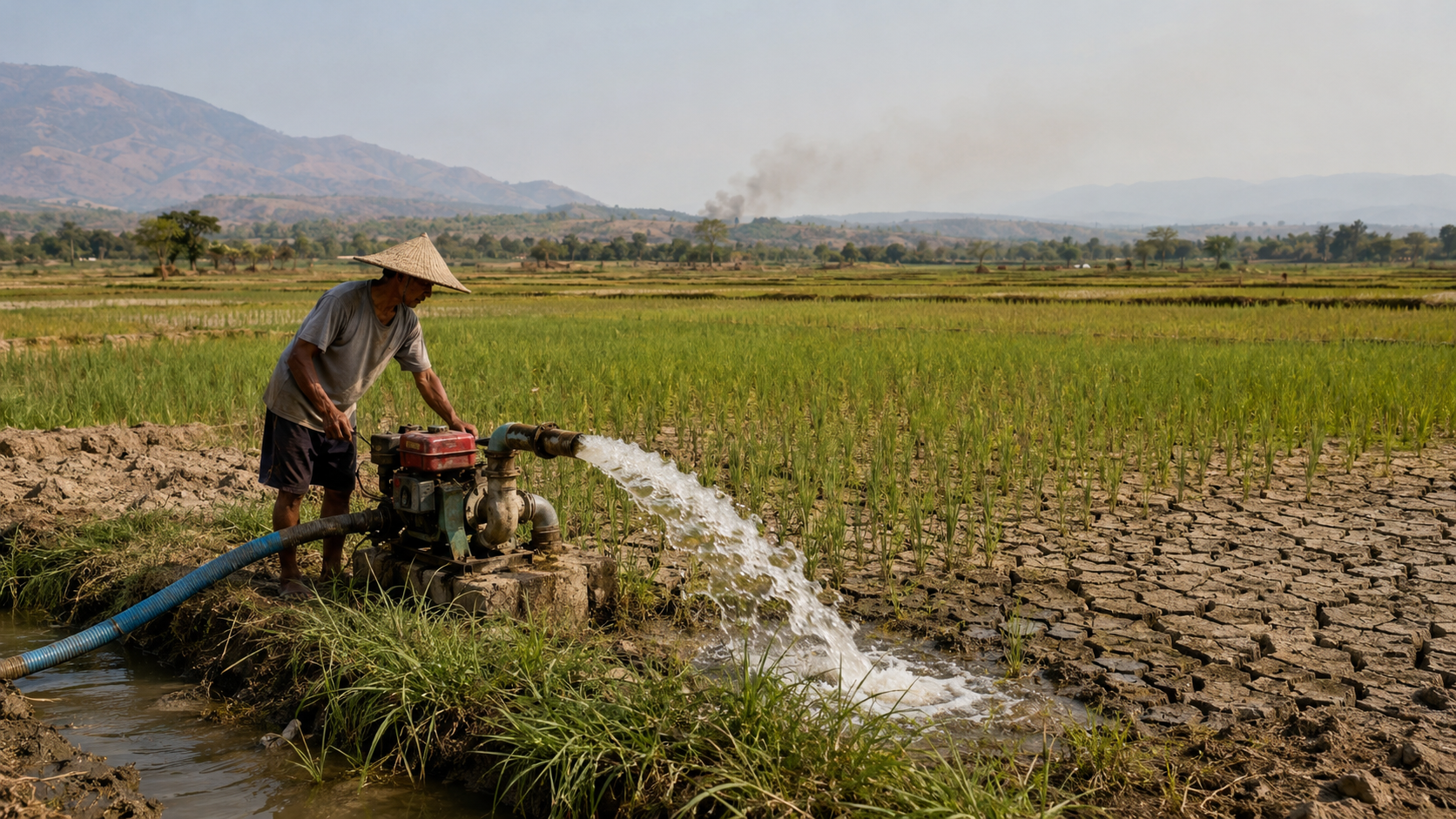
In West Java, some farmers are already preparing pumps and changing their crop choices.Farmers in Cirebon are weighing whether to skip a third rice harvest or switch to crops such as mung beans if water becomes too scarce. That detail matters. It shows the dry-season test has begun before any national food shortage appears.
The Agriculture Ministry has also pushed planting programs in key producing areas. In Lamongan, East Java, officials recently accelerated a 750-hectare rice planting program to protect production momentum. The government wants to keep cropping cycles moving even as rainfall becomes less reliable.
Rice Reserves Give Indonesia a Buffer
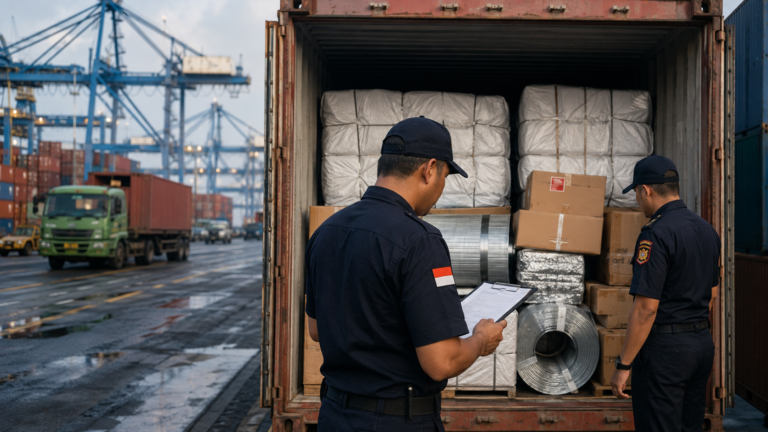
Food security remains the strongest part of Indonesia’s preparation. Bulog, the state logistics agency, reported record rice stocks of 5.36 million tons in late May, with storage capacity expanded to 6.2 million tons. Officials also said Bulog had absorbed about 2.8 million tons of rice from its 2026 procurement target.
That gives Indonesia a cushion against price spikes. It does not remove the drought risk. Rice stocks can stabilize markets, but they cannot replace lost rainfall in farming areas. If irrigation weakens or planting areas shrink, the government may still face local supply stress even with strong national reserves.
Bapanas, the National Food Agency, has also projected surpluses in key commodities. That message is useful, especially after the anxiety caused by past El Niño years. Still, food security is not only about national totals. Distribution between surplus and deficit areas will matter if dry conditions hit unevenly.
Water Pumps and Fire Warnings
The government’s water-pump strategy is now central. Earlier this year, officials said more than 80,000 pumps had been distributed in 2025, with tens of thousands more planned. The real issue is not the number of pumps. It is whether water, fuel, coordination, and maintenance reach the right fields at the right time.
Fire risk is the other test. BMKG has warned that the 2026 dry season could intensify, especially in the third quarter. Hotspot activity has already drawn attention, with fire-prone provinces in Sumatra and Kalimantan facing the familiar threat of forest and peatland fires.
A better-prepared Indonesia should be able to avoid a repeat of 2015, when fires and haze caused massive economic and health damage. But the coming months will judge preparation by results: rainfall deficits, reservoir levels, hotspot counts, rice prices, planting delays, and whether farmers can keep producing through a drier season.
About the Author