Eid al-Adha food prices are becoming more than a household concern. They are also a test of whether the government can turn big promises on food security into daily relief for families, farmers, traders, and communities preparing for qurban.
Cheap Markets and Eid al-Adha Food Prices
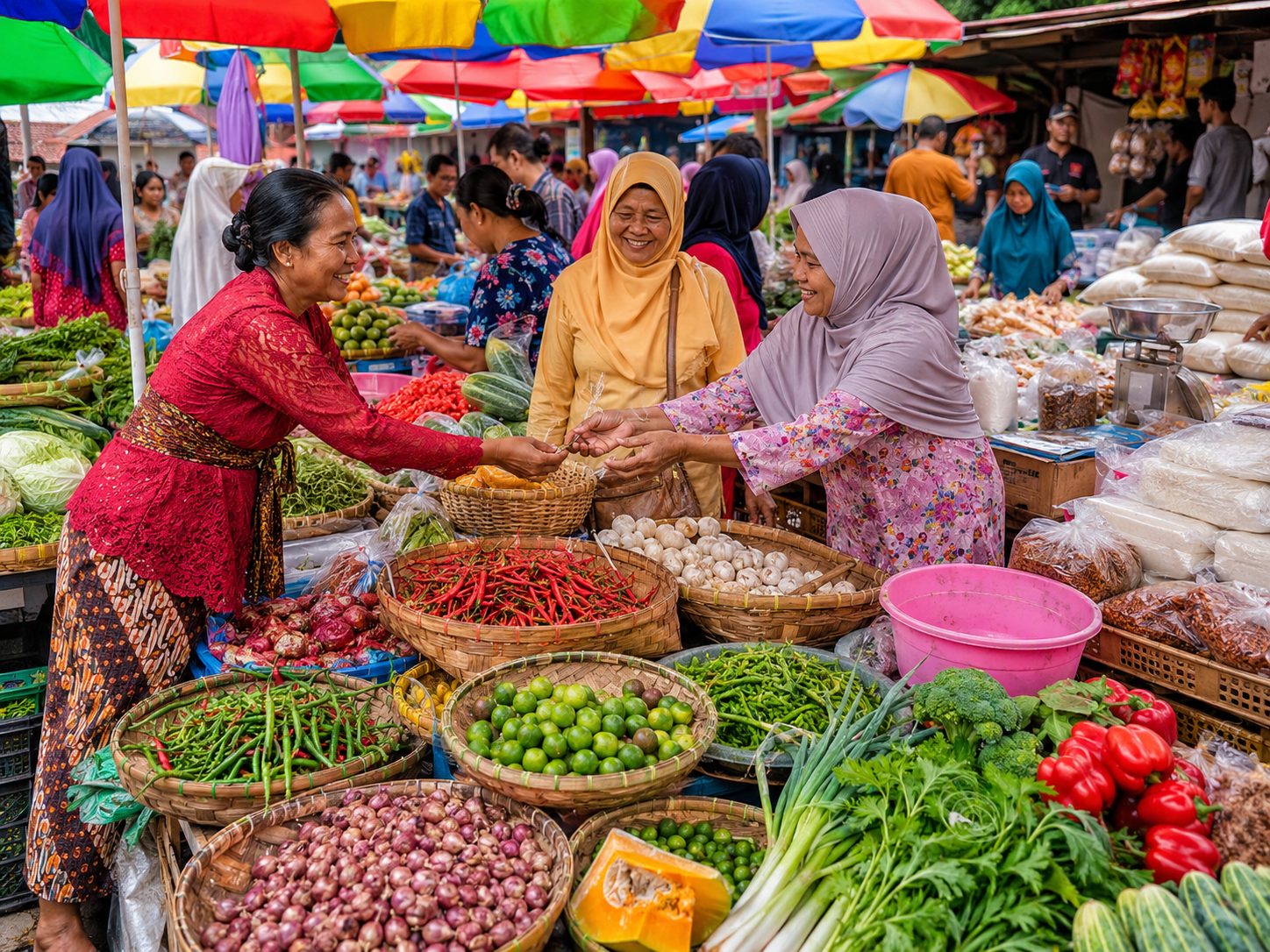
Ahead of the holiday, Coordinating Minister for Food Affairs Zulkifli Hasan inspected cheap-market operations in Sidoarjo, East Java. The government said the move aimed to curb rising food prices before Eid al-Adha, especially for staples such as rice, cooking oil, and sugar.
Medium rice stood at Rp15,800 per kilogram, while premium rice reached Rp17,150 per kilogram in the latest food-price monitoring. Those figures matter because rice is never just another item in the basket. In Indonesia, rice is emotional, political, and economic at the same time.
Cheap markets can help. They give households some relief when demand rises. They also show that the state is present when prices become sensitive. But they remain short-term tools. They can soften pressure for a few days. They cannot solve poor distribution, weak storage, regional price gaps, or the old problem of farmers receiving too little while consumers still pay too much.
That is the harder test behind the holiday headlines.
Prabowo’s Cattle Donation Adds a Political Signal
President Prabowo Subianto also donated 1,098 cattle for Eid al-Adha celebrations. Officials said 598 cattle would go to all 38 provinces and 514 districts and cities, while 500 others would be distributed to pesantren, religious institutions, community leaders, and social organizations.
The donation matters, but not because it can fix food affordability by itself. It matters because it shows how the government wants to frame Eid al-Adha: not only as worship, but also as solidarity, local livestock support, and national food policy.
Officials said the cattle were locally sourced, health-certified, male, more than two years old, and free from physical defects. The breeds included Simmental, Limousin, Ongole crossbreeds, Brahman, Angus, Bali cattle, Friesian Holstein, Belgian Blue, and Charolais.
Food Security Needs More Than Holiday Intervention
Indonesia has reason to care about the bigger picture. The government has promoted domestic food production, reduced import dependence, and stronger reserves. Yet food security does not become real because officials repeat the phrase often. It becomes real when families can buy rice without anxiety, farmers can earn decent margins, and supply chains work outside major cities.
Livestock supply is part of that story. The government said sacrificial animal availability was secure for Eid al-Adha 2026, with goat supply at around 1.4 million head against projected demand of 1.08 million. Sheep availability was reported at 935,690 head against projected demand of 466,086. Authorities also formed task forces to monitor animal movement before the holiday.
The Health Ministry also warned people to handle qurban meat safely, reminding the public that cooked meat served at room temperature should be consumed within four hours to reduce contamination risk.
The Bigger Test Comes After Eid
This is where the holiday becomes a national stress test. Food prices, livestock movement, meat safety, fuel, LPG, transport, and local distribution all meet at once. If the system works, most people barely notice. If it fails, people feel it quickly.
Bank Indonesia’s recent rate hike adds another warning light. On May 20, the central bank raised its benchmark rate by 50 basis points to 5.25 percent to defend the rupiah and preserve stability. Inflation was still contained in April at 2.42 percent year-on-year, but a weak currency can still raise imported-cost pressure over time.
So the government deserves credit for acting early. Cheap markets, livestock monitoring, and qurban distribution all have value. But Indonesia should be honest about the standard. The real victory is not one smooth holiday. The real victory is a food system that works after the banners come down, after the ceremonies end, and after Eid al-Adha food prices leave the headlines.
About the Author