Deforestation
Indonesia is taking visible, high-stakes action to protect its forests. At the same time, deforestation is rising again, partly driven by the country’s own development goals. This is not a simple contradiction. It is a genuine dilemma. The government is cracking down on illegal land use, while also pushing for food and energy self-sufficiency: two priorities that require land and often come at the expense of forests.
Indonesia’s Forest Crackdown
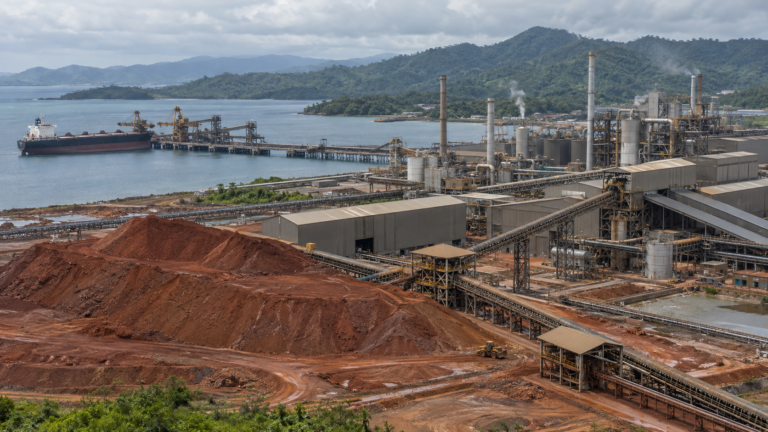
Since early 2025, President Prabowo Subianto has led a sweeping forest crackdown on illegal plantations and mining operations. A multi-agency task force has seized around 5.88 million hectares of plantations and more than 10,000 hectares of mining concessions, an area nearly twice the size of Belgium.
Authorities have recovered assets worth roughly $22 billion, while companies have already paid about $423 million in fines. Officials have indicated that billions more could still be collected.
Companies that refuse to cooperate now face the risk of criminal prosecution. Some confiscated land has been transferred to the state, including to Agrinas Palma Nusantara, which now controls one of the largest palm oil land banks globally.
The Dilemma: Self-Sufficiency vs Forest Conservation
Even as enforcement tightens, Indonesia’s broader policy direction is placing new pressure on forests. Programs to expand rice production and boost biofuel output aim to reduce reliance on imports and strengthen national resilience. But both require land, and in practice, that often means converting forest areas.
This creates a difficult trade-off. Food and energy security are strategic priorities, especially after recent global disruptions. Yet expanding agriculture and palm oil-based biodiesel can accelerate deforestation if growth relies on clearing new land.
In particular, biodiesel highlights a clear paradox: it is cleaner alternative to fossil fuels, but when forests are cleared for new plantations, the environmental benefits become uncertain. It becomes a “green versus green” problem: climate goals on one side, biodiversity protection on the other.
One way this tension is being addressed is through sustainable palm oil certification, such as RSPO standards, which aim to prevent forest clearing and protect high-value ecosystems by shifting expansion to existing or degraded land.
However, not all producers adopt certification, and enforcement can be inconsistent. Domestic demand, especially for biofuel, does not always prioritize sustainability standards. Still, sustainable palm oil remains one of the few tools that directly targets the link between agricultural expansion and deforestation.
Other approaches, such as improving yields on existing farmland or strengthening land-use zoning, could also help reduce pressure on forests, but no solution is perfect. The challenge is managing trade-offs rather than eliminating them.
Rising Deforestation and the Cost to Biodiversity
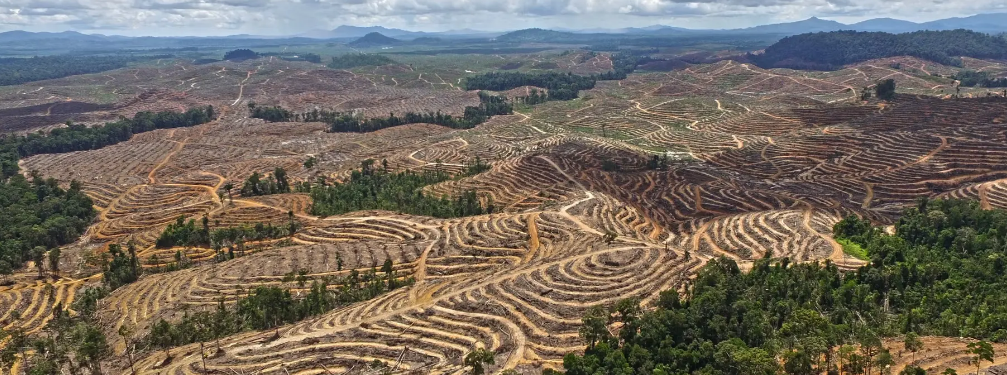
Indonesia’s forest loss surged by about 66% in 2025, reaching more than 433,000 hectares cleared, the highest level in years. Much of this expansion has occurred in regions like Borneo and Sumatra.
Indonesia’s forests support some of the world’s most unique species. The Tapanuli orangutan, already critically endangered, survives in a highly limited habitat where even small losses can have severe impacts.
The Sumatran elephant faces growing pressure as well. As forests are converted, migration routes are disrupted, increasing the risk of conflict between humans and wildlife.
About the Author