Agroforestry in Indonesia
Agroforestry in Indonesia is moving from a technical forestry term into a national policy question: can the country grow more food, raise village incomes, and protect forests at the same time?
Indonesia’s forests are not empty land waiting for use. They store carbon, regulate water, hold soil together, and shelter some of the world’s most threatened wildlife. When forests shrink, the damage reaches far beyond the tree line. Sumatran tigers lose hunting grounds. Orangutans lose canopy routes. Elephants are pushed toward farms and villages, where conflict can turn deadly.
Agroforestry in Indonesia Links Forests, Food, and Income
The Forestry Ministry now wants social forestry to focus less on expanding access and more on improving management. Deputy Forestry Minister Rohmat Marzuki said the government is pushing agroforestry through the Food and Energy Agroforestry Facilitation program, which provides seeds and mentoring for forest farming groups. As of May 2026, Indonesia had granted social forestry access to 8.34 million hectares for more than 1.43 million households.
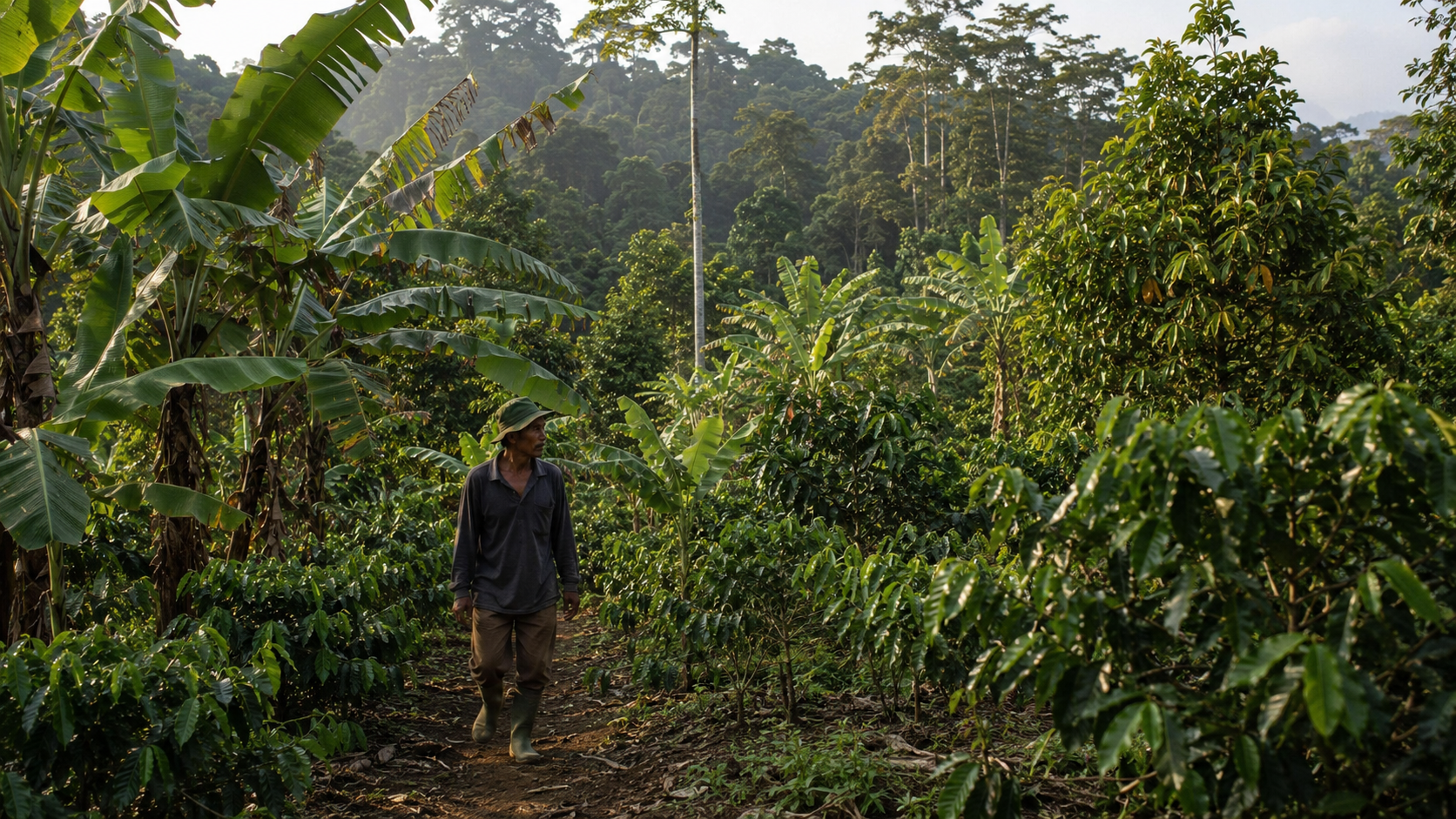
In simple terms, agroforestry means growing trees together with crops or other useful plants. It can include coffee under shade trees, cocoa mixed with fruit trees, spices, honey, timber trees, medicinal plants, or food crops grown in a layered system. Done well, it gives farmers more than one source of income while keeping forest functions alive.
This is why the policy connects naturally to food security. Indonesia wants stronger local production, village cooperatives, and supply chains that can support programs such as free nutritious meals. Forest communities could become part of that supply network, but the key phrase from the ministry matters: without opening new forest areas.
Forests Are Also Wildlife Infrastructure
The food argument should not bury the biodiversity argument. A forest is not only a carbon store or an economic zone. It is living infrastructure.
For species such as the Sumatran tiger, forest fragmentation means smaller hunting ranges and more contact with people. For orangutans, even a road through forest can split habitat and isolate populations. For elephants, shrinking habitat often leads to crop raids, fear, retaliation, and losses on both sides.
That is why agroforestry has to be judged by quality, not slogans. A mixed forest garden can support shade, soil moisture, insects, birds, and small wildlife. A monoculture plantation with a few trees attached should not receive the same moral credit. Indonesia has seen enough land-use mistakes to know the difference.
The Promise and the Risk
Agroforestry can help smallholders earn income, reduce pressure to clear land, and make rural food systems more resilient to heat and erratic rainfall. It can also give communities a stronger reason to keep trees standing.
But the risk is also real. “Productive forest” can become a neat phrase for commercial pressure if officials measure success only by export value, investment, or tonnage. Communities need secure rights, fair prices, technical support, and access to markets. Otherwise, the burden of conservation falls on people who already live with limited services.
Agroforestry in Indonesia should therefore be treated as more than a farming method. It is a test of whether the country can link food security, rural welfare, biodiversity, and climate policy without turning forests into another sacrifice zone.
If Indonesia gets this right, forest communities could become guardians of both food and wildlife. If it gets it wrong, agroforestry will become one more green label pasted onto old patterns of extraction.
About the Author