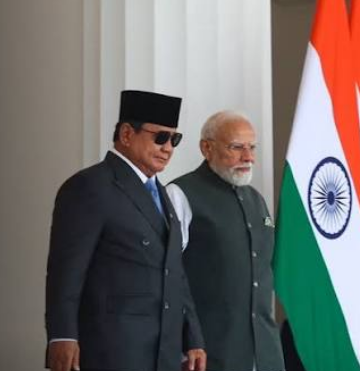
Modi Prabowo Summit
Indian Prime Minister Narendra Modi’s visit to Indonesia was not only about defence deals. It also showed how Jakarta and New Delhi are trying to turn an old friendship into a wider modern partnership.
A Warm Welcome in Jakarta
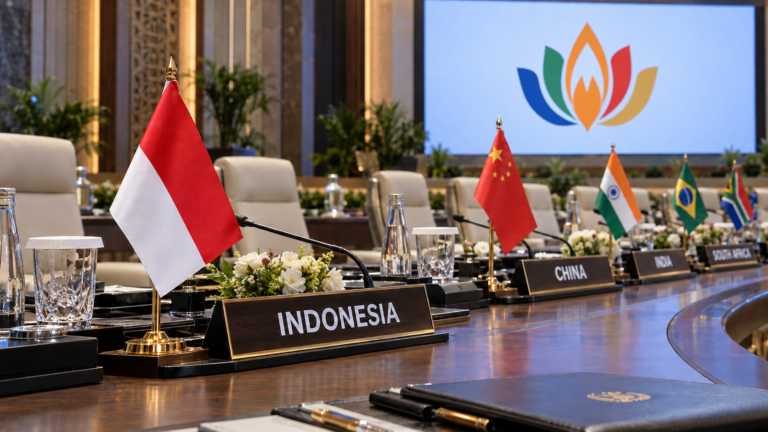
Modi visited Indonesia from July 6 to 8 at the invitation of President Prabowo Subianto. The main talks took place on July 7 at Istana Merdeka in Jakarta, where Modi received a ceremonial welcome before meeting Prabowo in both private and delegation-level formats.
The Modi-Prabowo summit produced agreements across several areas, including agriculture, health, telecommunications, disaster management, minerals, space, research, steel, digital networks and education. Defence was part of the agenda too, including cooperation on the BrahMos missile system and an air-to-air missile agreement. But the visit was clearly designed to look broader than weapons.
Modi was also awarded the Bintang Adipurna of the Republic of Indonesia, described by India as Indonesia’s highest civilian honour. He dedicated the award to the people of both countries and to their “deeply-rooted ties.”
Beyond Missiles and Strategy
The two leaders discussed practical cooperation in fields that matter directly to people and economies. India listed agriculture, medical product regulation, health workforce cooperation, research, telecommunications and disaster management among the outcomes.
One notable plan is the proposed Indian Institute of Management Bangalore campus at Singhasari Special Economic Zone in Indonesia. Another is the Indonesia Open Network, based on India’s Open Network for Digital Commerce model, which could help small businesses join the digital economy.
There was also a food-security angle. India announced the supply of 100 tonnes of high-quality DWR 162 wheat seeds to Indonesia. That may sound technical, but it fits a wider question for both countries: how to make large populations more secure in a period of climate stress and supply-chain uncertainty.
Democracy, Friendship and Personal Chemistry
Prabowo used the visit to praise India’s democratic experience. Speaking at an Indian community event in Jakarta, he said democracy is “not an easy road,” but still the best system for justice, hope and inclusion.
He also made the moment personal. Prabowo recalled that Indonesia’s first president, Sukarno, was chief guest at India’s first Republic Day celebration in 1950. Prabowo himself was chief guest at India’s Republic Day in 2025.
There were lighter details too. Prabowo gave Modi a set of angklung, the traditional West Javanese musical instrument. The two leaders reportedly tried playing it together, turning a formal visit into a more relaxed cultural moment.
Modi also referred to the popularity of Indian songs in Indonesia. His line about “Kuch Kuch” was clearly meant as a warm cultural joke, but it carried a diplomatic message: the relationship is not only state-to-state. It is also people-to-people.
Old Cultural Links, New Cooperation
India and Indonesia have centuries of cultural contact behind them. Hindu-Buddhist influence, Sanskrit, maritime trade, the Ramayana and temples such as Prambanan are all part of that shared history.
That is why the Prambanan announcement mattered. The two leaders inaugurated India-supported restoration and conservation work at the UNESCO World Heritage temple complex in Yogyakarta. They also agreed to mark 2026–2027 as the Tagore-Dewantara Year of India-Indonesia Cultural and Educational Diplomacy, recalling Rabindranath Tagore’s 1927 visit to Indonesia and his links with Ki Hajar Dewantara.
The Modi-Prabowo summit still had a strategic layer. Indonesia and India both care about the Indo-Pacific, sea lanes and regional stability. But the bigger message was softer and older: two large democracies with deep civilizational links are trying to make that history useful for the future.
About the Author