President Prabowo Subianto used Pancasila Day to frame Indonesia’s next economic chapter as a Pancasila-based transformation, not just another growth program. His message was clear: development should protect national unity, improve ordinary lives, and keep Indonesia’s natural wealth from slipping out through corruption, smuggling, weak pricing, or foreign dependence.
Prabowo’s Speech on Pancasila Day
Speaking at the 2026 Pancasila Day commemoration in Jakarta, Prabowo said Indonesia’s economy must reflect Pancasila values: belief in God, humanity, unity, democracy, and social justice. That matters because Pancasila is not only a founding ideology. In Indonesian public life, it also functions as a moral language for national direction.
But his speech was not only about economics. Prabowo also described Pancasila as Indonesia’s compass in a world facing geopolitical tensions, trade disputes, and uncertainty. This year’s theme, “Pancasila Unites the Nation, the Foundation of World Peace,” gave his remarks a broader message: Indonesia must guard unity at home while acting with confidence abroad.
In economic terms, Prabowo gave that language a sharper meaning. Growth figures alone are not enough. A larger economy means little if farmers, workers, fishermen, children, and small businesses do not feel the gains. This was the core of his Pancasila-led economic development message.
It also fits into the wider policy direction often described as Prabowonomics, where the state takes a more active role in shaping growth, protecting strategic resources, and expanding social programs.
Pancasila-Based Transformation and the Fight Over Resources
The strongest part of the speech was Prabowo’s warning that Indonesia’s economic reforms would face resistance. He said groups that benefit from corruption, smuggling, and illegal economic practices may try to block the government’s agenda. That line gave the speech its political edge.
It also connected neatly with his broader view of natural resources. Prabowo argued that Indonesia’s wealth should serve the people and future generations. That is not a new theme in Indonesian politics, but his government is now trying to turn it into policy.
One major example is the planned centralized export system for key commodities. Indonesia has begun a transition toward a state-controlled export system for coal, palm oil, and ferroalloys. The system will run through Danantara Sumberdaya Indonesia, under sovereign wealth fund Danantara. Full implementation is expected on January 1, 2027.
The stated aim is to prevent under-invoicing, improve tax revenue, and keep more export proceeds inside Indonesia. In plain terms, Jakarta wants more control over how strategic commodities are priced, sold, and reported.
Nickel, EVs, and the Risk of China Dependence
Although Prabowo did not explicitly mention China in his Pancasila Day speech, the issue of dependence still sits close to the surface.
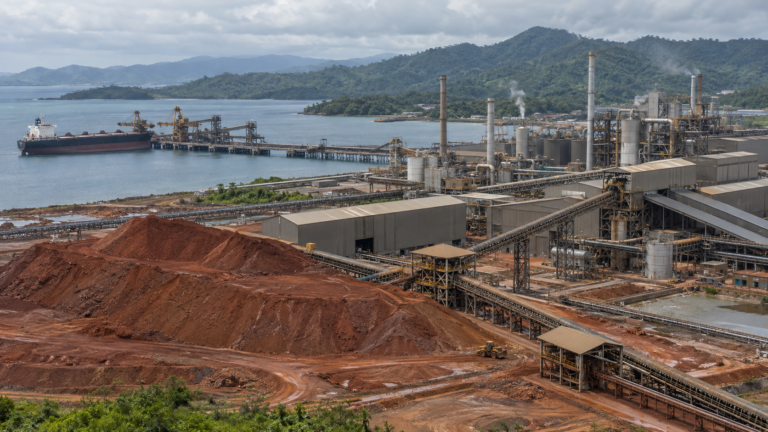
Indonesia’s nickel boom has relied heavily on Chinese investment, Chinese industrial capacity, and China-linked EV supply chains. That helped Indonesia become a global nickel powerhouse. But it also created a strategic vulnerability. If Indonesian downstreaming depends too much on Chinese capital, technology, and demand, then sovereignty becomes more complicated.
China’s EV industry is shifting toward lithium-iron-phosphate batteries, which do not need nickel. That shift could weaken the demand assumptions behind Indonesia’s nickel strategy. In other words, China helped build the boom, but China’s own battery choices could also expose its risks.
This does not mean Indonesia should reject Chinese investment. That would be unrealistic. The better question is whether Indonesia can welcome investment without becoming trapped by dependence.
That is the real test of Prabowo’s Pancasila-based transformation. If Indonesia wants development rooted in social justice and national dignity, it must make sure downstreaming creates Indonesian jobs, Indonesian skills, Indonesian bargaining power, and Indonesian resilience.
About the Author