
Uyghur Forced Labor
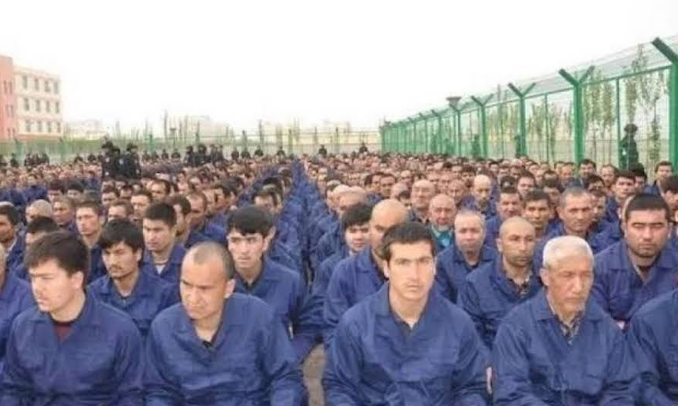
Allegations of forced labor involving Uyghurs and other minorities in China have moved beyond human-rights advocacy into trade policy, supply-chain scrutiny and ethical debates over global commerce. A major new UN warning, China’s rejection of the accusations, and growing attention to the Uyghur Forced Labor Prevention Act have pushed the issue back into focus, raising difficult questions not only about repression, but about the moral costs hidden inside global supply chains.
A New UN Warning on Forced Labor in China
A statement by UN experts published in January 2026 renewed scrutiny over allegations of state-imposed forced labor affecting Uyghurs, Kazakhs, Kyrgyz and Tibetans in China.
These allegations build on years of evidence and scrutiny, including survivor testimony, leaked government documents, satellite research and the 2022 UN human rights assessment.
The experts described a “persistent pattern” of coercive labor transfers linked to state poverty-alleviation programs, arguing that some coercive elements may amount to forcible transfer or even enslavement as a crime against humanity. They pointed in particular to labor-transfer systems in Xinjiang that, according to official planning targets, projected 13.75 million labor transfers under the region’s 2021–2025 development plan.
According to the experts, these systems involve surveillance, pressure, and the inability of many participants to refuse or change assignments because of fear of punishment or arbitrary detention.
The report cited Tibetan labor transfer programs affecting an estimated 650,000 people in 2024, alongside wider relocation schemes that have reportedly affected millions over two decades. The criticism is not only about labor conditions, but about what the experts called efforts to forcibly reshape cultural identities, weaken traditional livelihoods and erode religious and linguistic life.
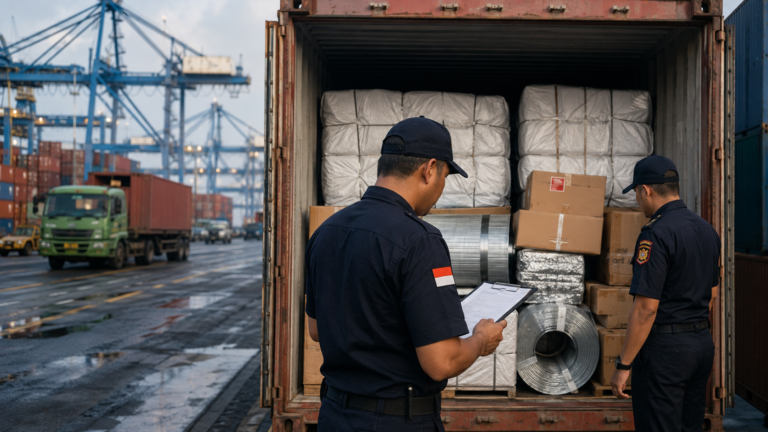
Another important point reaches far beyond China’s borders: goods allegedly linked to forced labor may enter global supply chains indirectly through third countries. That matters because it raises doubts about whether targeted trade restrictions alone can prevent such products from reaching world markets.
The UN experts also urged businesses and investors sourcing from China to conduct human-rights due diligence and ensure their supply chains are not, in their words, “tainted by forced labour.”
Beijing Rejects the Accusations
Beijing argues labor programs in Xinjiang and elsewhere are aimed at poverty reduction, vocational opportunity and countering extremism, not coercion. Chinese officials have repeatedly denied the existence of forced labor and portrayed outside criticism as politically motivated attacks that distort conditions in Xinjiang.
That denial is part of a broader Chinese narrative: that development and stability policies have improved living standards in minority regions.
Critics argue that development rhetoric does not answer concerns over coercion, surveillance or restrictions on religious and cultural expression. That is why China’s treatment of minorities, especially Uyghurs but also Tibetans and others, continues to draw serious international criticism.
The Uyghur Forced Labor Prevention Act and the Solar Panel Dilemma
The Uyghur Forced Labor Prevention Act, which took effect in the United States in 2022, changed the debate by presuming certain goods linked to Xinjiang are inadmissible unless importers can prove otherwise. That shifted the issue from activism into hard supply-chain compliance.
Scrutiny has touched cotton and apparel, tomatoes and other agricultural goods, as well as solar materials such as polysilicon. More recent enforcement and research have also raised concerns involving aluminum, auto parts and some critical minerals tied to battery and clean-energy supply chains.
Solar supply chains introduced a deeper dilemma. Because polysilicon used in solar manufacturing has drawn scrutiny, some clean-energy technologies promoted as part of a greener future have also become entangled in allegations of coerced labor. It is a striking paradox: environmental progress can raise human-rights questions of its own.
The Moral Questions Behind Cheap Imports
The issue is no longer simply what may happen in western China: it is whether global trade can be separated from ethical accountability.
This is where the debate becomes uncomfortable. Consumers rarely know how deeply supply chains run. Governments seek affordable imports, industrial growth and renewable energy expansion. Yet ethical sourcing questions do not disappear because they are inconvenient.
That dilemma matters in Indonesia too. As a major trading economy and the world’s largest Muslim-majority country, Indonesia has reasons to think about both ethical sourcing and solidarity with Uyghur Muslims.
About the Author


1 thought on “Uyghur Forced Labor and the Ethics of Global Trade”
Comments are closed.