
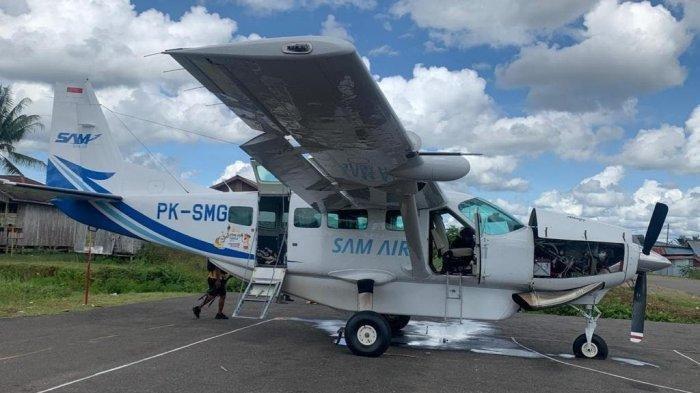
Smart Air Shooting
Four days after the Smart Air Shooting, the shock has not faded in Indonesia’s easternmost province. What should have been a routine landing in South Papua ended with the deaths of a pilot and co-pilot and renewed attention on the Papua conflict that continues to shape life in parts of the region.
On February 11, a Smart Air Cessna Grand Caravan, flight PK-SNR, landed at Korowai Batu Airport in Boven Digoel Regency at around 10:30 a.m. local time. According to the Cartenz Peace Task Force, the aircraft had arrived from Tanah Merah and was preparing to continue to Dekai in Yahukimo when gunmen opened fire.
Authorities say around 20 members of an armed criminal group, known as KKB (Kelompok Kriminal Bersenjata), were involved. Investigators allege the attackers emerged from a lodging house near the airstrip before shooting at the plane. Thirteen bullet holes were later recorded in the fuselage, and 23 pieces of evidence were collected at the scene.
Passengers and crew tried to escape as shots rang out. All 13 passengers survived and were later returned to their homes. The pilot, Captain Enggon Erawan, and co-pilot, Captain Baskoro Adi Anggoro, were reportedly pursued and fatally shot. Their bodies were evacuated, identified, and flown to Jakarta to be handed over to their families.
Investigation and Security Response After the Smart Air Shooting
Brigadier General Faizal Rahmadani, Head of Operations of the Cartenz Peace Task Force, said the alleged perpetrators were members of KKB units identified as the Cannibal Battalion and the Semut Merah Battalion, reportedly led by Elkius Kobak from Yahukimo. Law enforcement operations are ongoing, with security forces deployed to pursue suspects and secure the area.
Rahmadani stated that operations are being conducted in what he described as a measured and professional manner, with priority given to both apprehending suspects and protecting residents. Additional troops were sent to secure Korowai Airport and surrounding districts.
National officials condemned the attack and called for accountability. The incident again raised concerns about the safety of civilian aviation in Papua’s highlands, where air travel remains essential infrastructure. Remote communities depend on flights for food supplies, medical access, government services, and trade. Any disruption is felt immediately.
The Papua Conflict: A Long and Complicated History
Papua was incorporated into Indonesia in the 1960s after Dutch colonial administration ended. The 1969 Act of Free Choice, conducted under international supervision, involved selected representatives rather than a direct popular vote. While internationally recognized, many indigenous Papuans have long questioned its legitimacy.
From these grievances emerged the Free Papua Movement (OPM), which advocates independence. Over time, armed factions developed, including groups authorities classify as KKB. These factions have carried out sporadic attacks targeting security forces, infrastructure projects, and at times civilian assets. Jakarta describes them as criminal insurgents; supporters see them as resistance fighters.
Clashes have intensified at various moments, particularly in highland regencies such as Nduga, Intan Jaya, and Yahukimo. Military and police deployments expanded in response. Critics argue that heavy security measures deepen mistrust among local communities. Authorities maintain that operations are necessary to protect civilians and uphold sovereignty.
Economic inequality, resource projects, demographic change, and cultural concerns continue to feed tension. The conflict has never fully disappeared. It quiets, then resurfaces.
About the Author



2 thoughts on “The Smart Air Shooting and the Unresolved Tensions of the Papua Conflict”
Comments are closed.