Middle East War
U.S.–Iran nuclear talks mediated by Oman ended without a breakthrough, followed almost immediately by U.S. and Israeli strikes on Iran, triggering a Middle East war.
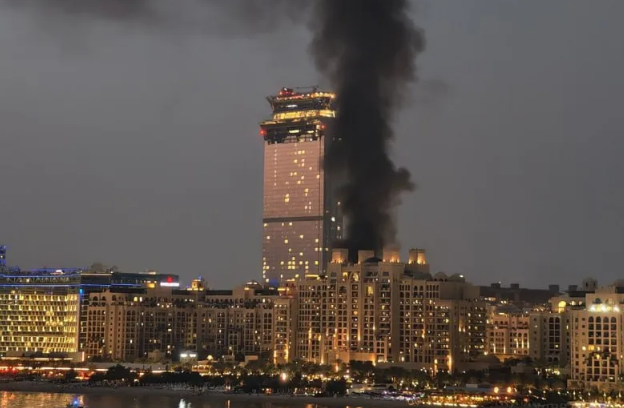
Iran’s response has been broad: missiles and drones aimed at Israel, U.S. forces, and several Gulf states and even Cyprus, with civilian areas and commercial infrastructure also affected.
How the Middle East War Has Expanded Across the Gulf
Iran’s retaliatory launches have been directed toward Israel and U.S. military bases in Gulf countries including Saudi Arabia, the United Arab Emirates, Kuwait, Qatar, Bahrain, and Oman.
In Israel, missile strikes on residential areas killed at least 11 civilians. At least 5 civilians and 6 U.S. soldiers were killed by Iranian strikes in Dubai and Abu Dhabi. Iranian drones have even reached beyond the Middle East, hitting a British Air Force base in Akrotiri, Cyprus.
The disruption has also reached ports and airports. In Dubai and Abu Dhabi, debris from interceptions damaged sites tied to aviation and trade hubs, and authorities reported multiple injuries. Oman’s Duqm port was also hit. This matters because the Gulf is a transit engine for global travel and for Asia-bound commerce.
Indonesian Citizens and Travel Risks
Large Indonesian communities live and work across the Gulf. Estimates place between 600,000 and 800,000 Indonesians in Saudi Arabia, with roughly 100,000 in the United Arab Emirates and smaller communities in Kuwait, Qatar, Bahrain, and Oman.
About 386 Indonesian citizens are currently recorded as residing in Iran, primarily students and trainees.
So far, there have been no confirmed reports of Indonesian casualties tied to the missile exchanges.
Still, the Indonesian government has urged caution for travel to the region and advised Umrah pilgrims to delay departures. Airlines have adjusted flight paths to avoid sensitive airspace. Rerouting increases travel time and operating costs, and that uncertainty affects both pilgrims and business travelers.
Saudi Arabia and the UAE function not only as destinations but as transit gateways. Disruptions there affect connections well beyond the Middle East.
Energy Security
The most direct channel to Indonesia’s economy is energy. Iran has threatened shipping through the Strait of Hormuz, a chokepoint for roughly a fifth of global oil and liquefied natural gas trade. Even partial disruption pushes tanker rates and insurance premiums sharply higher and encourages ships to wait offshore rather than transit. When transport costs spike, crude prices typically follow.
Indonesia’s National Energy Council has already convened to assess risks, and lawmakers have urged stronger resilience planning. The logic is simple: Indonesia imports a significant share of its crude and refined fuel needs. Higher global prices pressure the state budget through subsidies and compensation schemes, and they can feed into domestic inflation via transport and logistics costs. If the price shock persists, the hit is not only at the pump, but in food distribution and broader consumer prices.
About the Author