Indonesia reinforces ties with Japan, Singapore and Malaysia at a moment when trade is no longer just about exports and imports. The recent meetings were about minerals, energy, investment, logistics and market access, but they also happened in a harsher global climate shaped by supply-chain rivalry, Trump-era tariff politics, rare-earth competition and growing geopolitical tension across key sea lanes.
Nuclear energy and mineral agreement with Japan
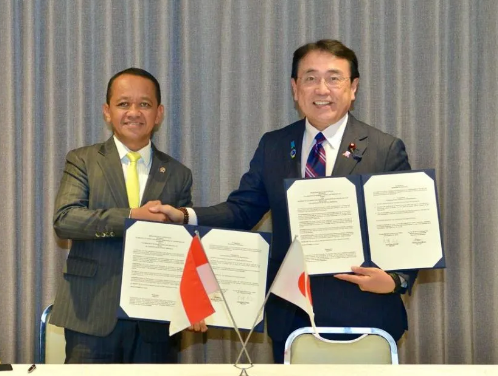
On the sidelines of the Indo-Pacific Energy Security Ministerial and Business Forum in Tokyo, Energy Minister Bahlil Lahadalia and Japan’s economy minister Ryosei Akazawa signed a memorandum covering two sensitive sectors: critical minerals and nuclear energy. Indonesia used the occasion to promote its huge reserves of nickel, but also its deposits of bauxite, tin, copper and rare earth elements. Japan, for its part, stressed energy security and supply sustainability. The agreement is not limited to mining. It also covers low-carbon nuclear technology with high safety standards, plus continued discussion on LNG and coal supply chains and energy-transition projects under the Asia Zero Emission Community framework, including the Sarulla geothermal plant and the Legok Nangka waste-to-energy project. Indonesia is trying to position itself as a serious player in the global energy transition.
Trade partnerships with Singapore and Malaysia
The Singapore and Malaysia meetings were less dramatic, but still important. Deputy Trade Minister Dyah Roro Esti held both talks on the sidelines of the 32nd ASEAN Economic Ministers Retreat in Taguig. With Singapore’s Gan Kim Yong, she highlighted that bilateral trade rose 14.6% in five years, from US$16.85 billion in 2020 to US$19.32 billion in 2025. Jakarta also reaffirmed its CPTPP accession process and discussed the ASEAN Digital Economy Framework Agreement, RCEP and other trade and investment initiatives. With Malaysia’s Sim Tze Tzin, the focus was on expanding market access and high-value sectors after bilateral trade reached US$24.22 billion in 2025. The two sides also discussed the Joint Trade and Investment Committee, the Malaysia-Indonesia Investment Committee, the 2023 Border Trade Agreement and faster normalization at the Entikong-Tebedu crossing.
Minerals, tariffs and the supply-chain scramble
Indonesia sits inside a wider contest over critical minerals. Chinese firms control about 75% of Indonesia’s nickel refining capacity, which means Jakarta’s nickel boom has also created a dangerous concentration of foreign influence inside a strategic industry. At the same time, Washington has stepped up efforts to build alternative critical-mineral networks after China’s rare-earth restrictions rattled markets and manufacturers. That is the real backdrop to these meetings. Indonesia wants downstreaming and more value-added exports, but it also needs partners that do not turn supply chains into political weapons.
The bigger geopolitical picture
From the Taiwan Strait to the South China Sea, tensions are rising and geopolitical blocs are becoming increasingly clear. Chinese military flights near Taiwan have picked up again, and China’s coast guard said this week it expelled a Japanese fishing boat near the disputed Diaoyu/Senkaku islands.
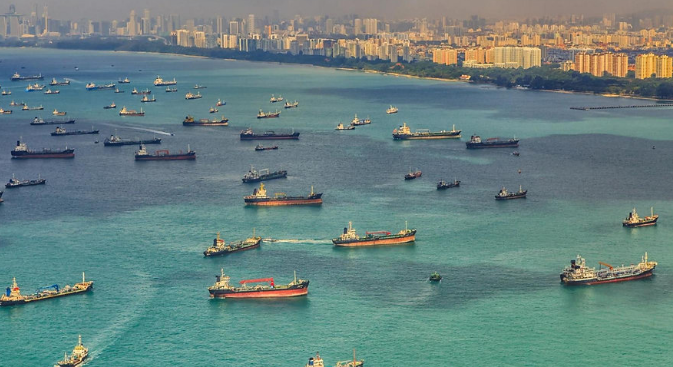
Indonesia’s navy recently ran an integrated combat drill in the Singapore Strait using KRI Surik-645 and patrol aircraft P-8203 to rehearse surveillance, coordination and layered defense in one of the world’s busiest shipping corridors. And far beyond Southeast Asia, the disruption of shipping through the Strait of Hormuz by the Iranian forces shows how easily strategic chokepoints can be turned into instruments of war.
Indonesia should keep strengthening ties with Japan, ASEAN partners and other rules-based economies, while reducing dependence on the CRINK bloc.
About the Author