Singapore Strait
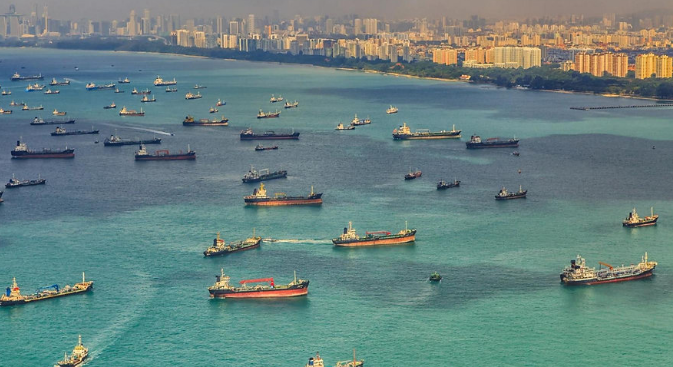
Indonesia’s navy recently conducted an integrated maritime exercise in the Singapore Strait, one of the most important shipping routes in the world. The drill was organized by Fleet Command I (Koarmada I) and took place in waters near the Riau Islands, a busy maritime zone between Indonesia and Singapore. The exercise involved several naval units and simulated responses to maritime threats such as piracy and security disruptions along major sea lanes.
The Importance of the Singapore Strait
The narrow passage of the Singapore Strait is the eastern gateway of the Malacca–Singapore maritime corridor, linking the Indian Ocean with the South China Sea and the wider Pacific. Every year tens of thousands of vessels move through this route transporting oil, gas, food, and manufactured goods between Asia, Europe, and the Middle East.
Other chokepoints around the globe show how vulnerable global trade can become when politics enters the picture.
The Strait of Hormuz is a perfect example, because 20% of the world’s oil supply passes through it. In the past few days, Iranian forces have targeted commercial vessels near the narrow passage linking the Persian Gulf to the Indian Ocean. Several tankers have been damaged and many ships are now waiting outside the Gulf. The strait is not formally closed, but the attacks and threats have made it too dangerous for most commercial traffic, effectively creating a “de facto closure”.
Another recent case is the Red Sea: Iran-backed Houthi forces in Yemen have launched attacks in the past years against commercial vessels, forcing shipping companies to reroute traffic away from the Suez Canal and around Africa.
The Taiwan Strait is also one of Asia’s most important maritime corridors. Growing military tensions between China and Taiwan have raised fears that conflict there could disrupt global trade.
Viewed in that wider context, the Singapore Strait sits at the intersection of commerce and geopolitics. It is not a disputed waterway, but its importance means that any instability in surrounding regions could affect it.
Threats in the Singapore Strait
Piracy and robbery incidents have increased in the Malacca–Singapore corridor in recent years. Many attacks involve small groups boarding slow-moving ships at night and stealing equipment or engine parts. While such incidents often avoid major violence, they still create risks for crews and cargo.
The geography of the strait adds to the challenge. In several sections vessels must slow down while navigating narrow channels and heavy traffic. That makes ships easier targets for criminals operating from small boats.
Naval patrols and training exercises are therefore a routine part of maritime security in the region. For Indonesia, which controls large stretches of nearby waters, maintaining the ability to respond quickly is a central task.
The Broader Geopolitical Picture
China’s growing alignment with Russia and Iran adds another layer to the picture.
Just to the north of the Singapore Strait lies the South China Sea, where China’s sweeping maritime claims (the so-called nine-dash line), overlap with waters claimed by several Southeast Asian states.
Recent events in the Strait of Hormuz show how quickly maritime chokepoints can turn into geopolitical weapons. China has been increasing military pressure in the Taiwan Strait and expanding its naval presence across the South China Sea. If similar tactics were ever applied to Asian shipping lanes, like the Singapore Straight, the consequences for regional trade would be enormous.
About the Author