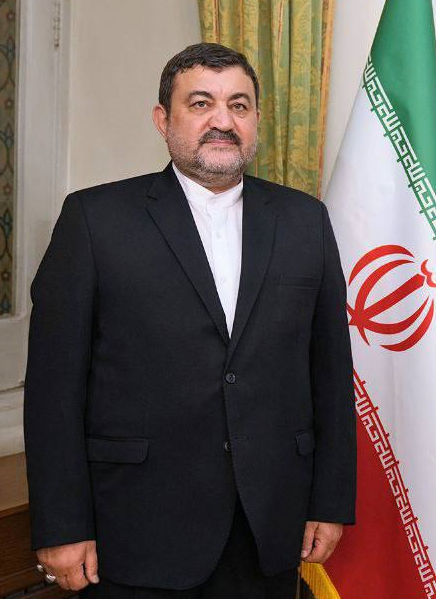
Ambassador Mohammad Boroujerdi
Indonesia-Iran relations are no longer a quiet diplomatic file. Tehran has openly pushed for deeper cooperation with Jakarta in technology, industrial partnerships, scholarships, and coordination within the D-8 bloc. At the same time, global tensions between the United States and Iran are rising again, with fragile nuclear talks and visible military signalling in the region. In this environment, neutrality becomes harder to sustain.
Strategic Incentives from Tehran
Iran’s outreach is concrete: Ambassador Mohammad Boroujerdi has proposed cooperation in nanotechnology, biotechnology, healthcare production, agricultural systems, and civilian drone applications. Tehran has offered full scholarships for Indonesian students and expressed readiness to establish joint ventures and factories.
The Limits of Bebas dan Aktif
On the surface, economic cooperation with Iran fits Indonesia’s long-standing doctrine of bebas dan aktif: a “free and active” foreign policy that avoids formal alliances while engaging widely. Strategic hedging has served Jakarta well. It has allowed Indonesia to maintain ties with Washington, Beijing, Moscow, and Middle Eastern capitals without committing to a single bloc.
But hedging assumes the space between rival powers remains stable. That space is shrinking.
The Reality of Iran’s Regime
Iran is not simply another trading partner. It is a theocratic state where ultimate authority rests with the Supreme Leader and clerical institutions can override elected bodies. Human rights organizations continue to report executions, repression of protests, restrictions on women’s freedoms, and systematic pressure on minority communities.
During the January 8–9, 2026 crackdown on nationwide protests, also known as the Rasht massacre, Iran International reported that internal security documents pointed to more than 36,000 people killed across over 400 cities. If even a fraction of those figures proves accurate, the events would represent one of the largest protest massacres in modern history.
For Indonesia, the issue is not just humanitarian: it is political. Remaining silent while deepening cooperation risks sending the message that strategic partnerships outweigh basic principles.
Indonesia’s Democratic Identity
Indonesia’s identity stands in stark contrast. It is the world’s third-largest democracy, built on Pancasila, constitutional elections, pluralism, and an interpretation of Islam that is comparatively open and socially embedded rather than state-imposed. Civil society is active. Religious diversity is recognized.
Indonesia naturally belongs among democracies. Its institutions, social fabric, and political culture align more closely with open societies than with clerical authoritarianism.
CRINK Alignment and What It Signals
China and Russia have repeatedly shielded Tehran diplomatically in international forums. Their backing of the Iranian government sends a clear signal about the priorities of the emerging CRINK alignment (China, Russia, Iran, and North Korea). These states challenge Western influence and resist liberal democratic norms. Support for Tehran during periods of unrest implicitly validates the regime’s hardline responses.
This raises a difficult question. When countries strengthen political and economic ties with Iran, are they simply conducting business, or are they effectively legitimizing the regime’s actions?
Rising Tensions and a Shrinking Middle Ground
US-Iran negotiations remain uncertain. Washington continues to apply sanctions pressure, and increased US naval deployments in the region underscore how quickly diplomacy can give way to deterrence. Tehran, for its part, said that it will not negotiate under coercion. Both sides are preparing for war if talks collapse.
If confrontation escalates, can Jakarta truly remain equidistant?
A Strategic Choice Ahead
This is where Indonesia-Iran relations become more than a trade discussion: they become a test of strategic alignment.
Expanding cooperation without clear political boundaries carries risks. Scholarships create long-term networks, and industrial partnerships generate dependency.
Indonesia must decide what its neutrality ultimately serves. If neutrality protects democratic values and strategic autonomy, it is a strength. If neutrality drifts into moral ambiguity while authoritarian blocs consolidate, it becomes vulnerability.
About the Author