Voice of Baceprot
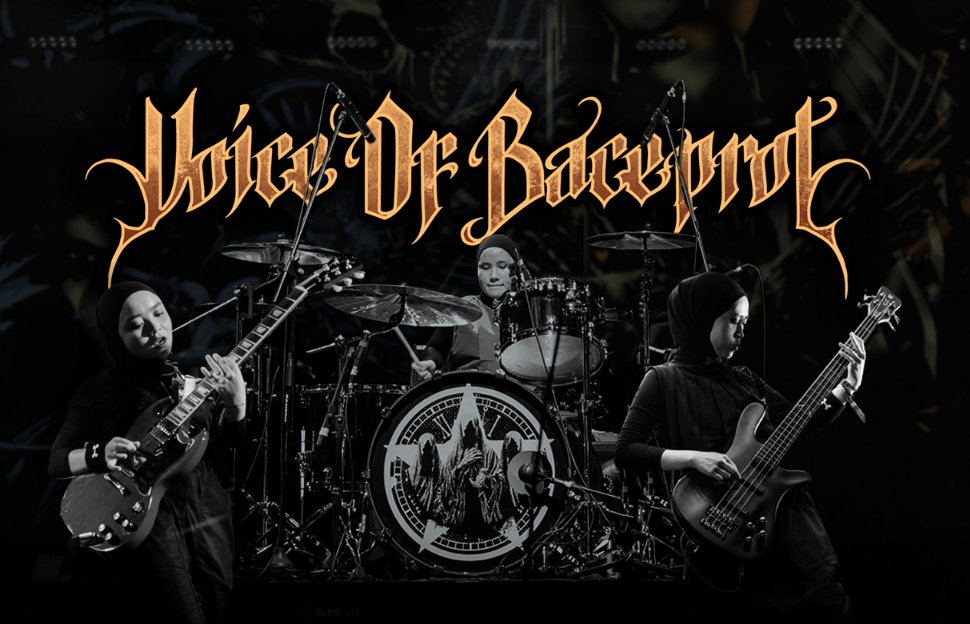
Three women in hijabs walk onto a festival stage, pick up a guitar, bass and drumsticks, and launch into heavy metal. Voice of Baceprot are a band with few, if any, international parallels: practising Muslim women who keep their visible religious identity while performing on major stages around the world.
Voice of Baceprot: From an Islamic School to Global Stages
Voice of Baceprot was formed in 2014 by vocalist and guitarist Firda “Marsya” Kurnia, bassist Widi Rahmawati and drummer Euis Siti Aisyah. The friends met at an Islamic school in Singajaya, Garut, West Java. A school counsellor introduced them to metal and encouraged them to play.
“Baceprot” means “noisy” in Sundanese. Their music is loud, but its message is serious. VOB sing about women’s freedom, corruption, war, environmental damage and pressure to obey social expectations.
When Religion Is Used to Kill the Music
One song captures the band’s story better than any description: God, Allow Me (Please) to Play Music. Even the title sounds like a prayer. VOB are not rejecting Islam. They are appealing to God while defending the music that gives their lives meaning.
Its central challenge is equally direct: “Why today, many people wear religion to kill the music?” The target is not faith, but those who use religion as a weapon against art and freedom. The song was written in response to the conservative criticism the band had faced.
The song is performed in English, turning a conflict rooted in conservative West Java into a universal message. VOB often use English, although their catalogue also includes Indonesian and Sundanese. The question they raise can be understood anywhere: must religious devotion and artistic freedom be enemies?
Success Did Not Come Without Resistance
VOB did not emerge from a completely tolerant environment. Some people around them regarded metal as satanic or unsuitable for women, especially women wearing hijabs. The musicians received hostile messages, and Marsya has described being struck by a stone carrying a demand that she stop playing “devil’s music.” Her family once suggested a religious healing ritual to remove her interest in metal.
Yet conservative opposition never became a nationwide state prohibition. The band kept performing, recorded original music and toured Europe and the United States. In 2024, VOB became the first Indonesian act to perform at Glastonbury. They remain active internationally and are scheduled to appear at JAM JAM ASIA at Taipei Music Center on August 29, 2026.
A Band With Few Parallels
Female rock bands exist in other Muslim countries. Saudi Arabia’s Seera performs psychedelic rock publicly, something almost unthinkable in the kingdom only a few years ago. Afghanistan’s short-lived Burqa Band emerged in 2002, but its members appeared anonymously in full burqas and never built an open international career comparable to VOB’s.
Voice of Baceprot do not prove that Indonesia is uniformly liberal or free from intolerance. Their experiences show otherwise. But Indonesia’s pluralist system and comparatively moderate expressions of Islam created enough space for three Muslim women to remain visibly devout, challenge conservative expectations and take heavy metal to the world.
Religion does not have to kill the music. Voice of Baceprot are living proof.
About the Author