
Coral Reefs
The importance of coral reefs has become increasingly clear as governments and scientists worldwide warn about accelerating damage to marine ecosystems.
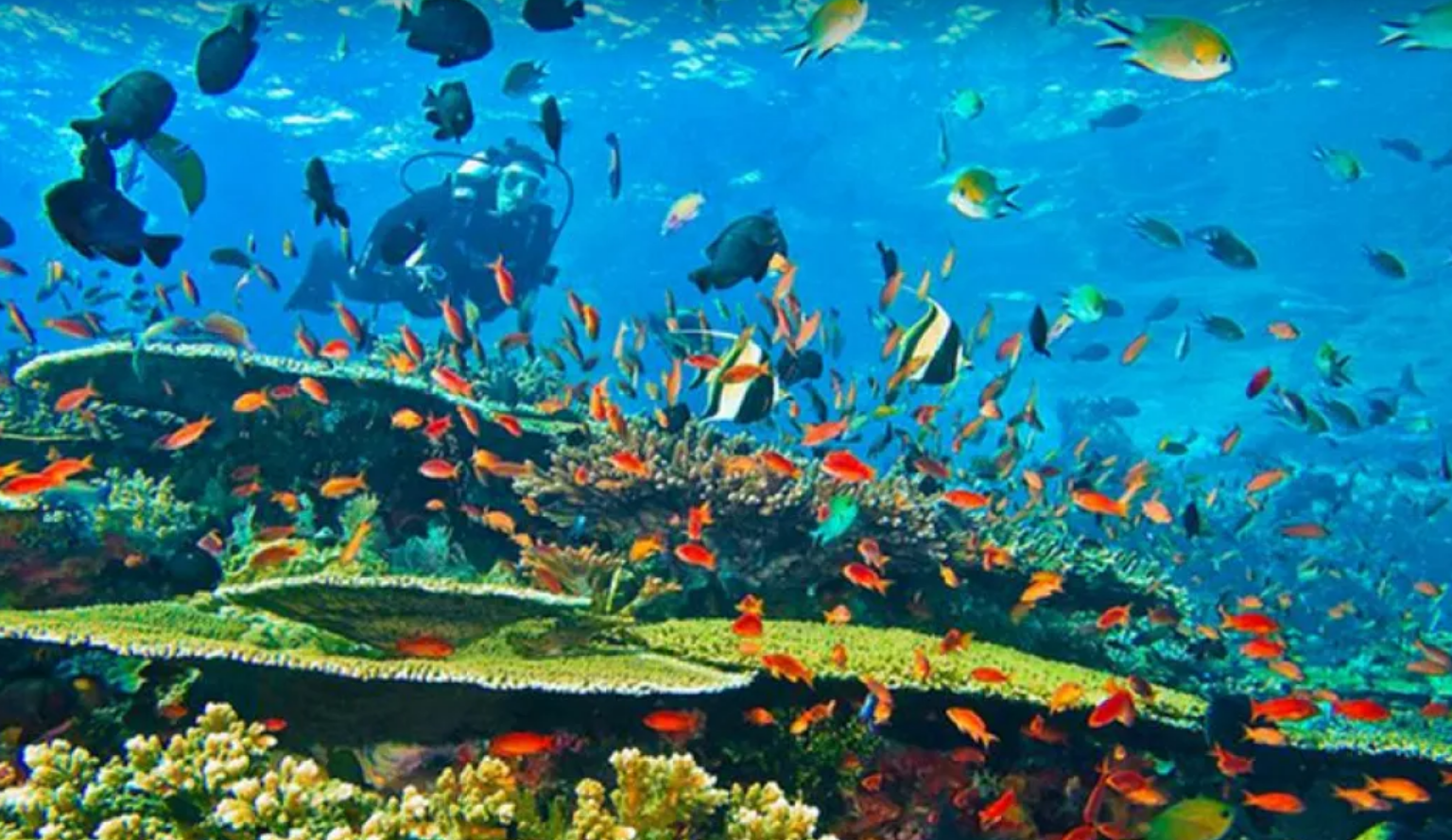
Coral reefs occupy only 1% of the ocean floor, yet they support a disproportionate share (more than 25%) of marine life. Fish species rely on reefs for breeding, shelter, and feeding grounds. In Indonesia, these ecosystems underpin small-scale fisheries that provide food and income for millions of coastal residents.
Reefs also play a physical role: by absorbing 97% of wave energy, they protect shorelines from erosion and storm surges. As sea levels rise and extreme weather becomes more common, this natural barrier becomes increasingly valuable.
Indonesia’s responsibility is global as well as local, hosting around 16% of the world’s coral reefs and nearly 60% of known coral species. Damage or protection here affects biodiversity far beyond national waters.
Indonesia Tightens Oversight of Cruise Ship Traffic
Indonesia has recently tightened oversight of cruise ship traffic in its waters as part of a broader effort to reduce risks to coral reef ecosystems. The new policy requires shipping and cruise operators to carry insurance that covers environmental damage. This policy is part of the “Polluter-Pays Principle”, according to which those responsible for pollution must pay for restoration.
Officials say the move is preventive rather than reactive. Cruise arrivals have increased in destinations such as Bali, Raja Ampat, and parts of eastern Indonesia, bringing economic benefits but also higher exposure to accidents, groundings, and spills.
Even a single incident can leave long-lasting damage in shallow reef systems. One of the clearest reminders is the Raja Ampat incident in 2017.
The 2017 Raja Ampat Incident and What It Changed
In March 2017, the British-registered cruise ship MV Caledonian Sky ran aground on a coral reef near Kri Island in Raja Ampat, West Papua. The ship struck the reef while navigating shallow waters, crushing large sections of living coral beneath its hull.
Indonesian authorities estimated that roughly 3,797 square meters of reef were damaged. Large coral colonies were broken apart, and reef structures that had taken decades to form were destroyed in a matter of minutes. Raja Ampat, often described as one of the most biodiverse marine regions in the world, was suddenly dealing with a visible scar on its seafloor.
Restoration followed, funded through insurance compensation. Although parts of the reef have shown signs of recovery, full ecological recovery cannot be guaranteed.
The incident reshaped how authorities view maritime risk in sensitive waters. It showed that relying on cleanup and restoration after accidents is not enough.
Making Polluters Pay for Environmental Damage
Indonesia’s current policy framework reflects that lesson. Based on the polluter-pays principle, Indonesian government is enforcing mandatory environmental insurance for operators whose activities create risk.
Companies responsible for spills, groundings, or other forms of marine damage are required to fund restoration and compensation. This principle (which is already applied in oil spill cases) is now being emphasized more strongly for maritime transport and tourism.
This creates two effects: first, it ensures that funds for restoration are available when accidents occur. Second, it encourages operators to adopt safer practices, better navigation standards, and more careful route planning in reef-rich waters.
The aim is to make cruise tourism compatible with fragile marine environments that cannot absorb repeated shocks.
Turning Debt Into Conservation Funding
In early 2026, Indonesia and the United States formally launched a US$35 million debt-swap program under the Tropical Forest and Coral Reef Conservation Act. Instead of directing funds toward debt repayment, the agreement converts part of Indonesia’s obligations into long-term investments in coral reef conservation.
The funding supports community-based conservation, scientific monitoring, and long-term management in some of Indonesia’s most biodiverse seascapes.
About the Author




2 thoughts on “The Importance of Coral Reefs: Why Indonesia Is Tightening Protection”
Comments are closed.