The Thailand–Cambodia ceasefire has entered another fragile phase. On December 27, Thailand and Cambodia agreed to a second truce in recent months, bringing a temporary halt to the worst fighting between the two neighbours in years. The ceasefire, which took effect at 0500 GMT, was still holding hours later, according to Thai defence officials. That alone counts as progress. Whether it lasts is the harder question.
What the Thailand–Cambodia ceasefire stops and what it doesn’t
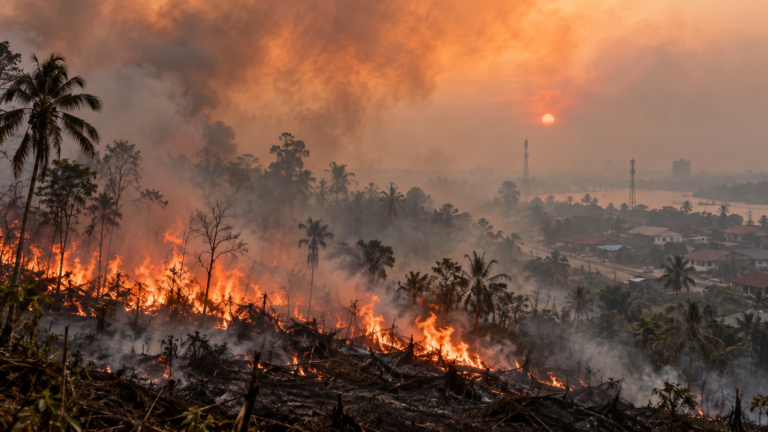
The agreement ended 20 days of clashes that killed at least 101 people and displaced more than half a million civilians on both sides of the border. The fighting included artillery barrages, rocket exchanges, and fighter-jet sorties, a stark escalation for a dispute rooted in maps drawn more than a century ago.
Under the new deal, both militaries agreed to freeze troop movements and maintain direct communication between senior commanders. Thailand also committed to returning 18 Cambodian soldiers held since the July clashes, provided the ceasefire holds for 72 hours. ASEAN observers will monitor compliance, while bilateral talks continue.
What this ceasefire does not do is resolve the underlying border problem. Demarcation work will proceed under existing mechanisms, meaning the contested areas that sparked the violence remain unresolved.
External pressure, familiar limits
The first truce in July was brokered with the involvement of U.S. President Donald Trump, alongside regional leaders. Trump later described the Thailand–Cambodia ceasefire as one of several conflicts he had helped stop. That ceasefire collapsed in early December, proving again that outside pressure can pause fighting but cannot substitute for a durable settlement.
This time, China has also stepped in diplomatically. Cambodian and Thai foreign ministers are scheduled to meet China’s foreign minister in Yunnan, following Beijing’s calls for restraint. China’s interest is stability near key trade routes, not arbitration. Its role, like Washington’s, is supportive rather than decisive.
Indonesia, ASEAN, and the long view
Indonesia has stayed out of the spotlight, but not out of the process. Jakarta’s consistent emphasis on restraint, ASEAN mechanisms, and dialogue reflects its bebas dan aktif doctrine: independent from alignments, active in preventing escalation. For ASEAN, this latest Thailand–Cambodia ceasefire matters beyond the border itself. Repeated breakdowns risk making the bloc look incapable of managing conflicts within its own region.
The conflict helps no one. It displaces civilians, drains military resources, and weakens regional confidence. This new ceasefire is welcome. But unless it leads to sustained talks and political compromise on the border itself, it will remain what Southeast Asia has seen too often: a pause, not a peace.
About the Author